Soil Stabilisation Cost: Grouting and Mixing
Soil stabilisation costs $3 to $10 per sq ft for grouting and $2,000 to $15,000 for a typical job. See which technique suits which soil.
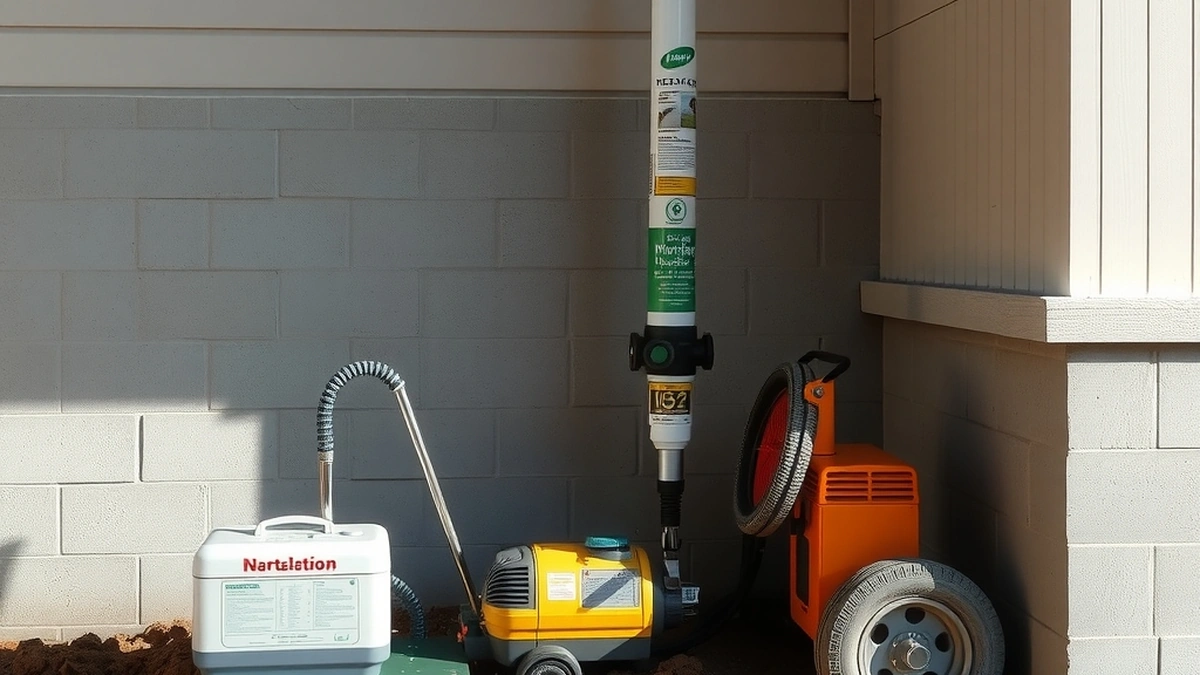
Soil stabilisation costs $3 to $10 per sq ft for grouting and $2,000 to $15,000 for a typical residential job. It treats the soil rather than the foundation, and it is used for voids, loose fill, and expansive clay.
- Grouting per sq ft
- $3 - $10
- Typical job
- $2,000 - $15,000
- Lime treatment
- $2 - $6 per sq ft
- Void filling
- $3 - $8 per sq ft
- Engineering report
- $400 - $1,500
Some links on this page are affiliate links.If you buy through them we may earn a commission at no extra cost to you. We do not accept payment for rankings. Read the full disclosure.
Soil stabilisation costs $3 to $10 per sq ft for grouting and $2,000 to $15,000 for a typical residential job. It is a different kind of repair from underpinning: instead of adding a pier, it improves the soil so the existing foundation has something to bear on. That makes it useful for voids, loose fill, and expansive clay, and useless for a footing that has already dropped.
What Soil Stabilisation Is
Soil stabilisation is the treatment of soil to increase its strength, reduce its compressibility, or limit its volume change. The three common techniques are grout injection, mechanical mixing with lime or cement, and compaction.
Grout injection fills voids and binds loose particles. Lime or cement mixing improves the soil’s engineering properties in place. Compaction increases density. Each addresses a different deficiency, and the geotechnical report decides which one applies.
The Techniques and Prices
| Technique | Cost | Best for |
|---|---|---|
| Cementitious grouting | $3 - $10 per sq ft | Voids, loose granular soil |
| Polyurethane grouting | $5 - $15 per sq ft | Void filling under slabs |
| Lime treatment | $2 - $6 per sq ft | Expansive clay |
| Cement mixing | $4 - $9 per sq ft | Soft cohesive soil |
| Compaction grouting | $6 - $12 per sq ft | Loose fill at depth |
The price ranges overlap because the techniques overlap in application. The engineer’s report should name the technique, the depth, and the dosage rather than a general instruction to “stabilize the soil.”
When It Is Used
The clearest use is a void under a slab that has not yet caused structural damage. Filling the void restores support and prevents the slab from cracking further.
The second is loose fill under a footing. Fill that was never compacted will continue to settle, and grouting can densify it before the settlement becomes severe. The third is expansive clay, where lime treatment can reduce the swell potential enough to slow the seasonal movement.
A Costed Example
A 600 sq ft garage slab has settled over a void, with no structural damage yet. The contractor proposes polyurethane grouting at $9 per sq ft:
600 × $9 = $5,400
Add mobilization at $400 and a drainage correction at $1,500:
$5,400 + $400 + $1,500 = $7,300
That sits in the upper half of the $2,000 to $15,000 band. If the void were under a house footing rather than a garage slab, the engineer would likely specify piers instead, because grouting does not add a load path to bearing soil.
Stabilisation Versus Underpinning
| Factor | Stabilisation | Underpinning |
|---|---|---|
| Action | Improves the soil | Adds a structural element |
| Cost | $2,000 - $15,000 | $6,000 - $30,000 |
| Best for | Voids, loose fill, clay | Settled footings |
| Depth | Shallow to moderate | To bearing soil |
| Verification | Density or lift measurement | Pier refusal log |
Stabilisation treats the soil the foundation already sits on. Underpinning bypasses that soil entirely. If the soil at the footing elevation is competent and the problem is a void below a slab, stabilisation is enough. If the footing has dropped because the soil at depth cannot carry it, stabilisation does not help.
The Sequence
- Get a geotechnical report with soil classification and depth.
- Identify the technique the engineer specifies.
- Fix the water source that caused the void or the softening.
- Inject or mix in the specified pattern and dosage.
- Verify with elevation readings or density tests.
- Restore the surface and recheck after a wet season.
Limits and Risks
Grouting under pressure can lift a slab or a structure if the volume is not controlled. That is why the work needs a plan and a monitoring point, not just a pump and a hose. An inexperienced crew can do damage that costs more than the original problem.
The monitoring point is usually a laser level or a survey marker on the slab. The crew watches it as the grout goes in and stops when the target is reached. If a contractor cannot describe how the lift will be measured, the job is being done by feel, and feel is how slabs crack.
Lime treatment changes the soil chemistry, and the dosage has to be right. Too little does nothing; too much can create a brittle layer that cracks. The mix design belongs to the geotechnical engineer, not the contractor.
Getting a Fair Price
Ask what technique, what depth, and what dosage. Ask how the result will be verified. Ask whether the price includes the geotechnical report, because the report is what makes the treatment a design rather than a guess. Ask, too, for the verification method and a copy of the injection log, which records the volume and pressure at each point. Those records are what an engineer uses if the treatment does not perform.
For the soil background, read soil stabilization and expansive clay soil. One more constraint is access. Grouting equipment needs a path to the treatment area, and a slab covered by finished flooring has to be opened or worked through small ports. A finished basement adds several hundred dollars to the job, and a crawl space with 18 inches of clearance adds more. Ask how the crew will reach the soil before the price is final.
If the footing has settled, underpinning cost is the closer comparison, and foundation grouting covers the injection detail.
Frequently asked questions
How much does soil stabilisation cost?
Grouting runs $3 to $10 per sq ft, and a typical residential job lands between $2,000 and $15,000. The area treated and the depth of the problem drive the total.
What is soil stabilisation?
It is the treatment of weak or moving soil to improve its strength or reduce its volume change, using grout injection, lime or cement mixing, or compaction.
Does soil stabilisation replace underpinning?
No. Stabilisation improves the soil; underpinning adds a structural element that reaches stronger soil. Some projects use both, with the engineer specifying the order.
Can soil stabilisation fix expansive clay?
Lime treatment can reduce the swell potential of clay, and moisture control reduces the cycle. Severe cases may still need deep piers or soil replacement.
How long does soil stabilisation last?
Cementitious grout and lime treatment are permanent within their design life. The result depends on the soil, the dosage, and whether water management is maintained.
Is soil stabilisation covered by insurance?
Usually not when it addresses long-term soil movement. A sudden event such as a burst pipe that washed out soil may be covered separately.
Sources
Some links are affiliate links.If you buy through them we may earn a commission at no extra cost to you. We do not accept payment for rankings. Read the full disclosure.