Foundation Grouting: Compaction and Permeation Explained
How compaction and permeation grouting stabilize foundations, when each method applies, and what to expect on cost and scope.
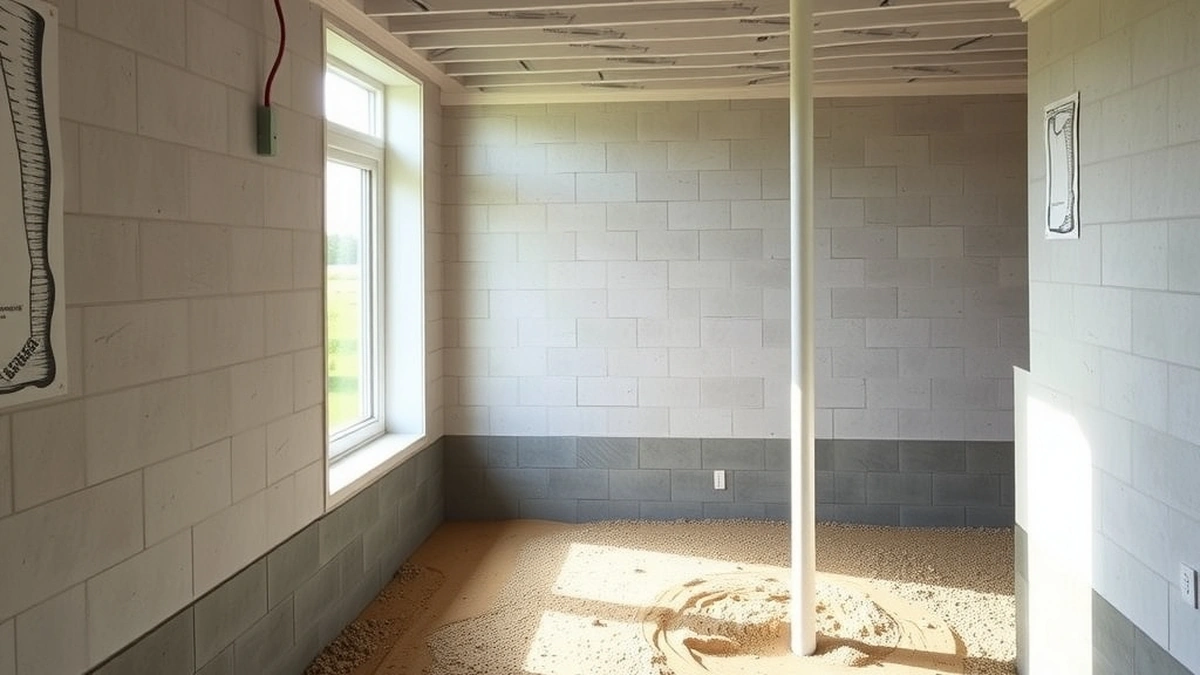
Foundation grouting injects grout into soil to densify loose ground (compaction) or fill voids and cracks (permeation) to support slabs and footings.
- Primary purpose
- Stabilize or lift soil-supported foundations
- Two main types
- Compaction grouting and permeation grouting
- Typical inspection lead time
- 1-2 weeks
- Permit timeline
- Varies by city and county; typically 1-3 weeks
Some links on this page are affiliate links.If you buy through them we may earn a commission at no extra cost to you. We do not accept payment for rankings. Read the full disclosure.
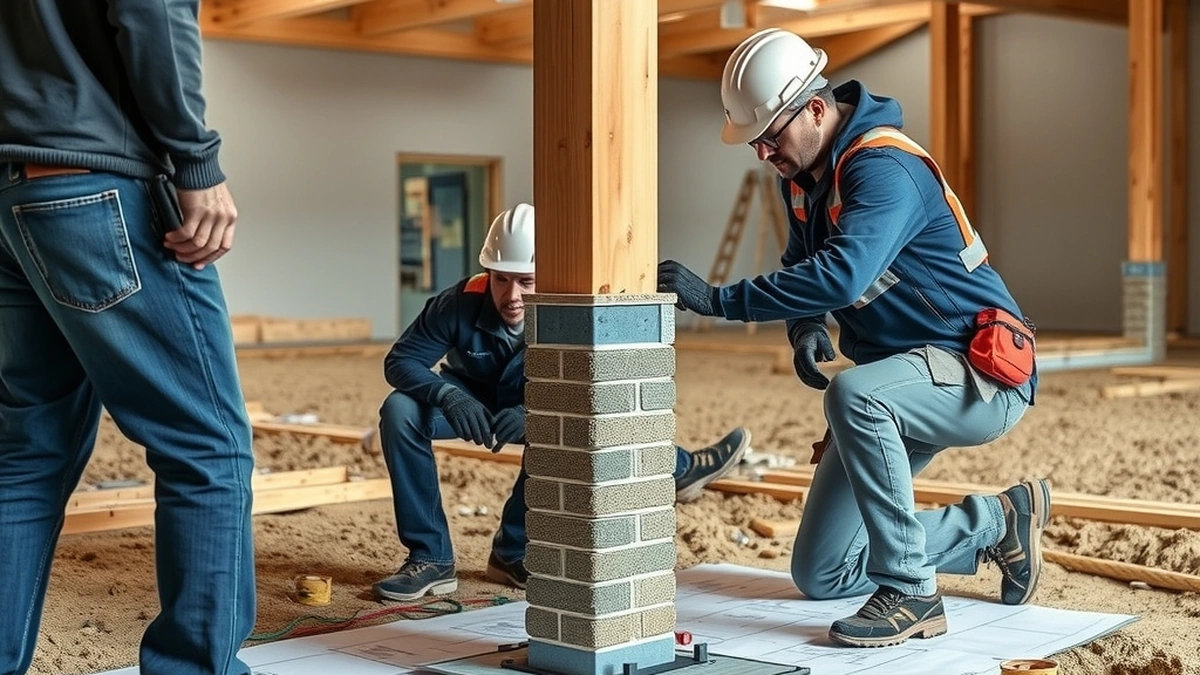
Foundation grouting is a ground-improvement method that injects grout into soil to stabilize foundations. Compaction grouting densifies loose soil by displacing it, while permeation grouting fills soil pores and voids without moving the ground. The correct choice depends on soil type, foundation load, and whether the goal is support, lift, or void filling.
What Foundation Grouting Does
Grouting changes the properties of soil beneath or beside a foundation. It does not replace the foundation itself, and it is not a crack repair in the same sense as epoxy injection or carbon fiber straps. Instead, it treats the ground so the ground can support the structure.
Measurements come first. A contractor or engineer should document crack width, floor elevation, and soil boring data before selecting a grout mix or injection pattern. A crack at or below 1/16 inch is generally cosmetic. A crack near 1/8 inch warrants monitoring. Wall movement approaching 2 inches typically requires a structural evaluation rather than grouting alone.
Compaction Grouting
Compaction grouting uses a stiff, low-slump grout that does not flow easily. It is injected in stages at depth, forming bulb-shaped columns. As the grout expands, it pushes against surrounding soil, densifying loose sands, gravels, or fill. This increases bearing capacity and can reduce settlement potential.
The method is best suited to loose granular soils where densification improves support. It is less effective in cohesive clay soils, where the grout may not displace material efficiently. Compaction grouting can also lift slabs or footings in some cases, but lift is a secondary effect, not the primary purpose.
If a project requires 20 grout columns at an estimated $300 to $800 per column, the material and installation cost could range from $6,000 to $16,000. These figures are estimates and vary by depth, grout volume, and local labor rates.
Permeation Grouting
Permeation grouting uses a fluid grout, often cementitious or chemical, that flows into the void spaces between soil particles. It does not displace soil. Instead, it fills cracks, seams, or porous zones and binds particles together as it cures.
This method is appropriate when the goal is to reduce water infiltration, fill voids under slabs, or stabilize granular soil without causing heave. Because the grout follows the path of least resistance, coverage can be unpredictable in tightly packed or layered soils. Injection points are typically spaced closer together than in compaction grouting.
Permeation grouting is not a substitute for structural piering when a foundation has lost bearing support entirely. It treats soil conditions; it does not transfer building loads to deeper bearing strata.
How Grouting Compares to Other Repairs
Foundation repair methods serve different purposes. Grouting improves soil. Piers transfer loads to deeper bearing material. Slab lifting restores elevation. Understanding the distinction prevents paying for a method that does not match the problem.
| Repair method | Typical cost range | Primary function |
|---|---|---|
| Push pier | $1,000-$3,000 each | Transfer load to bearing strata |
| Helical pier | $700-$2,500 each | Transfer load to bearing strata |
| Full pier job | $6,000-$30,000 | Multi-pier foundation stabilization |
| Mudjacking | $3-$8 per sq ft | Lift slabs with cement slurry |
| Polyurethane foam | $5-$15 per sq ft | Lift slabs with expanding foam |
| Slab lifting | $3-$12 per sq ft | General slab re-leveling |
A 500-square-foot slab lifted with mudjacking at $5 per square foot would cost roughly $2,500. The same area with polyurethane foam at $10 per square foot would cost roughly $5,000. Grouting costs are usually quoted per cubic foot of grout or per injection point, so a site-specific inspection is required before pricing.
For comparison, a full pier job often falls between $6,000 and $30,000, while foundation replacement can range from $40,000 to $150,000. Grouting usually sits below major structural repair costs, but it is not automatically cheaper if extensive drilling and grout volumes are required.
The Inspection and Measurement Phase
No grouting program should begin without measured data. An engineer inspection typically costs $400 to $1,500. Inspection lead time is usually 1 to 2 weeks. Permits vary by city and county and typically take 1 to 3 weeks.
The inspection should record:
- Crack width in inches
- Floor or slab elevation changes
- Soil type and bearing depth
- Groundwater conditions
- Loads carried by the foundation
If a foundation supports a residential load of 1,500 pounds per linear foot of wall, and the soil bearing capacity is 1,500 pounds per square foot, a 12-inch-wide footing provides 1,800 pounds per linear foot of capacity. That margin is thin. If grouting is intended to improve bearing capacity, the engineer must document the before-and-after soil values.
Cost and Scope Estimates
Grouting prices are not standardized like pier counts. A compaction grouting job might be priced per column or per cubic yard of grout. Permeation grouting might be priced per injection point or per gallon. Because grout volume depends on soil voids, the final quantity is often unknown until injection begins.
For planning purposes, treat grouting as a specialty scope with a wide estimate range. A small residential permeation grouting project might cost several thousand dollars. A large compaction grouting program under a commercial footing could run into tens of thousands. Always request a written scope that lists estimated grout volume, injection grid spacing, and a not-to-exceed ceiling where possible.
Warranty terms for grouting vary by contractor and are not standardized like the lifetime transferable warranties common with pier systems. A warranty transfer fee, where applicable, typically runs $100 to $500.
When Grouting Is Not the Right Answer
Grouting does not fix a failed foundation wall. If a wall has moved more than 2 inches, or if footings have deteriorated beyond load-bearing capacity, structural repair or replacement may be necessary. Carbon fiber straps cost $400 to $1,200 and address wall cracks, while wall anchors cost $500 to $1,500 each and address lateral movement. Neither is a grouting method, and neither treats soil.
If the problem is a sinking slab rather than soil instability, mudjacking at $3 to $8 per square foot or poly foam at $5 to $15 per square foot may be more direct. If the foundation requires deep support, push piers at $1,000 to $3,000 each or helical piers at $700 to $2,500 each are the standard alternatives.
Restoration of cosmetic finishes after structural repair typically amounts to 10 to 25 percent of the structural cost. Budget for patching, paint, and possibly flooring after grout injection holes are patched.
Choosing a Path
Start with measurement. Document crack width, elevation, and soil conditions. Use an engineer inspection to determine whether compaction grouting, permeation grouting, piers, or slab lifting matches the diagnosis. Request itemized estimates that separate mobilization, materials, and grout volume.
Grouting is a legitimate tool in foundation repair, but it is a soil treatment, not a foundation replacement. When the soil is the problem, grouting can be the solution. When the foundation itself is the problem, piers, anchors, or wall repair are the appropriate methods.
Next, compare foundation repair cost, pier and beam foundation repair cost, foundation crack repair cost before you commit.
Frequently asked questions
What is foundation grouting?
Foundation grouting is the injection of grout into soil or foundation voids to improve bearing capacity, fill gaps, or re-level supported elements.
How does compaction grouting work?
A stiff grout mix is injected under pressure to displace and densify surrounding loose soil, forming columns that increase bearing capacity.
How does permeation grouting work?
A fluid grout mix flows into soil pores or cracks without displacing soil, filling voids and binding particles together.
Is grouting a substitute for piers?
Not always; piers transfer load to bearing strata while grouting improves existing soil, so the right method depends on soil conditions and foundation needs.
Do I need an engineer before grouting?
An engineer inspection typically costs $400-$1,500 and is recommended to determine whether compaction or permeation grouting is appropriate.
How long does grouting last?
Service life depends on soil conditions and drainage; grouting does not carry the same standardized warranty term as pier systems.
Sources
Some links are affiliate links.If you buy through them we may earn a commission at no extra cost to you. We do not accept payment for rankings. Read the full disclosure.