
Contractors guides
How to vet a foundation contractor, read a quote and spot the upsell.
How to vet a foundation contractor
Foundation repair is a high-ticket, high-pressure sale, and the difference between a good contractor and a bad one is rarely visible in the truck. It is in the diagnosis, the scope and the warranty document. These are the criteria we use to describe a company, and the ones you can check before signing.
| Criterion | Weight | What good looks like |
|---|---|---|
| Independent diagnosis | 25% | Engineer's report before a scope, or a measurement-based inspection |
| Written scope | 25% | Method, pier count, depth assumption, restoration, permits |
| Warranty | 20% | Written, transferable, backed by a named entity |
| Track record | 20% | Five-year-old jobs you can visit; licence and insurance on file |
| Price transparency | 10% | Unit pricing, not a lump sum with a discount deadline |
Red flags in a quote
- A discount that expires today — foundation problems are not a today problem.
- No pier count, no depth, no method, just "foundation repair".
- A lifetime warranty with no document, or one that excludes "settling" (the exact thing you are paying to fix).
- Pressure to sign before an engineer has seen the house.
- Financing presented as a discount rather than a loan.
- No licence number on the proposal, or a licence that does not match the company name.
Questions that separate the good from the rest
- What is the measured floor elevation difference, and where did you measure it?
- How many piers, at what spacing, and to what depth is bearing assumed?
- Who stamps the engineering letter, and is it included in the price?
- What happens if the piers hit refusal at half the expected depth — is the price fixed?
- What is restored: drywall, flooring, landscaping, paint?
- What voids the warranty, and who honours it if you close?
- Can I speak to a customer whose job is five years old?
How to compare three quotes
Put them in the same table: method, count, depth, engineering, permits, restoration, warranty, price. If one quote is 30% cheaper, the difference is almost always scope — fewer piers, no engineering, no restoration — rather than efficiency. Ask each contractor to quote the engineer's scope exactly; the comparison then becomes honest.
The cost hub explains what each line should cost, the insurance hub covers warranty transfer, and the comparison hub covers repair versus replace.
Do foundation repair companies lie?
Some oversell, and the pattern is predictable: a free inspection, a scary diagnosis, a discount with a deadline. Independent engineering and three comparable quotes remove most of the risk.
What licence should a foundation contractor have?
It varies by state: a general contractor licence, a specialty structural licence, or both. Ask for the number, check it against the state database, and confirm the name matches the contract entity.
Is a lifetime warranty real?
When it is a written document from a company with a track record and a transfer clause, yes. When it is a verbal promise, it is marketing.
How we describe a contractor
We do not publish star ratings for individual companies, because a rating without the scope, the soil and the house is noise. What we publish is the criteria: whether the diagnosis is independent, whether the scope is written, whether the warranty is transferable, and whether the company can produce a five-year-old job. Those four questions separate most good contractors from most bad ones before money changes hands.
Where a claim about a warranty or a licence could not be verified, the page says so rather than repeating the sales copy. The same standard applies to our own methodology.
What a good inspection looks like
An inspection that ends in a number is a sales call. A good one starts with measurements: floor elevation readings at six or more points, a crack map with widths and displacement, a crawl space or basement walk-through, and a drainage assessment. Ask to see the readings and keep a copy — they are the baseline against which any future movement is judged.
If the inspection never left the driveway, the diagnosis is not ready.
All contractors guides

Checking a Contractor Licence and Insurance
Verify a foundation contractor's licence and insurance before signing. Learn what to check, where to look, and what it means for your repair.
Read the guide →
Do You Need a Permit for Foundation Repair?
Permit requirements for foundation repair vary by city and county. Learn when permits are required, typical costs, and how to check local rules.
Read the guide →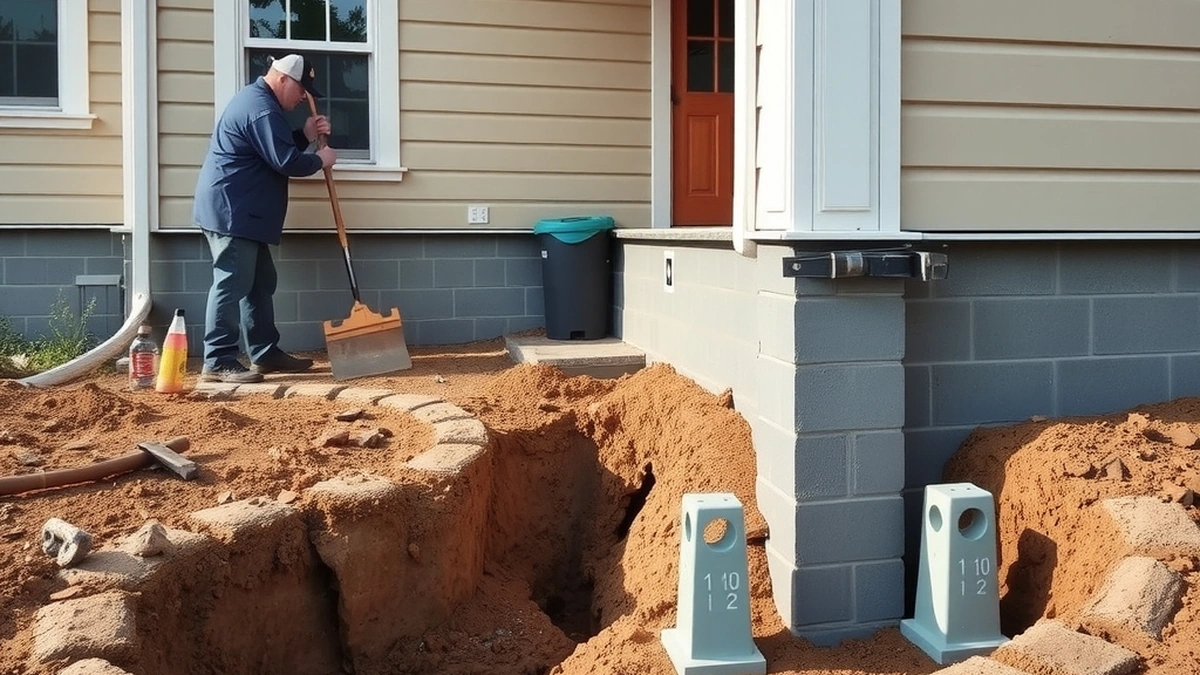
What a Foundation Repair Day Looks Like
A walk through a typical pier install: arrival, excavation, driving, lifting, and cleanup. See what happens each day and what it costs.
Read the guide →
How to Read a Foundation Repair Quote
A numbers-first guide to evaluating foundation repair quotes, including pier counts, unit prices, warranties, and what to compare before signing.
Read the guide →
Red Flags in Foundation Repair Sales
How to spot pressure tactics, vague pricing, and unnecessary pier recommendations before signing a foundation repair contract.
Read the guide →
Foundation Repair Scams and How They Work
Common foundation repair scams, warning signs, and how to verify estimates before paying.
Read the guide →
How to Choose a Foundation Contractor: A Buyer's Guide
Steps to vet foundation contractors, compare repair methods, and price piering, mudjacking, and wall stabilization.
Read the guide →
Questions to Ask a Foundation Contractor Before Hiring
A numbers-first checklist for vetting foundation repair contractors, including pier counts, warranties, permits, and pricing.
Read the guide →