Basement Waterproofing Cost: Interior vs Exterior
Basement waterproofing costs $4,000 to $12,000 for exterior membrane work and $2,000 to $8,000 for interior systems. See what each fixes.
Basement waterproofing costs $4,000 to $12,000 for exterior membrane and footing drain work, and $2,000 to $8,000 for an interior drainage system. Exterior work is more effective; interior work is cheaper and faster.
- Exterior waterproofing
- $4,000 - $12,000
- Interior system
- $2,000 - $8,000
- Sump pump installed
- $600 - $3,000
- Crack injection
- $400 - $1,200
- Encapsulation
- $3 - $8 per sq ft
Some links on this page are affiliate links.If you buy through them we may earn a commission at no extra cost to you. We do not accept payment for rankings. Read the full disclosure.
Basement waterproofing costs $4,000 to $12,000 for exterior work and $2,000 to $8,000 for an interior system. The exterior scope is more expensive because it requires excavation to the footing, and it is also the only approach that stops water before it reaches the wall. The interior approach manages water that has already arrived.
What Waterproofing Means
Basement waterproofing is the installation of a barrier or a drainage system that keeps water out of the basement. It is different from damp proofing, which is a coating that resists soil moisture but not hydrostatic pressure.
The distinction matters at the quote stage. A coating sold as waterproofing will fail under pressure, and a membrane installed without a footing drain will fail as soon as the drain clogs. The system, not the product, is what works.
The Two Approaches
| Approach | Cost | What it does | Limitation |
|---|---|---|---|
| Exterior membrane | $4,000 - $12,000 | Stops water at the wall | Requires excavation |
| Footing drain | Included or $2,000 - $6,000 | Relieves pressure at the base | Needs a discharge point |
| Interior drain and sump | $2,000 - $8,000 | Collects water at the joint | Does not reduce wall pressure |
| Crack injection | $400 - $1,200 | Seals a specific leak | Does not stop new cracks |
Exterior work is the more complete repair because it addresses the water before it touches the wall. Interior work is faster, cheaper, and less disruptive, and it is often the right choice when the leak is minor or the budget is limited.
What the Exterior Job Involves
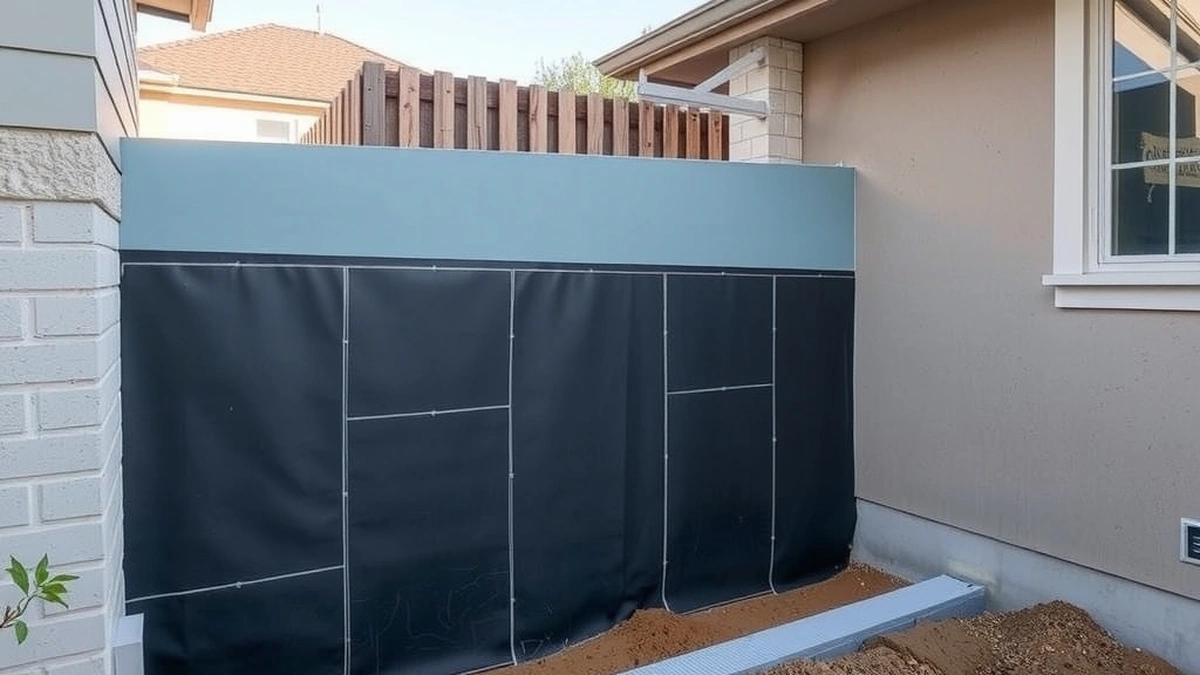
The contractor excavates along the wall to the footing, cleans and repairs the wall, applies a membrane, installs drainage board, and replaces or adds a footing drain at the base. The trench is then backfilled with gravel and soil, and the grading is restored so water runs away from the house.
That excavation is why the price is high. A 40-foot wall at 8 feet deep moves a large volume of soil, and the crew has to protect the foundation while it is exposed. Landscaping, decks, and walks may have to be removed and rebuilt.
A Costed Exterior Job
A 40-foot wall waterproofed on the exterior:
Excavation and disposal: 40 ft × $90 = $3,600 Membrane and drainage board: 40 ft × $45 = $1,800 Footing drain: 40 ft × $35 = $1,400 Sump pump and discharge: $1,400
Total: $8,200
That sits in the middle of the $4,000 to $12,000 band. Adding a deck removal and rebuild could push it to the top.
A Costed Interior Job
An interior drain along two walls with a sump pit:
Drain: 60 ft × $45 = $2,700 Sump pit and pump: $1,500 Discharge line: $400
Total: $4,600
That is a mid-range interior system and roughly half the exterior cost for the same house. It keeps the floor dry, but the wall still receives the pressure.
Which One to Choose
Choose exterior when the wall is bowing, when the leak is high on the wall, or when the basement is finished and a failure would be expensive. Choose interior when the leak is at the floor-wall joint, the wall is sound, and the budget is limited.
Choose crack injection alone only for a single stable leak in an otherwise dry basement. It is the cheapest option and the most likely to be oversold as a complete solution.
A useful test is the hose test. Run water against the wall from a sprinkler for 30 minutes and watch where it appears inside. If it shows at the floor-wall joint, an interior drain addresses it. If it shows high on the wall or across a wide area, the water is coming through the wall itself and exterior work is the more durable answer.
The Sequence
- Find the water source: roof, grading, or groundwater.
- Fix gutters, downspouts, and grading first.
- Get an engineer’s report if the wall is bowing or cracked.
- Choose exterior or interior based on the wall condition.
- Install the system with a discharge that leaves the property.
- Restore grading and landscaping.
- Test with a hose before the contractor leaves.
An exterior system needs the footing drain to stay clear and the discharge to stay open. An interior system needs the pump tested twice a year and the pit cleaned. Both need the gutters cleaned, because roof water is the largest single source of basement water in most houses.
Budget $150 to $400 a year for maintenance and pump testing. That is a small fraction of the cost of a failed system and a flooded basement.
Keep the discharge clear in winter. A line that freezes and splits will dump water at the wall the next time the pump runs, which is how a system that worked for years suddenly fails in February. A freeze-resistant termination costs little at installation and saves the kind of repair that arrives at the worst possible time.
Getting a Fair Quote
Ask what is included: excavation, membrane, drainage board, footing drain, sump, discharge, and restoration. Ask where the discharge goes and whether it is legal in your municipality. Ask for the warranty terms and what voids them.
For the method detail, read basement waterproofing methods and foundation waterproofing cost. If the wall is also bowing, basement wall repair cost covers the structural side that waterproofing does not address.
Frequently asked questions
How much does basement waterproofing cost?
Exterior waterproofing runs $4,000 to $12,000 because it requires excavation to the footing. Interior drainage systems run $2,000 to $8,000 and manage water that has already entered.
Is exterior waterproofing worth the extra cost?
It is the only method that stops water before it reaches the wall, so it is worth it where hydrostatic pressure is high or the wall is bowing. Interior systems are adequate for minor seepage.
How long does basement waterproofing last?
A properly installed exterior membrane and footing drain can last 20 to 30 years or more. Interior systems last as long as the pump and the drain are maintained.
Does waterproofing fix a bowing wall?
No. Waterproofing removes the water but does not restrain the wall. A bowing wall needs anchors or straps in addition to water control.
Can I waterproof a basement from the inside only?
Yes, with an interior drain and sump system. It relieves water at the floor-wall joint, but it does not reduce the pressure on the wall from outside.
Will waterproofing add value to my home?
A dry basement is a selling point and removes a common buyer objection. The value effect is usually in avoiding a discount rather than adding a premium.
Sources
Some links are affiliate links.If you buy through them we may earn a commission at no extra cost to you. We do not accept payment for rankings. Read the full disclosure.