Carbon Fibre Foundation Repair Cost: What to Expect
Carbon Fibre Foundation Repair Cost: What to Expect: practical numbers, costs, and trade-offs, written independently.
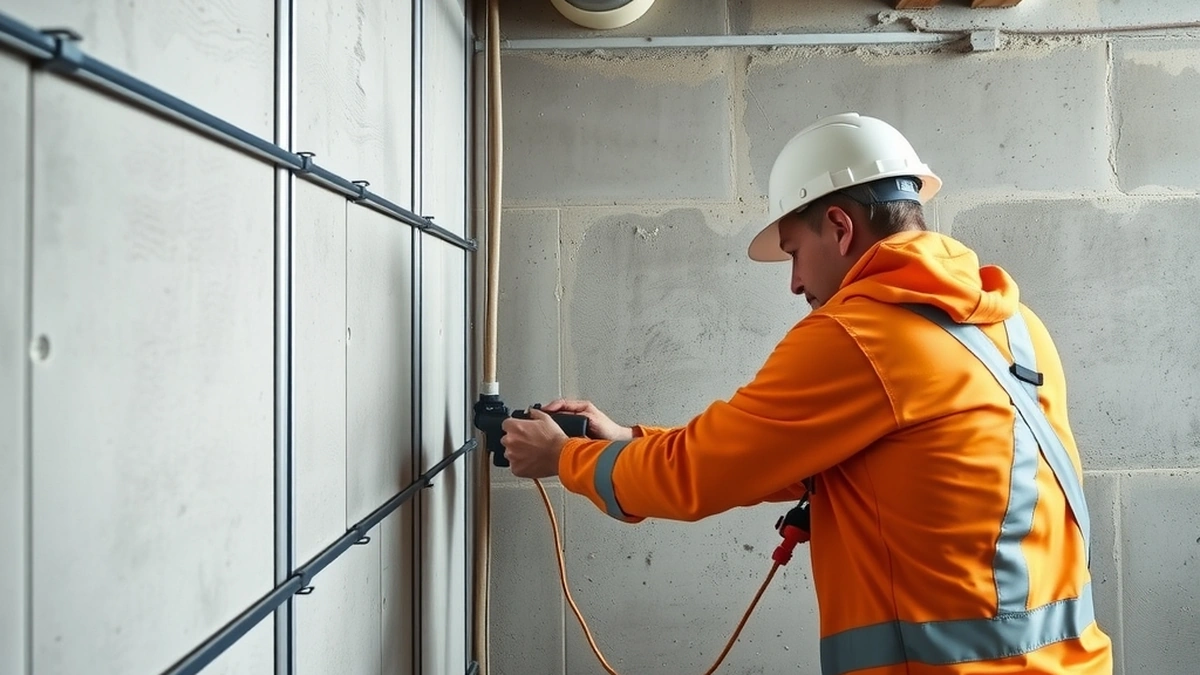
Carbon fibre foundation repair usually costs $400 to $1,200 per strap installed, with most residential jobs landing between $1,500 and $5,000 depending on wall count and access.
- Cost per strap (installed)
- $400 - $1,200
- Typical job range
- $1,500 - $5,000
- Best for
- Bowing or cracking basement walls under 2 inches of movement
- Not for
- Settling foundations or slab movement
Some links on this page are affiliate links.If you buy through them we may earn a commission at no extra cost to you. We do not accept payment for rankings. Read the full disclosure.
Carbon Fibre Foundation Repair Cost: What to Expect
Carbon fibre foundation repair typically costs $400 to $1,200 per strap installed, with most single-wall residential jobs landing between $1,500 and $5,000. The method is designed to stabilize bowing or cracked basement walls, not to lift a settling foundation. Measure crack width and wall movement first, then compare the unit price against piers, anchors, and slab lifting before choosing a repair path.
What Carbon Fibre Straps Actually Do
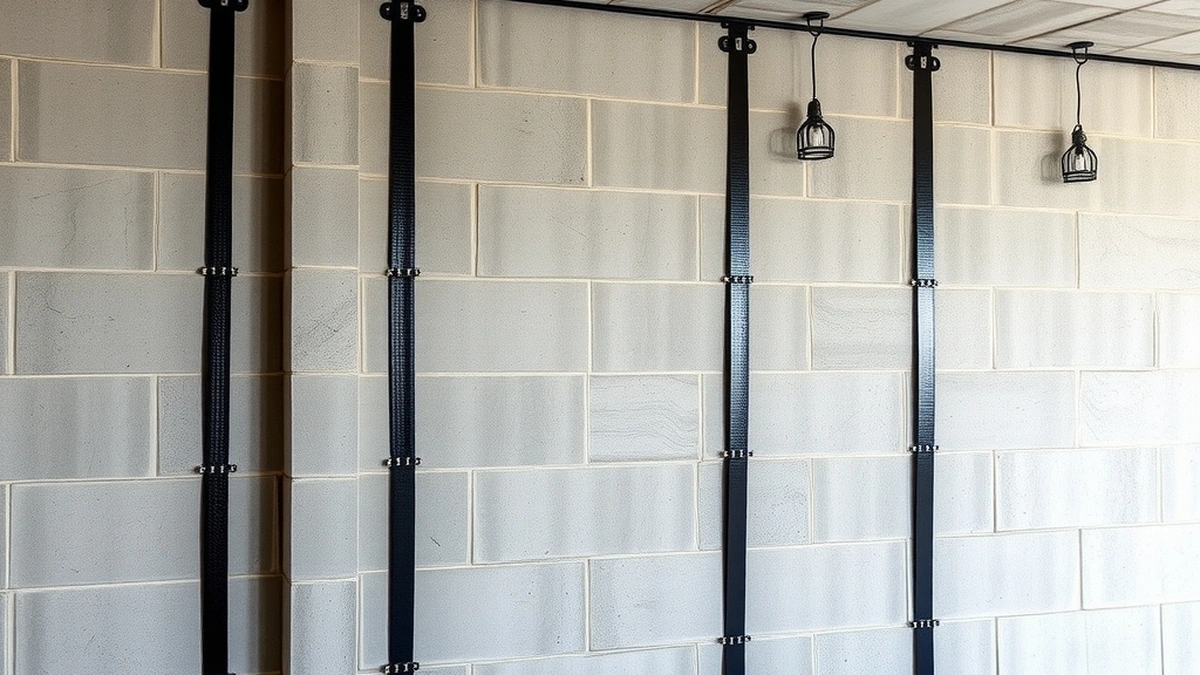
Carbon fibre straps are strips of high-tensile fabric bonded to the interior face of a concrete or masonry basement wall with epoxy. The straps resist tensile forces from soil pressure and help hold the wall in its current position. They are not a lifting system and will not raise a slab or footing that has settled.
This distinction matters for cost. If your problem is foundation settlement, you need piers or slab lifting. If your problem is a basement wall leaning inward, carbon fibre straps may be appropriate. The first measurement is crack width. Hairline cracks under 1/16 inch are usually cosmetic. Cracks at or above 1/8 inch warrant monitoring, and inward wall movement approaching 2 inches generally requires structural intervention beyond surface reinforcement.
Carbon Fibre Strap Pricing
The canonical installed cost for one carbon fibre strap is $400 to $1,200. That range includes material, surface preparation, epoxy, and labor. Total job cost depends on how many straps the wall requires, which is driven by wall height, wall length, and the severity of the bow or crack.
Here is an arithmetic example for a 20-foot basement wall:
- Wall height: 8 feet
- Strap spacing: every 4 to 6 feet
- Estimated strap count: 4 to 5 straps
- Low estimate: 4 straps × $400 = $1,600
- High estimate: 5 straps × $1,200 = $6,000
A two-wall basement corner could easily run $3,000 to $10,000. These figures are estimates; actual quotes vary by local labor rates and wall accessibility.
How It Compares to Other Repair Methods
Carbon fibre straps sit on the lower end of structural repair costs, but they address a narrower set of problems than piers or anchors. The table below shows canonical price ranges for common foundation repair methods.
| Method | Typical Unit Cost | What It Addresses |
|---|---|---|
| Carbon fibre strap | $400 - $1,200 each | Basement wall cracks and bowing under 2 inches |
| Push pier | $1,000 - $3,000 each | Settling footings and foundation settlement |
| Helical pier | $700 - $2,500 each | Settling foundations, especially lighter loads |
| Wall anchor | $500 - $1,500 each | Severe basement wall bowing |
| Mudjacking | $3 - $8 per sq ft | Sunken slabs |
| Poly foam lifting | $5 - $15 per sq ft | Sunken slabs and void filling |
| Slab lifting | $3 - $12 per sq ft | Concrete slab leveling |
A full pier job often runs $6,000 to $30,000, while carbon fibre work on a single wall usually stays under $5,000. However, if the wall has moved more than 2 inches or shows signs of imminent failure, straps alone may not be sufficient, and the cost comparison becomes moot because the wrong method will fail.
When Carbon Fibre Is the Wrong Choice
Carbon fibre straps do not address foundation settlement. If your floors are sloping, doors are sticking, or cracks run diagonally from window corners, the issue may be a sinking footing rather than a bowing wall. In those cases, strap installation is a waste of money.
They are also not appropriate when wall movement exceeds 2 inches. At that point, the wall may need wall anchors, helical tiebacks, or in rare cases replacement. Foundation replacement runs $40,000 to $150,000 and is generally considered only after other methods have failed or when damage exceeds roughly one-third of the structure’s value.
If your only issue is a narrow crack with no movement, cosmetic crack repair may be sufficient. You can review typical pricing for that scope at /foundation-crack-repair-cost/.
Inspection, Permits, and Timing
Before any strap installation, measure the crack and wall displacement. An engineer inspection costs $400 to $1,500 and is recommended to confirm that wall movement is within acceptable limits and that carbon fibre is structurally appropriate. Inspection lead time is typically 1 to 2 weeks.
Permit requirements vary by city and county and typically take 1 to 3 weeks to approve. Some jurisdictions require a stamped engineering design for basement wall reinforcement, especially if the wall shows significant bowing. Factor the inspection and permitting timeline into your project schedule before signing a contract.
Internal Cost Context
Carbon fibre repair is often one component of a broader foundation scope. If your basement walls are bowing but your footings are stable, straps may be the right standalone fix. If the same house also has a settling porch or slab, you may need to combine methods.
For slab-related issues, review /slab-lifting-cost/ or /mudjacking-cost/. For deep foundation settlement, see /push-pier-cost/ or /helical-pier-cost/. For severe wall bowing beyond strap limits, see /wall-anchor-cost/. For general budget framing, see /foundation-repair-cost/. If your home sits on a crawl space or pier-and-beam system, see /pier-and-beam-foundation-repair-cost/.
Warranty and Transfer Considerations
Ask for written warranty terms before work begins. Some contractors offer transferable warranties on structural repairs, while others provide limited coverage. A warranty transfer fee typically ranges from $100 to $500 if you sell the home. Pier warranties are often described as lifetime and transferable, but carbon fibre warranty terms vary by manufacturer and installer. Get the exact duration and transfer conditions in writing.
Bottom Line
Carbon fibre foundation repair costs $400 to $1,200 per strap installed, with most jobs falling between $1,500 and $5,000. It is a targeted solution for basement wall cracks and minor bowing, not a cure for settlement. Measure crack width and wall displacement first, confirm movement is under 2 inches, and compare the per-strap price against piers, anchors, and slab lifting before committing to a method.
Next, compare foundation repair cost, pier and beam foundation repair cost, foundation crack repair cost before you commit.
Frequently asked questions
What is carbon fibre foundation repair?
Carbon fibre foundation repair uses high-strength fabric straps bonded to basement walls to stop inward movement and distribute soil pressure without excavation.
How much does one carbon fibre strap cost?
One installed carbon fibre strap typically costs between $400 and $1,200, depending on wall height, access, and regional labor rates.
When should carbon fibre straps be used?
Straps are appropriate for basement walls with cracks under 1/8 inch and inward movement under 2 inches; they do not lift settled foundations.
Is carbon fibre repair cheaper than piers?
Yes. Carbon fibre straps at $400 to $1,200 each are generally less expensive than push piers at $1,000 to $3,000 each or helical piers at $700 to $2,500 each.
Do I need an engineer before installing straps?
An engineer inspection costs $400 to $1,500 and is recommended to confirm wall movement is within limits and that straps are the correct method.
How long does carbon fibre repair last?
Manufacturer warranties vary, but properly installed carbon fibre systems are intended as a permanent structural stabilization when wall movement stays below 2 inches.
Sources
Some links are affiliate links.If you buy through them we may earn a commission at no extra cost to you. We do not accept payment for rankings. Read the full disclosure.