Questions to Ask a Foundation Contractor Before Hiring
A numbers-first checklist for vetting foundation repair contractors, including pier counts, warranties, permits, and pricing.

Ask for a written scope with pier count, depth to bearing, unit price, permit responsibility, and warranty terms before signing any foundation repair contract.
- Typical repair cost
- $4,000–$15,000
- Major repair cost
- $20,000–$40,000
- Engineer inspection
- $400–$1,500
- Permit lead time
- 1–3 weeks
Some links on this page are affiliate links.If you buy through them we may earn a commission at no extra cost to you. We do not accept payment for rankings. Read the full disclosure.
The best questions to ask a foundation contractor focus on measurable scope: crack width, displacement, pier count, depth to bearing, and unit price. A contractor who cannot put those numbers in writing is not ready to price the job. Use this checklist to separate an inspection from a sales pitch before you sign anything.
1. What Is the Written Scope of Work?
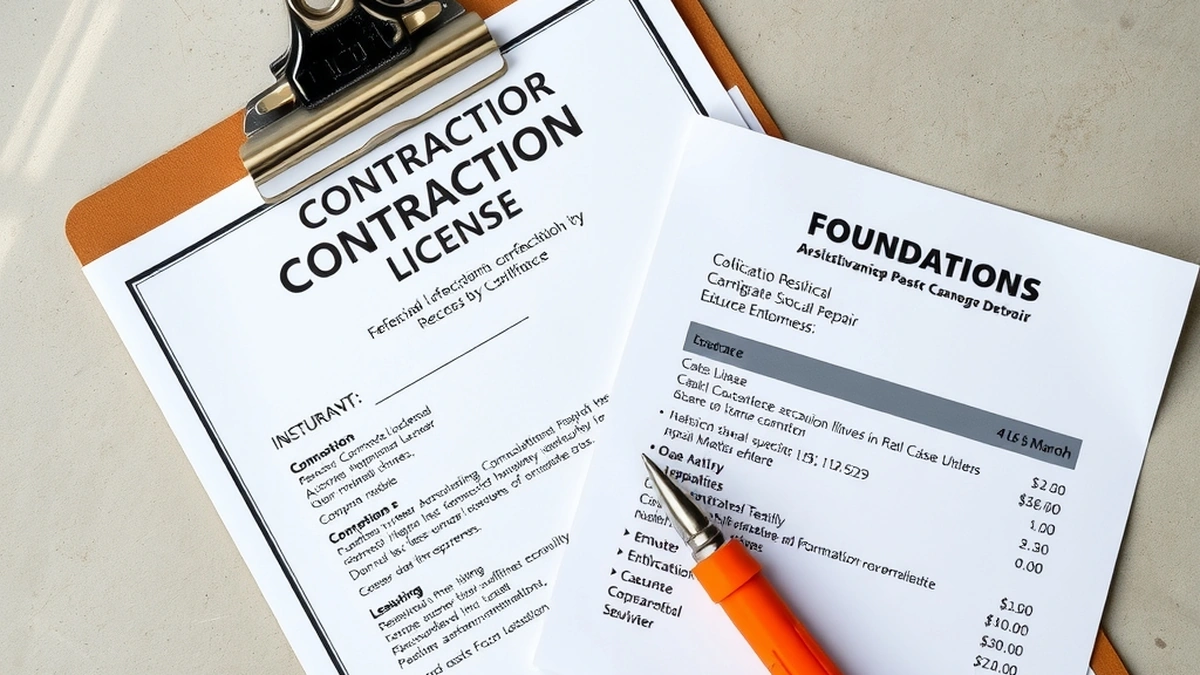
Start by asking for a written scope, not a verbal estimate. The document should list each symptom, its measurement, and the proposed repair method. For cracks, note width in inches. Hairline cracks under 1/16 inch are usually cosmetic. Cracks at or above 1/8 inch warrant monitoring. Lateral wall movement beyond 2 inches often indicates a structural issue that may require piers or wall anchors rather than surface patching.
Request a line-item breakdown. If the contractor recommends piers, the scope should state how many, what type, the estimated depth to bearing soil or bedrock, and the unit price per pier. Push piers typically run $1,000–$3,000 each. Helical piers typically run $700–$2,500 each. A full pier job commonly lands between $6,000 and $30,000, depending on pier count and depth.
2. How Did You Determine Pier Count and Depth?
Ask how the contractor calculated the number of piers and the depth to bearing. A legitimate answer references load, soil conditions, and foundation geometry, not a flat rate per home. If the job calls for eight push piers at $2,000 each, the pier subtotal is $16,000. Add mobilization, excavation, and any interior floor repair to reach the total job price.
Compare methods only after the numbers are set. Slab lifting with mudjacking costs roughly $3–$8 per square foot. Polyurethane foam injection runs about $5–$15 per square foot. For a 200-square-foot slab section, mudjacking might cost $600–$1,600, while foam might cost $1,000–$3,000. The cheaper option is not automatically the better one; foam cures faster and weighs less, but mudjacking uses a cementitious grout that some engineers prefer for certain soil profiles.
3. What Is Included in the Total Price?
Foundation repair pricing can hide extras. Ask whether the quote includes permits, engineering stamps, disposal, concrete cutting, interior floor patching, and landscaping restoration. The average repair falls between $4,000 and $15,000, while major repairs can reach $20,000–$40,000. Full foundation replacement ranges from $40,000 to $150,000 and is usually reserved for cases where more than one-third of the structure has failed or the foundation is beyond stabilization.
If carbon fiber straps are proposed for basement walls, expect $400–$1,200 per strap. Wall anchors typically run $500–$1,500 each. Ask how many straps or anchors the wall requires and whether the price includes excavation outside the wall. For crawl spaces, encapsulation runs about $3–$8 per square foot, or $4,000–$15,000 for a full job. Get those numbers in writing before approving work.
4. Who Pulls Permits and Handles Inspections?
Permit requirements vary by city and county, and approval typically takes 1–3 weeks. Ask who is responsible for applications and fees. If the contractor says permits are unnecessary, verify that with your local building department. Some jurisdictions require an engineer’s stamp for underpinning or structural repairs, which adds cost and time.
An independent structural engineer inspection costs $400–$1,500 and is worth paying for if the contractor’s diagnosis seems thin. The engineer can confirm whether the foundation needs piers, wall anchors, or partial replacement. Inspection lead time is usually 1–2 weeks, so schedule early if your timeline is tight.
5. What Warranty Covers the Work?
Ask for the warranty in writing and read the transfer terms. Pier warranties are often lifetime and transferable, but transfer fees typically run $100–$500. Mudjacking and polyurethane foam carry shorter functional lives, often 5–15 years, and may not transfer at all. Clarify what voids the warranty: new landscaping, plumbing leaks, changes to drainage, or unapproved weight added to the structure.
If the contractor offers a manufacturer’s warranty on materials and a separate workmanship warranty, ask for the duration of each. A lifetime pier warranty that excludes labor after year one is different from a lifetime warranty covering both materials and installation.
6. Can You Show Comparable Jobs?
Ask for references from jobs with similar foundation types and repair scopes. A slab-on-grade repair is not the same as a pier-and-beam crawl space repair, and a basement wall anchor job differs from a porch pier installation. Request photos of finished work, not just mid-construction shots, and ask whether the homeowner experienced settlement after the repair.
If you are researching costs by repair type, review our breakdowns for pier and beam foundation repair cost, helical pier cost, and push pier cost to understand how unit prices translate into full project estimates.
7. How Will You Protect the Property During Work?
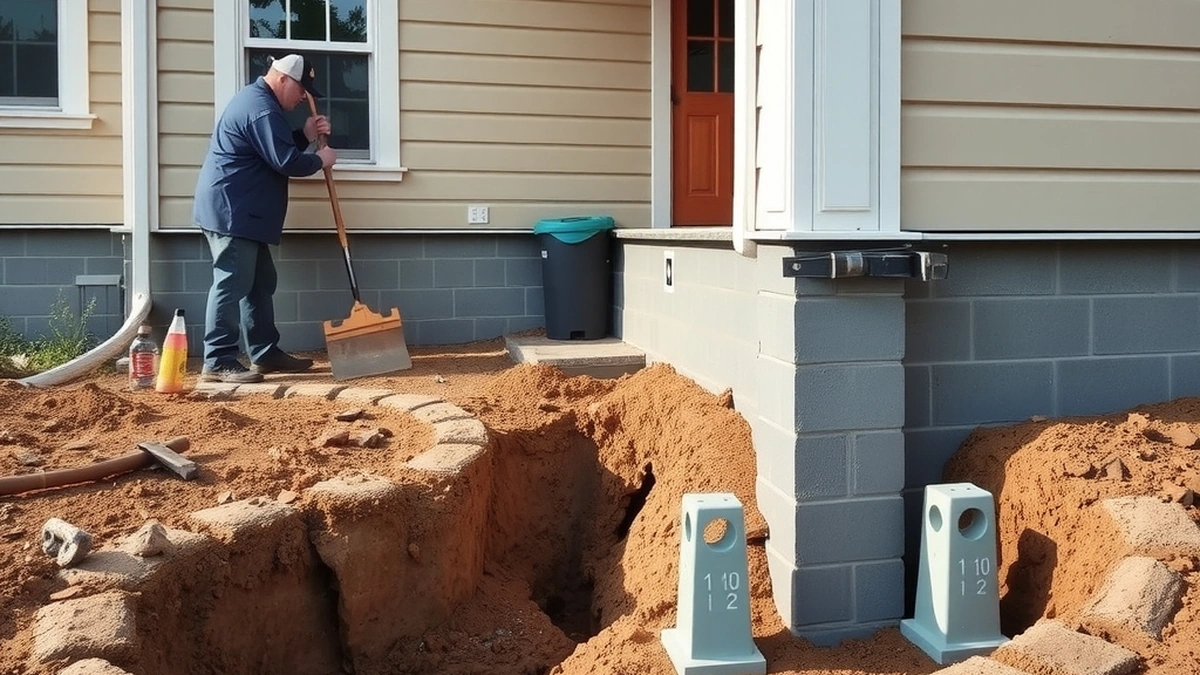
Foundation repair involves excavation, heavy equipment, and sometimes interior floor cutting. Ask where equipment will be staged, how spoil will be removed, and how the contractor will protect landscaping, driveways, and interior finishes. Get a cleanup standard in writing: who backfills, who replaces sod, and who repairs interior drywall cracks caused by lifting.
For slab lifting projects, ask whether the contractor will seal injection holes and match the existing concrete finish. For interior pier installation through a floor, ask how the opening will be patched and whether the patch is structural or cosmetic.
8. What Happens If the Foundation Keeps Moving?
No contractor can guarantee soil behavior, but they should explain the contingency plan. If piers are installed and the structure continues to settle, will the contractor add piers at no cost, at a discounted rate, or at full price? If wall anchors are installed and the wall still bows, what is the next step?
Ask about restoration expectations. Foundation repair typically restores 10–25 percent of structural elevation or alignment, not 100 percent. Lifting a settled slab back to its original position can crack interior finishes or damage plumbing. A conservative contractor will set realistic movement targets before work begins.
9. What Is the Payment Schedule?
Avoid paying the full amount upfront. A common structure is a deposit for mobilization, progress payments at defined milestones, and a final payment after inspection and walkthrough. Ask what happens if the job runs over the estimated timeline due to weather, soil conditions, or permit delays.
If the contractor proposes replacement because more than one-third of the foundation has failed, get a second opinion. Replacement costs $40,000–$150,000 and is rarely the first option unless the foundation is structurally unsound beyond stabilization.
10. How Soon Can Work Start, and How Long Will It Take?
Inspection lead time is usually 1–2 weeks. Once you sign, ask for a start date and a day-by-day schedule. Pier installation can take several days to a few weeks depending on count and depth. Slab lifting may take one to two days per section. Wall anchor installation depends on exterior access and soil conditions.
Delays are common in foundation work because bearing depth is not fully known until excavation begins. Ask how the contractor communicates changes to scope or price if piers must go deeper than planned.
Final Checklist Before Signing
- Written scope with crack measurements and displacement notes
- Pier count, type, depth to bearing, and unit price per pier
- Total price with permit, engineering, and cleanup costs included
- Written warranty terms and transfer fee
- Permit responsibility confirmed
- Start date and estimated completion window
- Payment schedule tied to milestones
Measure first, method second, price third. If a contractor cannot answer these questions with numbers, keep looking. For additional cost context, see our guides on foundation crack repair cost, mudjacking cost, carbon fiber foundation repair cost, and wall anchor cost.
Frequently asked questions
What should I ask first?
Ask for a written inspection report that lists crack width, displacement, pier count, depth to bearing, and unit price before any work begins.
How many piers might a job need?
Pier count depends on the structure and load; a full residential pier job often ranges from $6,000 to $30,000 depending on pier type and quantity.
Are foundation warranties transferable?
Pier warranties are often lifetime and transferable, while transfer fees typically run $100–$500 depending on the contractor.
Who pulls permits?
Confirm whether the contractor or homeowner is responsible; permits vary by city and county and typically take 1–3 weeks.
Should I get an engineer involved?
An independent structural engineer inspection costs $400–$1,500 and can confirm whether repair or replacement is warranted.
How long does an inspection take to schedule?
Inspection lead time is usually 1–2 weeks, depending on contractor availability and your location.
Sources
Some links are affiliate links.If you buy through them we may earn a commission at no extra cost to you. We do not accept payment for rankings. Read the full disclosure.