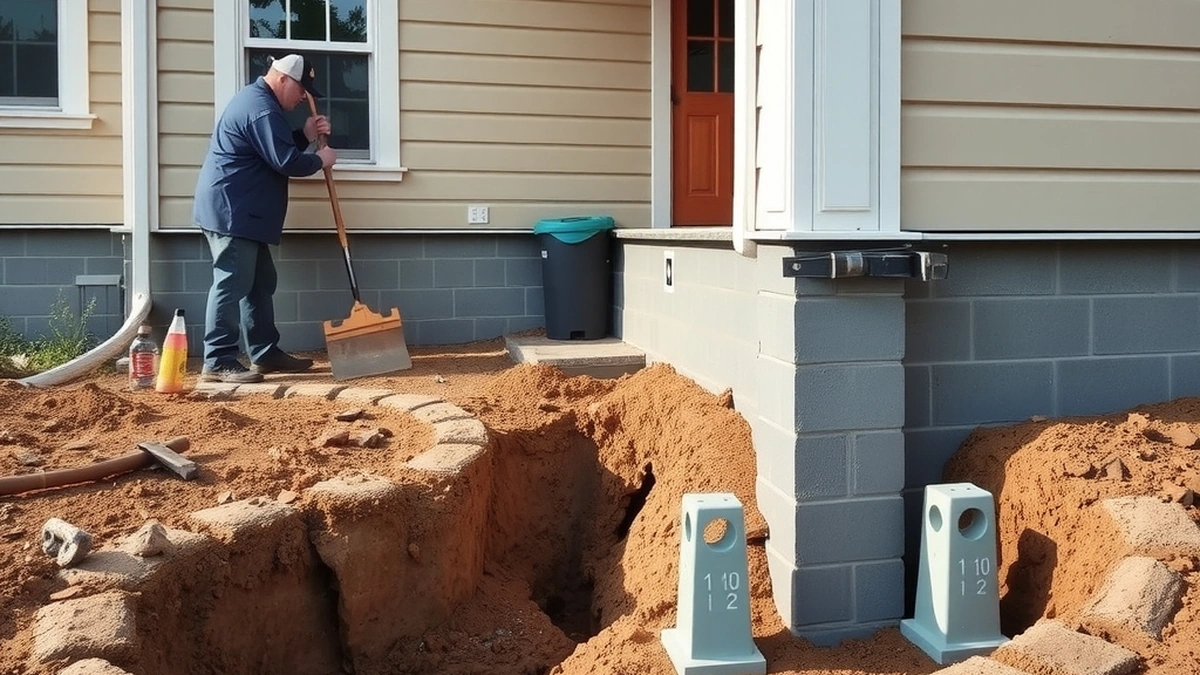
Checking a Contractor Licence and Insurance
Verify a foundation contractor's licence and insurance before signing. Learn what to check, where to look, and what it means for your repair.
Confirm the contractor holds a valid state or local licence and carries active liability and workers' compensation insurance before signing any foundation repair contract.
- Primary check
- State or local contractor licence number
- Insurance types
- General liability and workers' compensation
- Verification source
- State licensing board and insurer certificate
- Typical permit lead time
- 1-3 weeks
Some links on this page are affiliate links.If you buy through them we may earn a commission at no extra cost to you. We do not accept payment for rankings. Read the full disclosure.
Checking a contractor licence and insurance means confirming that the foundation repair company is legally authorized to work in your area and carries active coverage for liability and worker injuries. You verify the licence number through your state or local licensing board and request a certificate of insurance directly from the carrier. Skipping this step can leave you responsible for property damage or on-site injuries.
Why Licence and Insurance Matter
A contractor licence is not a quality guarantee, but it is a baseline requirement. It indicates the business registered with the state or municipality and met whatever examination, bonding, or experience rules apply to foundation work in your jurisdiction. Insurance is separate. General liability covers damage to your house, while workers’ compensation covers employees who are hurt on your property. Without both, a single accident can become a homeowner’s financial problem.
Foundation repair costs vary widely by method. Push piers typically run $1,000-$3,000 each, and helical piers $700-$2,500 each. A full pier job often lands between $6,000 and $30,000. Slab lifting with mudjacking costs about $3-$8 per square foot, while poly foam injection runs $5-$15 per square foot. Carbon fibre straps cost $400-$1,200 each, and wall anchors run $500-$1,500 each. Crawl space encapsulation ranges from $3-$8 per square foot or $4,000-$15,000 per job. Because these projects involve structural loads and excavation, the contractor should carry enough insurance to cover the full scope.
Step 1: Find the Licensing Authority
Licensing happens at the state, county, or city level, depending on where you live. Some states issue a general contractor licence; others require a specialty licence for foundation or structural work. A few municipalities have no statewide contractor licence but enforce local registration instead.
Start by searching your state licensing board website. Enter the contractor’s name or licence number and confirm that:
- The licence is active, not expired or suspended.
- The business name matches the entity signing your contract.
- The licence classification covers foundation repair or concrete work.
If your state does not license foundation contractors specifically, check the county or city building department. Permit requirements vary by city and county; typically 1-3 weeks, so the contractor should know which approvals apply before excavation begins.
Step 2: Verify Insurance Directly
Ask for a certificate of insurance (COI) before work starts. The document should list the contractor as the insured, name the insurance company, show policy limits, and list effective and expiration dates. Do not accept a photocopy or a screenshot that you cannot independently confirm.
Call the insurance agent or carrier listed on the certificate. Confirm that the policy is active and that it will remain in force for the duration of your project. Two coverages matter most:
- General liability: Pays for damage to your home, driveway, landscaping, or neighboring property caused by the contractor’s work.
- Workers’ compensation: Covers medical costs and lost wages if a crew member is injured while working on your foundation.
If the contractor uses subcontractors, ask whether those workers are covered under the contractor’s policy or carry their own. A one-person operation may not be required to carry workers’ compensation in some states, but you should know that before signing.
Step 3: Check Bonding Where Required
Some states and municipalities require contractors to post a surety bond. A bond protects you if the contractor fails to complete the job or violates licensing rules. It is not insurance, and it does not replace liability coverage. Ask whether a bond is required in your area and request the bond number if applicable. You can usually verify it through the same licensing board that issues the contractor’s licence.
Step 4: Review the Contract Before Signing
The written contract should include the contractor’s licence number, insurance carrier, and policy numbers. It should also specify the repair method, pier count if applicable, depth to bearing, start and completion dates, and payment schedule. Never pay the full amount upfront. A reasonable deposit covers materials and mobilization, with progress payments tied to completed milestones.
If the project involves structural piers, the contract should state the type and quantity. For example, a job using eight push piers at $1,000-$3,000 each implies a pier cost of $8,000-$24,000 before labor, excavation, and permits. A helical pier job using ten piers at $700-$2,500 each implies $7,000-$25,000 in pier material alone. These figures are estimates; actual pricing depends on soil conditions, access, and local labor rates.
Step 5: Understand What a Licence Does Not Guarantee
A valid licence and active insurance do not mean the contractor is the right choice for your foundation. They mean the business is authorized and insured. You still need to compare the proposed repair method to the observed damage. A crack narrower than 1/16 inch is generally cosmetic; movement approaching 2 inches in a foundation wall warrants closer structural review. An engineer’s inspection typically costs $400-$1,500 and can help determine whether piers, wall anchors, or slab lifting are appropriate.
Average foundation repair runs $4,000-$15,000, while major structural work can reach $20,000-$40,000. Full replacement may cost $40,000-$150,000. These ranges are estimates and should not replace a site-specific quote. If a contractor’s price falls far below market without a clear explanation, verify their credentials again before proceeding.
Step 6: Keep Records and Follow Up
Save the licence verification page, the certificate of insurance, and the phone confirmation with the carrier. Note the date, the person you spoke with, and the policy expiration. If the policy expires mid-project, request an updated certificate before work continues.
After the repair, confirm that any warranties are in writing. Transferable pier warranties are often described as lifetime, but transfer fees typically run $100-$500. Mudjacking and poly foam carry different life expectancies, usually 5-15 years for mudjacking. Written terms matter more than verbal promises.
Checking a contractor licence and insurance takes less time than a single repair day, but it protects you for the life of the work. Measure the damage first, choose the method second, and price third. Credentials come before all three.
Next, compare foundation repair cost, pier and beam foundation repair cost, foundation crack repair cost before you commit.
Frequently asked questions
Why check a contractor licence?
A valid licence shows the contractor met state or local requirements to perform foundation repair work legally in your jurisdiction.
What insurance should a foundation contractor carry?
General liability insurance for property damage and workers' compensation for employee injuries on your property.
How do I verify a licence number?
Look up the number on your state or county licensing board website and confirm the name matches the contractor you hired.
Is a certificate of insurance enough proof?
A certificate is a starting point, but you should call the insurer to confirm the policy is active and covers the work dates.
What happens if an uninsured worker gets hurt?
You could be liable for medical costs and lost wages if the contractor lacks workers' compensation coverage.
Do foundation repairs always need a permit?
Permit requirements vary by city and county; typically 1-3 weeks, so ask the contractor which permits apply to your project.
Sources
Some links are affiliate links.If you buy through them we may earn a commission at no extra cost to you. We do not accept payment for rankings. Read the full disclosure.