What a Foundation Repair Day Looks Like
A walk through a typical pier install: arrival, excavation, driving, lifting, and cleanup. See what happens each day and what it costs.
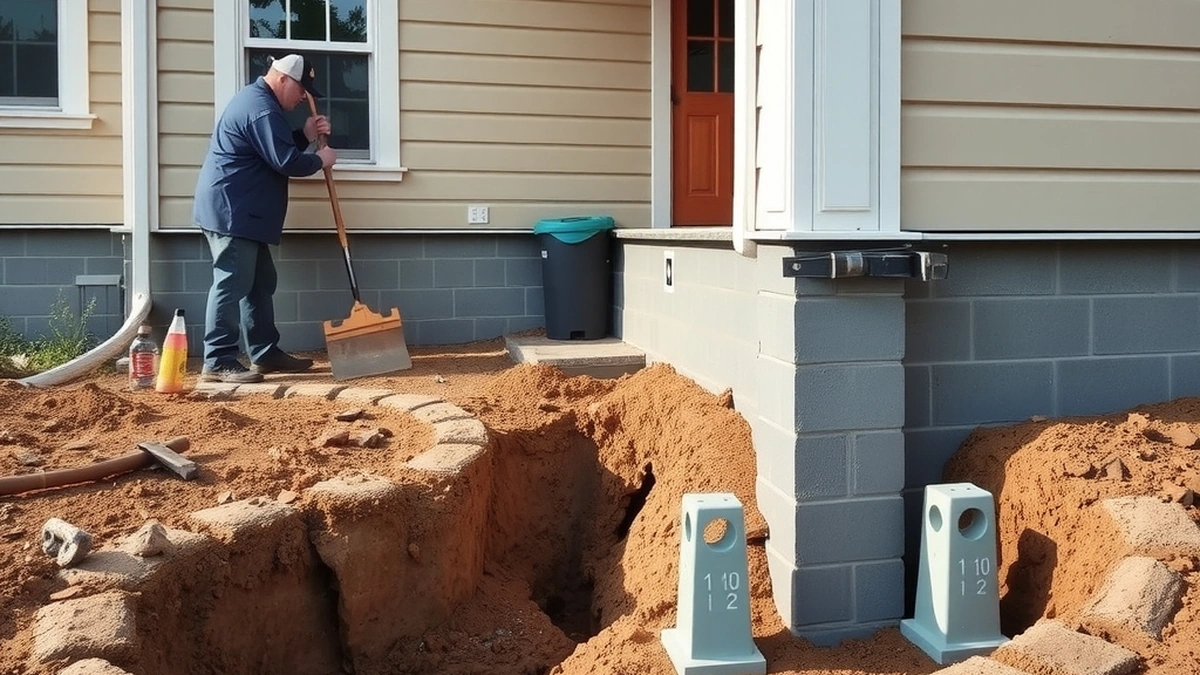
A foundation repair day is excavation, pier driving, lifting, and cleanup, usually starting at 7 a.m. and finishing by late afternoon. A one-wall pier job takes two to five days, and a full job runs $6,000 to $30,000.
- Crew arrival
- 7:00 - 8:00 a.m.
- Typical job length
- 2 - 5 days
- Noise level
- Hydraulic hammer and ram
- Dust control
- Water spray and plastic
- Full pier job
- $6,000 - $30,000
Some links on this page are affiliate links.If you buy through them we may earn a commission at no extra cost to you. We do not accept payment for rankings. Read the full disclosure.
A foundation repair day is mostly excavation and steel, not drama. Crews arrive between 7 and 8 a.m., mark the pier locations from the engineer’s plan, dig access trenches, and drive piers until they reach refusal. Lifting usually happens on the last day, and cleanup follows. A one-wall job takes two to five days.
The Day Starts With Layout
Before anything is dug, the foreman walks the plan. Pier locations are marked on the ground and checked against the elevation survey. Utilities are located, usually through the state one-call service, and the marks are compared with the plan. If a pier location sits on a water line or a sewer lateral, the location moves rather than the pipe.
This is also when the crew sets protection. Plywood goes down over walkways, plastic over basement windows, and a tarp over landscaping that cannot be avoided. A crew that skips this step will cost you more in restoration than the protection would have cost them.
Excavation and Pier Driving
Access trenches are typically 3 to 4 feet deep and wide enough for a person to work. Soil is stockpiled on tarps and backfilled at the end, or hauled away if it is contaminated or the site is tight. The footing is exposed, and a steel bracket is bolted to it.
Piers go down in sections. A hydraulic ram pushes each section until it reaches the design depth or refusal, which is the point where the pier stops advancing under load. The pressure reading at refusal is recorded, and the engineer’s design depth is compared with what the soil actually did.
| Stage | Typical time | What you will notice |
|---|---|---|
| Layout and protection | 1 to 2 hours | Marking paint, plywood, tarps |
| Excavation | 2 to 4 hours | Digging noise, soil piles |
| Pier driving | 3 to 6 hours | Rhythmic hydraulic ram, vibration |
| Lifting | 2 to 4 hours | Creaking, doors moving |
| Backfill and cleanup | 2 to 3 hours | Gravel, tamping, sweeping |
What the Lift Feels Like
Lifting is slow by design. The house is raised in increments of an eighth to a quarter inch, and the crew checks doors, windows, and plumbing between passes. A door that suddenly swings free is a good sign; a drain that starts leaking is a stop signal.
Inside, you will hear creaks and pops as the frame redistributes load. That is normal. What is not normal is a loud crack, a burst pipe, or a window that shatters. The crew should have a shutoff plan and a plumber on call if the scope includes interior lifting.
The Numbers Behind the Schedule
Permits typically take one to three weeks, and inspection scheduling adds one to two weeks. Those timelines run before the crew arrives, so the calendar from signature to start is often three to five weeks even though the physical work is short.
Cost scales with the pier count, not the days. A job with eight push piers at $2,000 each is:
8 × $2,000 = $16,000
That sits in the middle of the $6,000 to $30,000 full-job range. The days on site are a function of access and weather more than price.
Cleanup and What Comes After
Backfill is placed and compacted in lifts, and the surface is restored to rough grade. Gravel is placed where the trench meets a driveway or walk. The crew hoses down the wall and sweeps the work area, but fine dust inside the house is your cleanup, not theirs.
Interior cracks and paint are repaired after a settling period, usually one to two weeks. Waiting matters: patching drywall the day after a lift means patching it again when the frame finishes moving. The contractor should schedule that follow-up in the original contract, not as an extra.
A Realistic Expectation Table
| Day | Activity | Disruption |
|---|---|---|
| Before start | Permits, utility locate, materials delivery | None on site |
| Day 1 | Layout, protection, excavation | Noise, blocked access |
| Day 2 | Pier driving continues | Heavy vibration |
| Day 3 | Final piers, lifting, lock-off | Creaking, doors move |
| Day 4 | Backfill, grading, cleanup | Dust, equipment traffic |
| Two weeks later | Interior crack and paint repair | Minor |
How to Prepare
- Move vehicles off the driveway and clear a 10-foot working perimeter.
- Remove fragile items from walls on the side being lifted.
- Photograph cracks and door gaps before work starts, with a scale.
- Confirm the utility locate has been done and ask for the ticket number.
- Keep pets and children away from open trenches.
- Ask for the lift record and the pier refusal log before final payment.
What to Watch For
A crew that will not show you the engineer’s plan, will not record refusal depths, or wants full payment before the lift is a crew to avoid. A crew that protects the site, explains the sequence, and hands over a lift log is doing the job the way it should be done. Pay attention to how the foreman answers questions on day one; the same person manages the punch list on the last day, and the tone rarely changes.
For the cost context, read foundation repair cost, and if your house sits on beams rather than a slab, pier and beam leveling cost explains the different sequence. Homeowners comparing bids should also read what a fair quote contains before the first crew arrives.
Frequently asked questions
How long does foundation repair take?
A single-wall pier job usually takes two to five days. Larger jobs with interior work, drainage, and restoration run one to three weeks, and permits add one to three weeks before work starts.
Do I need to move out during foundation repair?
Most pier work happens outside the footprint and does not require moving out. Expect noise, vibration, and dust, and plan to be away during the loudest hours if you work from home.
Will the crew cut into my basement floor?
Only if interior piers or a sump pit are in scope. Exterior piers require trenches outside the wall, not floor cuts. Ask which is specified before the crew arrives.
How much dust does foundation repair create?
Exterior excavation creates soil dust that crews control with water spray and plastic sheeting. Interior work creates concrete dust, which needs a sealed barrier and negative air if the space is finished.
What time do crews start and finish?
Most crews arrive between 7 and 8 a.m. and leave by late afternoon. Concrete pours and lifting operations sometimes run longer, and the contractor should tell you the day before.
When can I use the house normally again?
You can use the house throughout most pier jobs. Interior repairs and painting wait until the lift is complete and the structure has had a week or two to settle into its new position.
Sources
Some links are affiliate links.If you buy through them we may earn a commission at no extra cost to you. We do not accept payment for rankings. Read the full disclosure.