How to repair foundation cracks
Repair methods for foundation cracks by location: poured walls, slabs, brick, and block, with injection steps and when a crack needs an engineer.
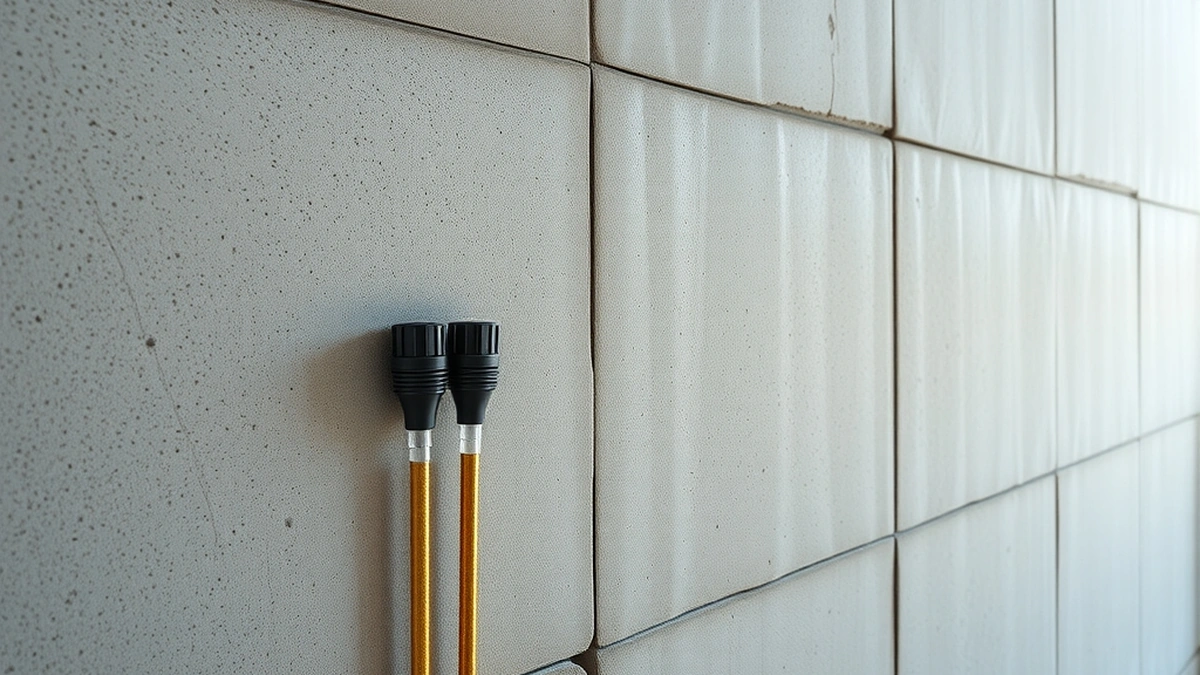
Repair foundation cracks by location and width: hairline cracks under 1/16 inch take a flexible sealant, poured wall cracks take epoxy or polyurethane injection, and slab cracks take a semi-rigid filler. Cracks at 1/8 inch or wider need an engineer first.
- Cosmetic crack
- 1/16 inch or less
- Monitor at
- 1/8 inch
- Injection repair
- Poured wall cracks
- Engineer inspection
- $400 - $1,500
- Slab lifting
- $3 - $12 per sq ft
Some links on this page are affiliate links.If you buy through them we may earn a commission at no extra cost to you. We do not accept payment for rankings. Read the full disclosure.
How to repair foundation cracks depends on where the crack is and how wide it is. A hairline crack at 1/16 inch or less in a poured wall can be sealed with a flexible filler, a vertical crack in a poured wall takes epoxy or polyurethane injection, and a slab crack takes a semi-rigid filler that keeps the edges from spalling. Any crack at 1/8 inch or wider needs a measurement history before repair.
Identify the crack by location and direction
The location tells you which repair method applies, and the direction tells you whether the crack is structural.
Vertical cracks in the middle of a poured wall are usually shrinkage cracks. They are often widest at the top and narrow toward the floor.
Diagonal cracks that step along mortar joints in a block or brick wall point to differential settlement at a corner. They widen toward the side that has dropped.
Horizontal cracks in a basement wall, usually a third of the way down, point to lateral soil pressure and inward bowing. Sealing one of those hides the symptom.
Cracks at the corner of a window or door opening are usually concentration cracks from a lintel or a lack of reinforcement, and they often recur after sealing unless the opening is addressed.
Repair methods by location
| Location | Crack type | Method | Notes |
|---|---|---|---|
| Poured wall | Vertical, dry | Epoxy injection | Restores stiffness across the crack |
| Poured wall | Vertical, leaking | Polyurethane injection | Flexible, seals active water |
| Poured wall | Horizontal | Wall anchor or strap | Restraint, not sealing |
| Slab | Random or map cracking | Semi-rigid filler | Keeps edges from spalling |
| Brick | Stair-step | Helical ties or stitching | Needs a structural diagnosis |
| Block | Stair-step | Injection plus reinforcement | Mortar joints are the weak plane |
Injection is the standard for poured walls because it fills the full depth of the crack rather than capping the surface. Epoxy is strong and rigid, and it is used where the crack is dry and the goal is to restore the wall’s stiffness. Polyurethane expands and stays flexible, and it is used where water is active.
Injecting a poured wall crack
Injection is a controlled process, and the preparation matters as much as the resin.
- Clean the crack with a wire brush and compressed air, and remove any loose concrete at the edges.
- Drill ports at an angle across the crack, spaced roughly 8 to 12 inches apart along its length.
- Flush the crack with water or air until the ports run clear.
- Seal the surface with an epoxy paste so the resin stays in the crack rather than running out.
- Inject from the lowest port upward, stopping when resin appears at the next port, then move up.
- Let the resin cure, cut the ports flush, and patch the surface.
A crack that is still moving will reopen beside the repair. That is why injection is paired with a cause fix: grading, downspouts, or drainage.
Sealing a slab crack
A slab crack is usually cosmetic unless there is vertical displacement. Clean the crack, widen it slightly into a keyway, and fill with a semi-rigid epoxy or polyurea filler. A flexible sealant alone lets the edges rock and spall under foot traffic.
If one side of the slab crack sits higher than the other, the slab has settled or heaved, and filling the crack is cosmetic until the slab is lifted. Slab lifting runs $3 to $12 per square foot; a 300-square-foot patio at $6 per square foot is 300 x $6 = $1,800.
For a floor inside the house, check the slope with a level before sealing. A floor that drops more than about an inch across a room points to a support problem, not a crack problem.
Brick and block cracks
Brick veneer cracks are usually a symptom of movement in the structure behind it. Stair-step cracks in a block wall follow the mortar joints because that is the weakest path through the wall.
Repair options are helical ties, which stitch the two sides of the crack together through the wall, and crack stitching with stainless reinforcement set into the mortar joints. Both are structural repairs. Painting over a stair-step crack in brick is not a repair, and it will reappear within a season.
Before any brick crack is stitched, the cause has to be identified. A corner that is still settling will crack the repaired joint again, and stitching will simply move the crack to the next weakest point.
When the crack is a symptom
Four conditions mean the crack is a symptom rather than the problem.
The crack is at 1/8 inch or wider, or it has grown since the last measurement. There is displacement across the crack when you run a straight edge over it. The wall is out of plumb by more than 2 inches. The crack comes with a sticking door, a sloping floor, or a gap at the ceiling line.
Any of those calls for an engineer. A structural engineer inspection typically costs $400 to $1,500 and produces a scope. From there, the repair is priced by the unit: push piers at $1,000 to $3,000 each, helical piers at $700 to $2,500 each, wall anchors at $500 to $1,500 each, and carbon fibre straps at $400 to $1,200 each.
Six push piers at $1,700 each is 6 x $1,700 = $10,200, plus the inspection. Four wall anchors at $900 each is 4 x $900 = $3,600 for a bowing wall.
Bottom line
Repair foundation cracks by matching the method to the location and width. Seal the hairline cracks, inject the poured wall cracks, fill the slab cracks, and stitch the masonry cracks only after the cause is known. For pricing on injection, see crack injection cost and epoxy versus polyurethane injection. For slab work, read slab cracks repair, and for a bowing wall, horizontal crack repair.
Frequently asked questions
What is the best way to repair a foundation crack?
Match the method to the wall: epoxy or polyurethane injection for poured walls, a semi-rigid filler for slabs, and helical ties or stitching for brick.
Can I repair foundation cracks myself?
You can seal a stable hairline crack at 1/16 inch or less, but injection and structural repairs need the right equipment and a diagnosis.
How wide is too wide for a foundation crack?
A crack at 1/8 inch or wider should be monitored and assessed by an engineer, especially if the two sides have moved out of plane.
Does crack injection stop water?
Polyurethane injection seals an active leak and stays flexible, while epoxy injection restores stiffness and is better for dry structural cracks.
Why do cracks come back after repair?
Cracks return when the cause is still active, usually water at the footing or ongoing settlement, so the drainage or support has to be fixed too.
How much does crack repair cost?
A homeowner sealant repair costs little in materials, while injection and structural repair are quoted per job after an inspection at $400 to $1,500.
Sources
Some links are affiliate links.If you buy through them we may earn a commission at no extra cost to you. We do not accept payment for rankings. Read the full disclosure.