Slab Cracks Repair: Seal, Lift, or Replace
Slab cracks are repaired by sealing at $3 to $8 per sq ft, injection at $400 to $1,200, or replacement. See which crack needs which fix.
Slab cracks repair costs $400 to $1,200 for injection, $3 to $8 per sq ft for lifting and void filling, or $8 to $18 per sq ft for replacement. The crack pattern and whether the slab is moving decide the method.
- Crack injection
- $400 - $1,200
- Lifting and filling
- $3 - $8 per sq ft
- Polyurethane foam
- $5 - $15 per sq ft
- Replacement
- $8 - $18 per sq ft
- Monitor at
- 1/8 inch
Some links on this page are affiliate links.If you buy through them we may earn a commission at no extra cost to you. We do not accept payment for rankings. Read the full disclosure.
Slab cracks repair depends on whether the slab is moving. A stable crack is sealed for a few hundred dollars. A crack over a void needs the void filled and the slab lifted at $3 to $8 per sq ft. A slab broken into moving pieces needs replacement at $8 to $18 per sq ft. The crack tells you which case you have if you measure it and watch it.
The Four Crack Types
Shrinkage cracks are narrow, random, and appear as the concrete cures. They are cosmetic and rarely need more than sealing. Settlement cracks are wider, often diagonal, and appear where the slab has lost support underneath.
Structural cracks run through the full thickness and may have a height difference across the two sides. Map cracking is a network of fine cracks that often signals a surface problem such as an alkali reaction or improper finishing.
Measuring the Crack
| Width | Classification | Typical repair |
|---|---|---|
| Under 1/16 inch | Hairline | Sealant or monitor |
| 1/16 to 1/8 inch | Minor | Flexible sealant |
| 1/8 to 1/4 inch | Moderate | Backer rod and sealant |
| Over 1/4 inch | Wide | Assess for lifting or replacement |
| Any width with offset | Structural | Investigate the cause |
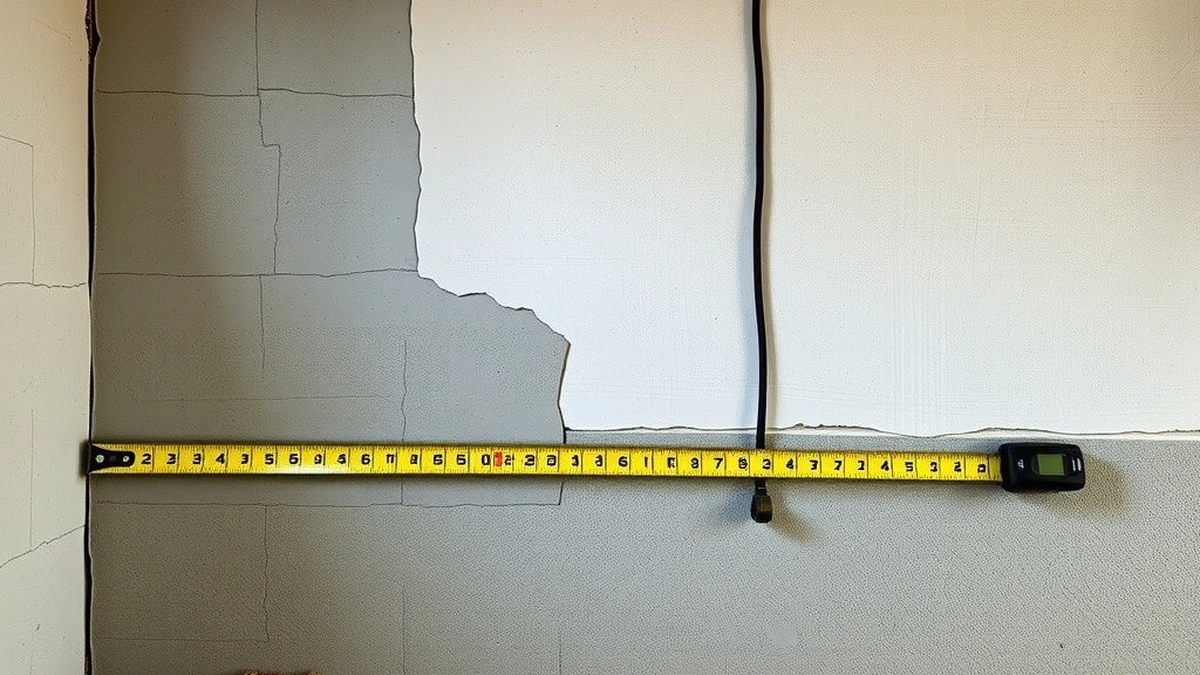
A crack with a vertical offset is more serious than a wider crack without one. The offset means the two sides have moved relative to each other, which is a support problem rather than a shrinkage problem. Run a finger or a straightedge across the crack; if it catches, there is an offset, and the slab needs more than sealant.
Sealing and Injection
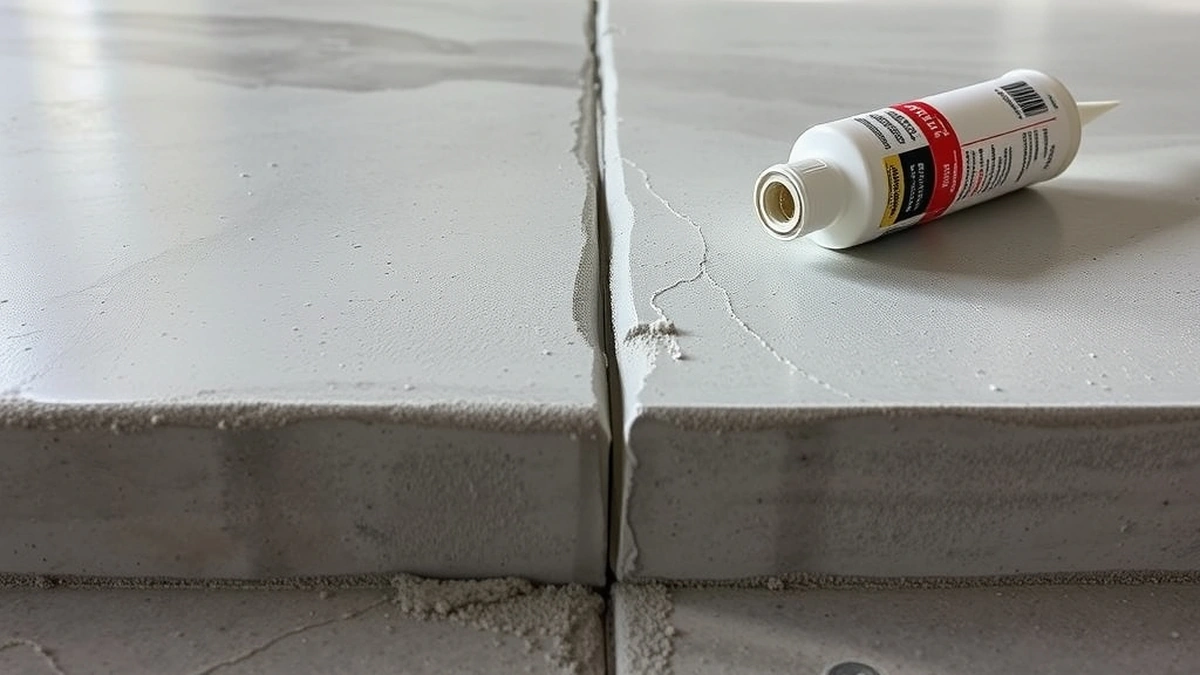
Surface sealing uses a flexible polyurethane or silicone sealant in a cleaned crack, often with a backer rod to control depth. It runs $3 to $8 per linear foot for small jobs and is a homeowner-level task for a driveway.
Injection uses epoxy or polyurethane resin under pressure and runs $400 to $1,200 per crack. Epoxy restores structural continuity in a dry crack; polyurethane foams and stays flexible in a wet one. Injection is the right repair for a crack that is stable but leaking.
Lifting and Void Filling
When the crack is caused by a void, filling the void and lifting the slab addresses the cause. Slurry costs $3 to $8 per sq ft and foam costs $5 to $15 per sq ft.
A 300 sq ft patio lifted with slurry at $6 per sq ft:
300 × $6 = $1,800
The same patio with foam at $12 per sq ft:
300 × $12 = $3,600
Foam costs more and weighs much less, which matters when the soil underneath is weak.
Replacement
Replacement is the answer when the slab can no longer act as a unit. It costs $8 to $18 per sq ft depending on thickness, reinforcement, and access, and it involves removing the old concrete, preparing the base, and placing new concrete with control joints.
A 400 sq ft driveway replaced at $12 per sq ft:
400 × $12 = $4,800
That is more than lifting but less than living with a slab that keeps cracking after every repair. Replacement also gives you the chance to improve what is underneath: a compacted base, a vapour barrier, and control joints that the original slab may have lacked.
The Repair Sequence
- Map the cracks on a sketch and record widths with dates.
- Tap-test for hollow areas that indicate a void.
- Check for vertical offset across each crack.
- Fix the water source that created the void or the settlement.
- Seal, inject, or lift according to the diagnosis.
- Cut control joints if the slab lacks them.
- Recheck after one freeze-thaw or wet-dry cycle.
Control Joints Matter
Most slab cracks appear where a control joint should have been. A control joint is a saw cut that gives the concrete a planned place to crack, and it is far cheaper than repairing random cracks later.
If a slab is being replaced or newly poured, insist on control joints at intervals of roughly 2 to 3 times the slab thickness in feet. A 4-inch slab wants joints every 8 to 12 feet. That single detail prevents most of the cracking a homeowner will otherwise be repairing in five years. The joints also need to be sealed after curing, because an open joint lets water reach the base and the base is what supports the slab. Sealing a joint costs a fraction of injecting a crack and a small fraction of replacing a slab.
When to Call a Contractor
Call one when a crack is wider than a quarter inch, when there is a vertical offset, when the slab sounds hollow, or when a repair has failed twice in the same place. Those signs point to a support problem rather than a surface problem, and the repair cost moves from hundreds to thousands.
Get two quotes and ask each contractor to explain the cause before the price. A contractor who says the crack needs sealing without looking underneath is quoting a surface repair for what may be a support problem, and the second crack will appear within a year.
For the slab context, read slab crack and concrete slab foundation repair. If the slab is part of the house foundation rather than flatwork, slab foundation repair covers the structural side.
Frequently asked questions
How much does slab crack repair cost?
Injection runs $400 to $1,200 per crack, lifting and void filling runs $3 to $8 per sq ft, and replacement runs $8 to $18 per sq ft depending on thickness and access.
Can I just fill a crack in my slab?
A stable crack can be sealed with a flexible sealant or injected with epoxy. A crack that is widening or has a height difference across it needs the cause addressed first.
What causes slab cracks?
Shrinkage during curing, settlement over a void, overload, tree roots, and missing control joints are the common causes. The pattern points to which one applies.
When should a slab be replaced instead of repaired?
When it is broken into several pieces that move independently, when the surface is deteriorating across a large area, or when the slab is too thin or under-reinforced for its use.
Do cracks in a garage floor matter?
Usually not structurally. A garage slab is not the house foundation, and most cracks are cosmetic. A crack with vertical displacement or a hollow sound underneath is worth investigating.
How wide is too wide for a slab crack?
A quarter inch is the usual threshold for sealing with a backer rod and sealant. Wider cracks, or cracks with displacement, need an assessment before sealing.
Sources
Some links are affiliate links.If you buy through them we may earn a commission at no extra cost to you. We do not accept payment for rankings. Read the full disclosure.