Crack Injection: Epoxy vs Polyurethane for Foundation.
Crack Injection: Epoxy vs Polyurethane for Foundation Cracks: practical numbers, costs, and trade-offs, written independently.
Epoxy is best for structural concrete cracks that need strength restoration; polyurethane is best for active water leaks and cracks that move. Measure width and movement first.
- Best for structural bonding
- Epoxy injection
- Best for water sealing
- Polyurethane injection
- Cosmetic crack threshold
- 1/16 inch wide
- Monitor crack threshold
- 1/8 inch wide
- Typical engineer inspection
- $400–$1,500
Some links on this page are affiliate links.If you buy through them we may earn a commission at no extra cost to you. We do not accept payment for rankings. Read the full disclosure.
Epoxy and polyurethane are the two main resins used for crack injection, but they are not interchangeable. Epoxy bonds concrete and restores structural strength across a crack. Polyurethane expands to seal water and tolerates ongoing movement. The right choice depends on whether the crack is structural, leaking, or both, which can only be determined after measuring crack width and displacement.
Measure the Crack Before Choosing Resin
Start with a crack gauge or ruler. A crack at or below 1/16 inch is typically cosmetic. A crack at or above 1/8 inch should be watched and may indicate movement. If the crack shows displacement or exceeds 1/8 inch, schedule an engineer inspection, which typically costs $400–$1,500 and has a lead time of 1–2 weeks. Do not inject a structural crack without knowing whether the foundation is still moving. Injection seals the symptom; it does not stop settlement or soil pressure.
Record the following before calling a contractor:
- Crack width in inches
- Crack length in linear feet
- Whether water is present
- Whether the crack is horizontal, vertical, diagonal, or stepped
- Any visible wall movement or sticking doors and windows
These numbers determine whether injection is appropriate or whether the foundation needs piers, wall anchors, or another structural repair. For context, pier installations typically range from $6,000–$30,000 per job, while carbon fiber straps cost $400–$1,200 each and wall anchors cost $500–$1,500 each.
Epoxy Injection: Structural Bonding
Epoxy is a two-part resin that cures hard and bonds concrete surfaces together. It is the standard choice when the goal is to restore load transfer across a cracked foundation wall or slab. Because epoxy does not flex, it works best on cracks that are stable or have been stabilized by another repair.
Typical epoxy injection characteristics:
- High compressive strength after cure
- Low viscosity, allowing it to penetrate narrow cracks
- Poor tolerance for wet or actively leaking cracks
- Little to no flexibility after curing
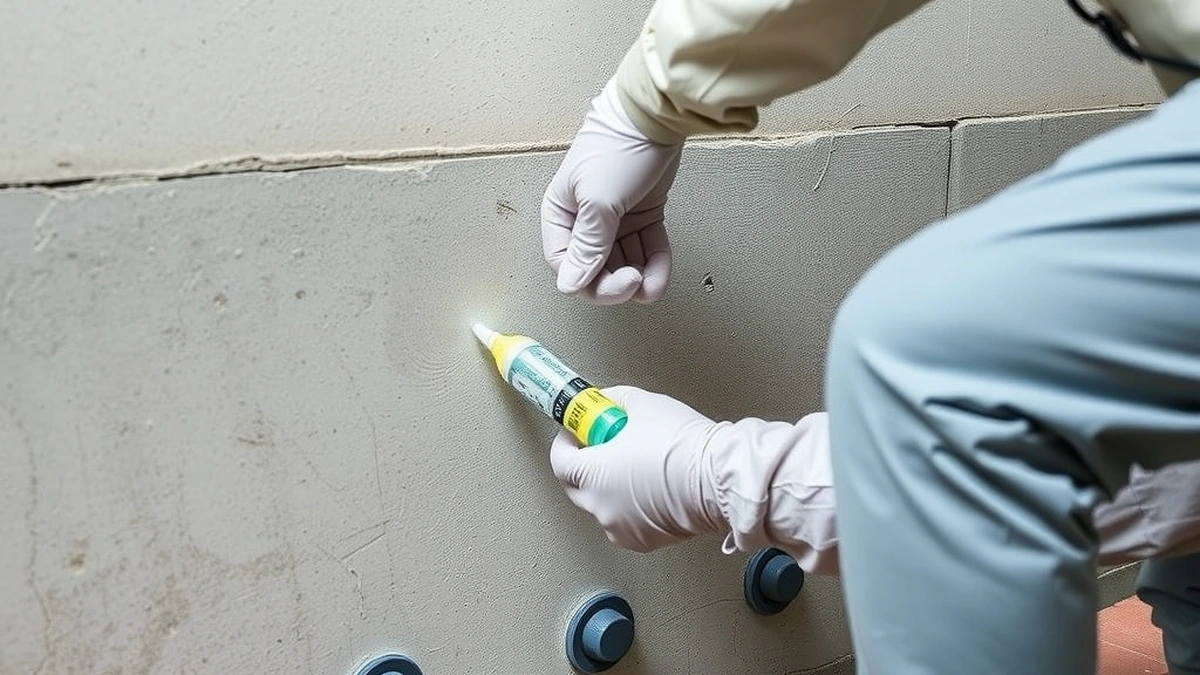
If a foundation wall has a vertical crack from shrinkage and no water intrusion, epoxy can restore the monolithic behavior of the concrete. The process involves cleaning the crack, installing injection ports along the length, sealing the surface, and pumping epoxy under pressure until the crack is full.
Costs for epoxy injection vary by region, crack length, and contractor, so treat all figures as estimates. A short residential crack might cost a few hundred dollars, while a long structural crack requiring multiple ports and full-depth injection can run into the low thousands. Always request a written scope based on measured crack length, not a flat price.
Polyurethane Injection: Water Sealing and Movement
Polyurethane is a foam resin that reacts with water and expands to fill the crack and surrounding voids. It remains flexible after curing, which makes it suitable for cracks that continue to move slightly or for basement walls with active water leaks.
Typical polyurethane injection characteristics:
- Expands on contact with water
- Flexible after cure, accommodating minor thermal or settlement movement
- Tolerates damp or actively leaking conditions
- Does not restore structural strength comparable to epoxy
Polyurethane is commonly used for basement wall cracks where the priority is stopping water entry rather than rebuilding structural capacity. If a crack leaks during rain but shows no structural movement, polyurethane is often the practical choice. If the crack is both structural and leaking, some contractors use a hybrid approach: epoxy for structural bonding followed by polyurethane for water sealing, or vice versa, depending on the sequence and site conditions.
Because polyurethane expands, it can fill irregular voids that epoxy might bridge over. However, expansion also means less control over final resin distribution inside the wall, which is why injection pressure and port spacing matter.
Side-by-Side Comparison
| Factor | Epoxy Injection | Polyurethane Injection |
|---|---|---|
| Primary purpose | Structural bonding | Water sealing and flexibility |
| Best crack condition | Dry, stable, structural | Wet, leaking, or moving |
| Cured hardness | Rigid, high strength | Flexible, rubber-like foam |
| Water tolerance | Poor; needs dry crack | Good; reacts with water |
| Load restoration | Yes | No |
| Typical use case | Foundation wall structural crack | Basement wall water leak |
| Estimated cost basis | Per linear foot or per crack | Per linear foot or per crack |
All cost figures are estimates and vary by local labor rates, access conditions, and crack complexity.
When Injection Is Not Enough
Injection treats the crack, not necessarily the cause. If the crack results from soil settlement, expansive clay, poor drainage, or hydrostatic pressure, injecting resin may crack again or push water to another section of the wall.
Signs that injection alone is likely insufficient:
- Crack width increasing over time
- Wall movement beyond 2 inches
- Sticking windows and doors across multiple rooms
- Sloped floors or gaps between walls and ceilings
- Recurring leaks after prior injection
In those cases, the foundation may need piers or wall stabilization. Push piers cost approximately $1,000–$3,000 each, and helical piers cost approximately $700–$2,500 each. A full pier job often runs $6,000–$30,000. Carbon fiber straps at $400–$1,200 each or wall anchors at $500–$1,500 each may be appropriate for bowing walls. Slab lifting alternatives include mudjacking at $3–$8 per square foot and poly foam at $5–$15 per square foot. These are separate scopes from crack injection and should be priced independently.
The Injection Process
Both epoxy and polyurethane injection follow a similar field procedure:
- Clean the crack surface to remove dust, efflorescence, and old sealant.
- Drill angled holes or install surface ports along the crack at regular intervals.
- Seal the crack surface between ports so resin cannot escape.
- Inject resin at the lowest port until it appears at the next port, then move upward.
- Remove ports and patch the surface after cure.
Port spacing and injection pressure depend on crack width, wall thickness, and resin viscosity. Narrow cracks require lower viscosity and closer port spacing. Wider cracks may need more resin volume and higher pressure, but excessive pressure can damage thin foundation walls.
Warranty and Long-Term Expectations
Injection warranties vary by contractor and manufacturer. Some offer limited warranties on the material and labor, often ranging from one to several years. Transfer fees, if the home is sold, typically run $100–$500. Ask whether the warranty covers water leakage, crack reopening, or both, and whether it is transferable.
Unlike pier warranties, which are often described as lifetime and transferable, injection warranties are generally shorter because they address a localized crack rather than overall foundation support. A successful injection can last many years, but it is not a guarantee against future foundation movement.
Choosing a Contractor
Request a written estimate that lists:
- Resin type: epoxy, polyurethane, or both
- Crack length and width in inches
- Number of injection ports
- Estimated gallons of resin
- Surface patching and port removal
- Warranty terms and transfer fees
Avoid contractors who quote a single price without measuring the crack or who recommend injection for every foundation problem. If the crack is structural, an engineer inspection should precede injection. For cost context on related repairs, review foundation crack repair cost, pier and beam foundation repair cost, and carbon fiber foundation repair cost.
Injection is a targeted repair, not a whole-foundation solution. Measure first, select the resin second, and price third. Epoxy restores strength; polyurethane stops water. Match the material to the crack condition, and confirm the foundation is stable before injecting either one.
Next, compare foundation repair cost, pier and beam foundation repair cost, foundation crack repair cost before you commit.
Frequently asked questions
What is crack injection?
Crack injection is a repair method where liquid resin is pumped under pressure into a concrete foundation crack to fill voids, bond concrete, or stop water entry.
When should I use epoxy instead of polyurethane?
Use epoxy when the crack is structural, relatively static, and you need to restore concrete strength and load transfer across the break.
When should I use polyurethane instead of epoxy?
Use polyurethane when water is actively leaking through the crack or the crack continues to move, since the foam flexes and tolerates moisture.
Can polyurethane fix structural cracks?
Polyurethane is generally not used to restore structural strength; it seals and flexes but does not bond concrete the way epoxy does.
How wide is too wide for injection alone?
There is no universal width limit, but cracks wider than 1/8 inch or with ongoing movement usually need an engineer inspection before injection.
Does crack injection require a permit?
Permit requirements vary by city and county and typically take 1–3 weeks; check with your local building department before starting work.
Sources
Some links are affiliate links.If you buy through them we may earn a commission at no extra cost to you. We do not accept payment for rankings. Read the full disclosure.