Sump Pump Problems and Limits: A Diagnostic Guide
Sump pump problems include stuck floats, short cycling, no discharge, and power loss. See how to diagnose each and what repairs cost.
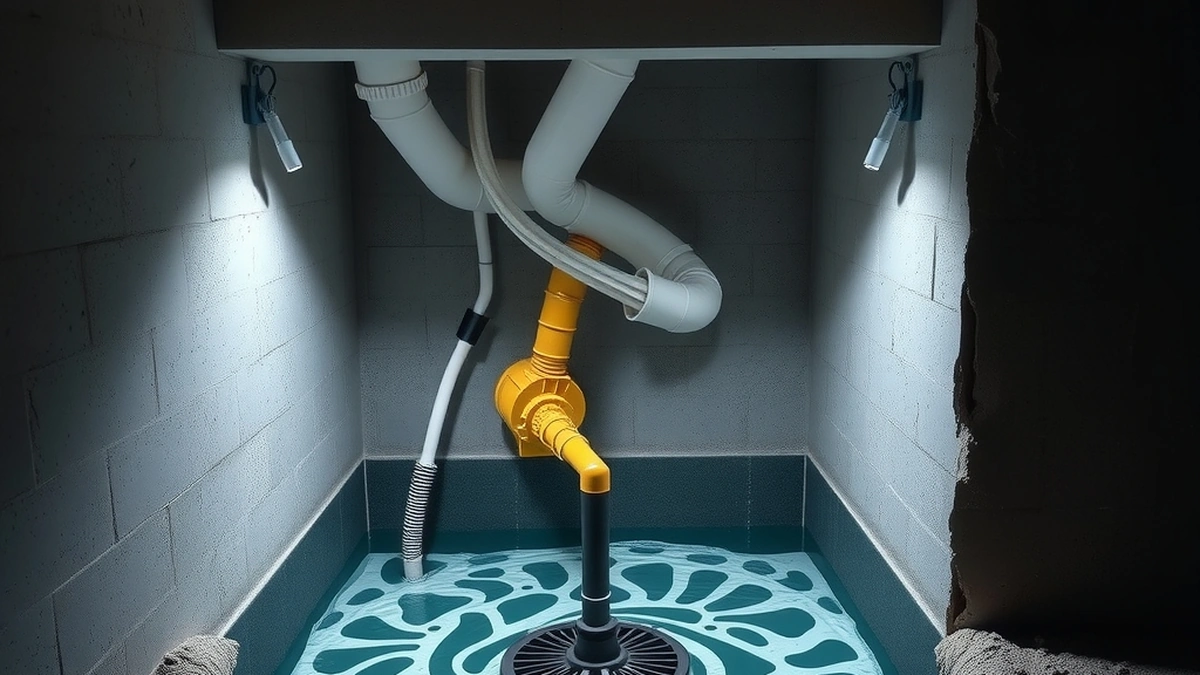
Sump pump problems include a stuck float, a failed check valve, a blocked discharge, short cycling, and power loss during storms. Repairs run $50 to $800; a replacement install runs $600 to $3,000.
- Replacement pump
- $300 - $800
- Float switch
- $50 - $200
- Check valve
- $30 - $150
- Full install
- $600 - $3,000
- Backup
- $400 - $1,200
Some links on this page are affiliate links.If you buy through them we may earn a commission at no extra cost to you. We do not accept payment for rankings. Read the full disclosure.
Sump pump problems are mostly switch and valve problems. The motor is reliable; the float that turns it on, the check valve that keeps water from running back, and the discharge that carries it away are the parts that fail. Diagnosing which one is which takes a bucket of water and ten minutes.
The Pump Will Not Start
Lift the float by hand. If the pump starts, the float is stuck or the switch is out of adjustment. If it does not, check the breaker, the outlet, and the cord.
| Test | Result | Meaning |
|---|---|---|
| Lift float | Pump runs | Float or switch adjustment |
| Lift float | Nothing | Power or motor |
| Check breaker | Tripped | Reset and retest |
| Check outlet | No power | Circuit problem |
A float that rests against the pit wall is the most common cause. The pit should be wide enough to give the float clear travel, and a piece of rigid foam or a brick against the wall can be enough to prevent it.
The Pump Runs Constantly
A pump that never stops is either getting more water than it can handle or is pumping the same water twice, and the difference is visible in the discharge. The check valve is the first suspect.
If the valve is stuck open or missing, water in the discharge line drains back into the pit after each cycle, and the pump restarts immediately. The fix is a $30 to $150 valve, and it is the cheapest repair in this article. A pump that is replaced because of a stuck valve is a pump that was replaced for no reason.
Short Cycling
| Cycle length | Likely cause |
|---|---|
| Seconds | Check valve or float set too low |
| Under a minute | Pit too small for the inflow |
| Minutes | Normal for a wet season |
| Continuous | Inflow exceeds capacity |
A pump that cycles every few seconds will burn out its motor, and the motor is the expensive part. The fix is usually a check valve or a float adjustment, not a new pump.
No Water Moves
A pump that runs but moves no water has a blocked intake, a frozen line, or an impeller full of debris. The motor will overheat if it keeps running dry, and a burned motor is a replacement rather than a repair.
Shut the pump off, pull it from the pit, and inspect the intake screen. Unplug it first, because a pump that starts with your hand in the pit is a serious injury. In winter, check the discharge for ice. A freeze-resistant termination prevents the problem from returning.
A Costed Repair
A pump that fails during a storm. Replacement pump at $350 and a check valve at $90:
$350 + $90 = $440
Add labor at $250:
$690
That sits in the $300 to $800 replacement band. A full new pit and pump would be $1,200 to $2,200.
The Limits
A sump pump removes water that reaches the pit. It does not stop water from entering the basement elsewhere, and it does not work without power, which is the argument for a backup on a finished basement. It also cannot keep up with a water table that rises faster than the pump’s rated flow, which is why the inflow measurement matters more than the horsepower.
Sizing matters more than brand, and the number on the box is not the number in the pit. A pump rated at 1,800 gallons per hour at 10 feet of head is not enough if the pit fills at 2,500, and the rating is at the head, not at the bottom of the pit. The rating is at a head height, and the head height is the depth of the discharge plus the run. A pump that is perfect for a shallow basement may be marginal in a deep one.
The Diagnostic Sequence
- Lift the float and listen for the pump.
- Check the breaker and the outlet.
- Confirm the discharge is clear and unfrozen.
- Test the check valve by watching for backflow.
- Measure the cycle time.
- Clean the pit and the intake screen.
- Replace the failed component, not the whole system.
Test the pump twice a year by pouring a bucket of water into the pit. Listen for the check valve to close and confirm the pump shuts off when the float drops.
Clean the pit annually. Silt and debris clog the intake and shorten the pump’s life. A covered pit slows the process, and a lid also keeps pests and toys out.
Check the discharge in late fall before the first freeze. A line that holds water will split, and the failure shows up as water at the wall rather than at the pump.
What to Ask a Contractor
Ask what failed and why, and ask for the part price separately from the labor. Ask whether the pump is sized for the inflow and the head. Ask whether a backup is warranted for the basement, and ask for the discharge route to be checked while the system is open.
For the method detail, read how sump pump works and what sump pump costs. If the pit fills in dry weather, water in the crawl space covers the source.
Frequently asked questions
Why is my sump pump not turning on?
A stuck float, a tripped breaker, a failed switch, or a disconnected power cord are the common causes. Test by lifting the float manually.
Why does my sump pump run constantly?
A float set too low, a failed check valve letting water back in, or a groundwater source feeding the pit faster than the pump can clear it.
What causes short cycling?
A check valve that is stuck open or missing lets water drain back into the pit, so the pump restarts immediately after shutting off.
How long does a sump pump last?
Seven to ten years in normal service. A pump that runs frequently wears out faster and should be checked annually.
Should I get a battery backup?
Yes on a finished basement or where the pit runs often. Power failures usually arrive with the storms that fill the pit.
Can I replace a sump pump myself?
Replacing a pump in an existing pit is within reach for a careful homeowner. Cutting a new pit or adding a circuit is contractor work.
Sources
Some links are affiliate links.If you buy through them we may earn a commission at no extra cost to you. We do not accept payment for rankings. Read the full disclosure.