How a Sump Pump Works: Float, Pit, Check Valve
A sump pump sits in a pit, switches on as water rises, and pushes it outside. See the float, the check valve, and the discharge.
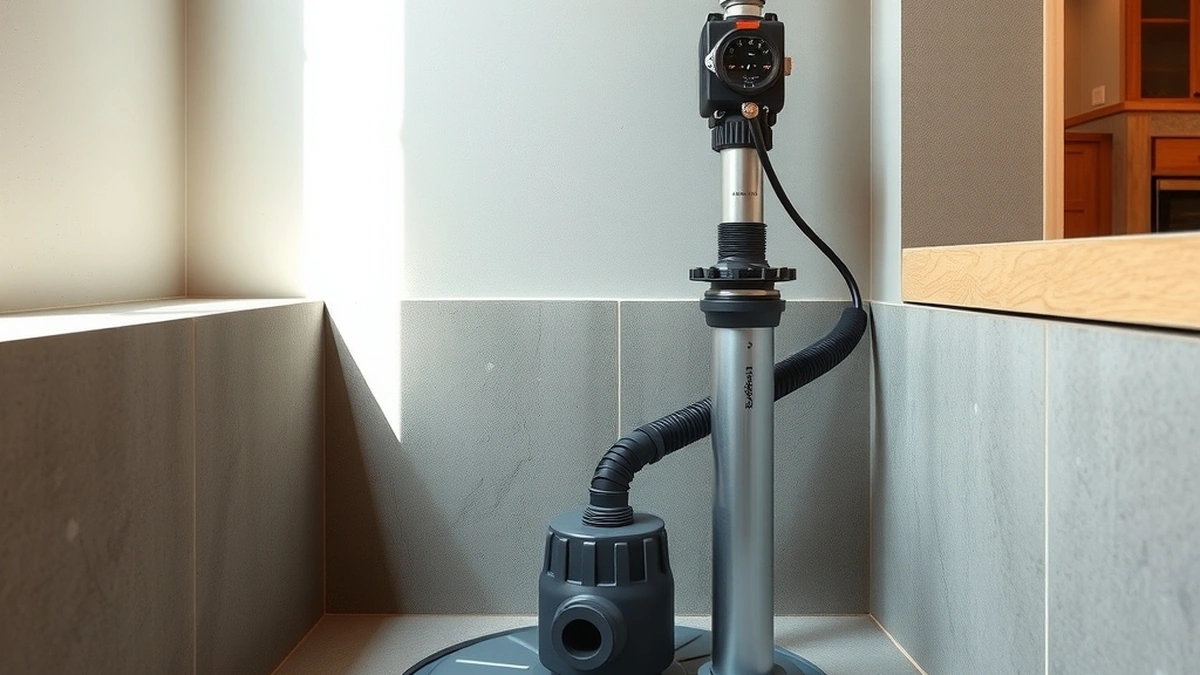
A sump pump works by collecting water in a pit, switching on when a float rises, and pushing the water through a discharge line and check valve to a point outside the foundation. Installed cost runs $600 to $3,000.
- Installed cost
- $600 - $3,000
- Pit depth
- 24 - 30 inches
- Pump capacity
- 1,800 - 3,000 gallons per hour
- Check valve
- Prevents backflow
- Battery backup
- $400 - $1,200
Some links on this page are affiliate links.If you buy through them we may earn a commission at no extra cost to you. We do not accept payment for rankings. Read the full disclosure.
A sump pump works by waiting. Water collects in a pit at the low point of the basement, a float rises with the level, and a switch starts the pump. The pump pushes the water up a discharge line and out of the house. Most of the time it does nothing, and the day it stops doing nothing is the day you notice it.
The Pit
The pit is a lined basin set into the lowest part of the basement floor or crawl space. It is typically 18 to 24 inches across and 24 to 30 inches deep, with perforations or gravel around it so water can enter.
The pit has to be deep enough for the pump to sit below the floor and for the float to have travel. A shallow pit short-cycles the pump, which wears it out. A pit that is not lined fills with soil and debris and clogs the intake.
The Float Switch
The float is the control. As water rises, the float rises, and at a set level it closes the switch and starts the pump. When the level drops, the float falls and the pump stops.
There are three common designs: a tethered float that hangs from the pump, a vertical float on a rod, and a diaphragm switch built into the pump base. The tethered float is the most common and the most prone to tangling against the pit wall, which is why the pit should be wide enough to give it clearance. A float that rests against the wall can stick in the on position and burn out the pump, or stick off and let the basement flood.
The Pump
The pump itself is a centrifugal unit with an impeller that moves water up the discharge. Submersible pumps sit in the pit and are cooled by the water. Pedestal pumps sit above the pit with the motor out of the water, and they are louder but easier to service.
Cast iron housings last longer than plastic, and a cast iron impeller handles small debris better. A plastic pump is fine for occasional use but wears faster in a pit that runs often. A pedestal pump is a reasonable choice where the pit is shallow or the homeowner wants to service the switch without reaching into the water.
Sizing the Pump
Pumps are rated by flow at a head height, not by horsepower alone. A one-third horsepower pump might move 2,500 gallons per hour at 5 feet of lift and 1,500 at 10 feet, and the difference matters in a deep basement.
Estimate the inflow by watching the pit during a storm. If it fills 12 inches in a minute, that is roughly 30 gallons per minute, and the pump needs to exceed that at the actual head. A pump that is undersized runs continuously and never catches up. A pump that is oversized short-cycles, which is also hard on the motor. The goal is a pump that runs for 10 to 30 seconds per cycle, not one that switches every two seconds.
The Check Valve and Discharge
| Component | Function | Failure symptom |
|---|---|---|
| Check valve | Stops backflow | Pump cycles repeatedly |
| Discharge pipe | Carries water out | Water sprays in the pit |
| Freeze protection | Drains the line | Line splits in winter |
| Outlet | Releases water away | Water returns to the wall |
The check valve sits just above the pump and keeps water in the discharge line from running back into the pit. It also has a small drain hole in some designs so the line can empty after each cycle in freezing weather. Without it, the pump restarts every time the water drains back, which burns out the motor.
A Costed Example
A 1,000 sq ft basement with no pit:
Pit and liner: $700 Pump: $350 Discharge and check valve: $300 Electrical: $450 Labor: $600
Total: $2,400, which sits inside the $600 to $3,000 band for a complete installation.
The Installation Sequence
- Confirm the low point and check for post-tension cables.
- Cut and excavate the pit, then set the liner in gravel.
- Install the pump with clear float travel.
- Add the check valve and run the discharge.
- Wire a dedicated GFCI circuit.
- Test with water and confirm the shutoff level.
Maintenance
Test the pump twice a year by pouring a bucket of water into the pit. Listen for the check valve to close and confirm the pump shuts off when the float drops. Clean debris from the pit annually, and check the discharge outlet for blockages.
A pump that runs constantly in dry weather has a stuck float or a water source feeding the pit. A pump that never runs in wet weather has a failed switch. A pump that runs and moves no water has a blocked intake or a frozen line, and the motor will overheat if it keeps running dry. Both are worth investigating before the next storm, and both are cheap to fix compared with the damage a failed pump does during one.
For the cost detail, read what sump pump costs and sump pump installation cost. If the basement is wet across the floor rather than at one point, basement waterproofing how it works covers the wider system.
Frequently asked questions
How does a sump pump work?
Water drains into a pit, a float rises with the level, and a switch turns on the pump. The pump pushes water through a discharge line and a check valve to a point outside the house.
How much does a sump pump cost installed?
A complete installation runs $600 to $3,000. A replacement pump in an existing pit runs $300 to $800.
Why does a sump pump need a check valve?
The check valve stops water in the discharge line from flowing back into the pit when the pump shuts off, which would make the pump cycle repeatedly.
How often should a sump pump run?
It depends on the water. A pump that runs continuously in dry weather suggests a stuck float or a plumbing leak feeding the pit.
What size sump pump do I need?
Sizing follows inflow and head height. Most basements under 2,000 sq ft use a one-third horsepower pump rated around 1,800 to 3,000 gallons per hour at 8 to 10 feet.
Does a sump pump prevent basement flooding?
It removes water that reaches the pit. It does not stop water from entering the basement elsewhere, and it does not work in a power outage without a backup.
Sources
Some links are affiliate links.If you buy through them we may earn a commission at no extra cost to you. We do not accept payment for rankings. Read the full disclosure.