Sump Pump Installation Cost: Pit, Pump, and Discharge
A sump pump install runs $600 to $3,000, split between the pit, the pump, the discharge line, and the electrical work. See the line items.
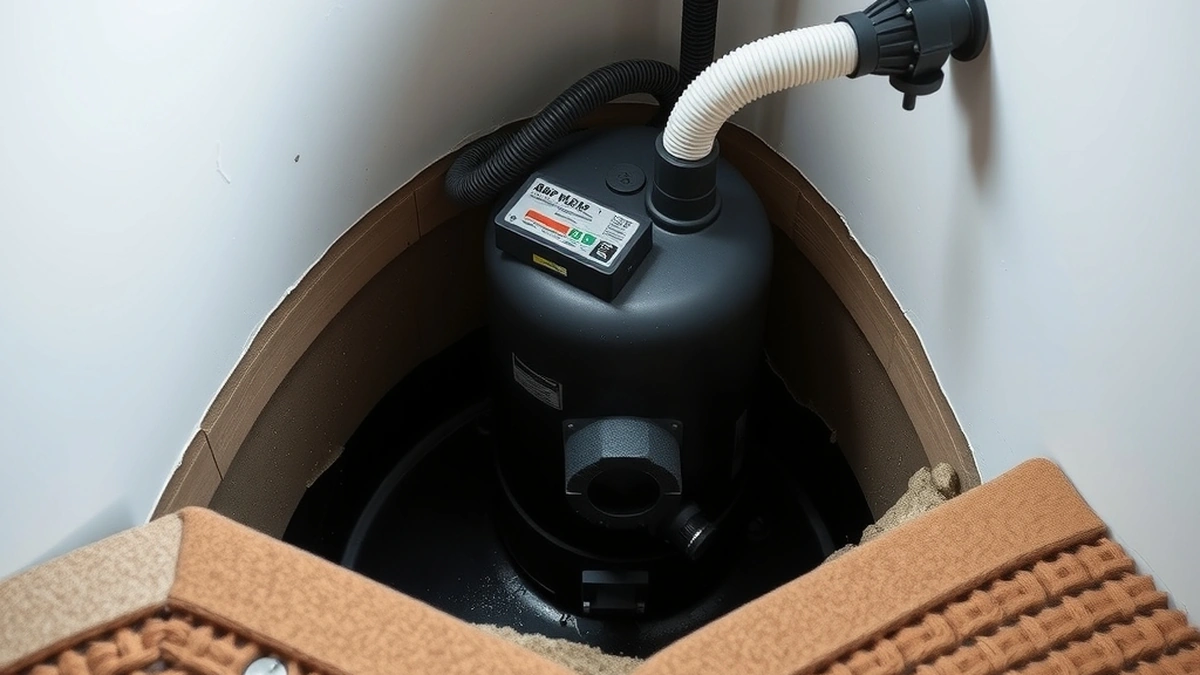
Sump pump installation costs $600 to $3,000 installed. A replacement pump in an existing pit runs $300 to $800, while a new pit, liner, discharge line, and electrical outlet push the job toward $3,000.
- Replacement pump only
- $300 - $800
- New pit and pump
- $1,200 - $2,200
- Full install with discharge
- $2,000 - $3,000
- Battery backup
- $400 - $1,200
- Typical crawl job
- $3 - $8 per sq ft
Some links on this page are affiliate links.If you buy through them we may earn a commission at no extra cost to you. We do not accept payment for rankings. Read the full disclosure.
Sump pump installation costs $600 to $3,000, and the pump itself is rarely the expensive part. On a new installation, the pit, liner, discharge line, check valve, and electrical circuit usually account for more than half the invoice. Replacing a pump in a pit that already exists is a $300 to $800 job by comparison.
What the Job Includes
A sump pump installation is the creation of a collection point below the floor slab and the plumbing needed to lift that water outside the building. The pit is a lined basin set into the lowest part of the basement or crawl space. The pump sits in the pit, a float switch turns it on as water rises, and a discharge line carries water up and out through the rim joist or the wall.
A complete job has five parts: the pit, the liner, the pump, the discharge assembly, and power. Quotes that mention only the pump are quoting a replacement, not an installation, and the totals are not comparable.
Line-Item Pricing
| Item | Typical cost | Notes |
|---|---|---|
| Submersible pump | $150 - $500 | Cast iron lasts longer than plastic |
| Pit and liner | $300 - $900 | Cutting a slab adds labor |
| Discharge line and fittings | $150 - $450 | Includes check valve and freeze protection |
| Electrical circuit | $250 - $600 | Dedicated GFCI required in most areas |
| Labor | $300 - $800 | Half a day to a full day |
| Battery backup | $400 - $1,200 | Optional but common on finished basements |
Adding the middle of each range gives a realistic installed total:
$325 + $600 + $300 + $425 + $550 = $2,200
That matches the $600 to $3,000 band. A replacement pump in an existing pit skips four of the six lines, which is why it costs so much less.
When the Pit Does Not Exist
Cutting a new pit is the part that changes the job. The contractor saw-cuts a square through the slab, excavates 24 to 30 inches down, sets a perforated liner, and beds it in gravel so water can enter. On a post-tension slab, cutting is a structural question and requires a scan and often an engineer’s approval before anyone touches the floor.
If the slab is post-tensioned, do not let a contractor cut it without a cable scan. The tendons are under high tension, and a cut cable is a serious injury risk and an expensive repair. The scan typically adds $300 to $700 and is worth every dollar.
Discharge and Freeze Protection
The discharge line is where many installations fail. Water must leave the building and land at least 4 to 6 feet from the foundation, on ground that slopes away. A line that dumps at the wall simply returns the water to the same soil the pump is trying to dry.
In cold climates the line needs a freeze-resistant termination. A common solution is a 45-degree elbow that lets the last section drain back into the pit after each cycle, so no water sits in the pipe to freeze. Ask the installer to show you the termination before the line is buried.
Pump Sizing Arithmetic
Pumps are rated in gallons per hour at a given head height. A typical basement needs 1,800 to 3,000 gallons per hour at 8 to 10 feet of lift. Sizing follows the inflow, not the floor area, but a rough rule for a standard 1,000 to 2,000 sq ft basement is a one-third horsepower pump.
If the pit fills 12 inches in 60 seconds during a storm, that is roughly 30 gallons per minute, or 1,800 gallons per hour, and a one-third horsepower unit at that head is marginal. The honest fix is a half horsepower pump plus a backup, not a bigger pit.
Comparing Options
| Option | Installed cost | Best for |
|---|---|---|
| Replacement pump | $300 - $800 | Existing pit, working discharge |
| New pit and pump | $1,200 - $2,200 | No pit, active water |
| Full install plus backup | $2,400 - $3,000 | Finished basement, storm outages |
A battery backup is not a luxury on a finished basement. Power failures cluster around the same storms that fill the pit, and a backup that runs 6 to 8 hours covers the typical outage. At $400 to $1,200 it is cheaper than one inch of water across 800 sq ft of flooring.
The Installation Sequence
- Confirm the low point of the slab and check for post-tension cables before any cutting.
- Cut and excavate the pit, then set and bed the liner in washed gravel.
- Install the pump, check valve, and float so the switch has clear travel.
- Run the discharge line to a legal termination point with freeze protection.
- Wire a dedicated GFCI circuit and test the pump with water before backfilling.
- Label the breaker and leave the pump manual with the homeowner.
Verifying the Work
Run the pump with a hose before the contractor leaves. Watch the float rise, listen for the check valve to close, and confirm water lands where it should. A pump that short-cycles every few seconds has a float set too low or a pit that is filling from an unsealed floor drain.
For the surrounding work, read foundation drainage cost and french drain versus sump pump before deciding which system carries the water. If the basement is damp rather than wet, basement waterproofing methods covers the sealing side of the problem, and crawl space encapsulation cost covers the vapor side.
Frequently asked questions
How much does it cost to install a sump pump?
A complete installation runs $600 to $3,000. Replacing a pump in an existing pit is the cheapest version at $300 to $800, and a new pit with discharge and electrical work is the most expensive.
Does a sump pump need a dedicated electrical circuit?
Most codes require a dedicated GFCI-protected circuit for a permanently wired pump. If no outlet exists near the pit, adding one typically adds $250 to $600 to the job.
Where should the discharge line run?
It should carry water at least 4 to 6 feet from the foundation and away from the slope of the lot, and it must not discharge onto a neighbor's property or into a sanitary sewer where that is prohibited.
How long does a sump pump last?
A cast iron submersible pump typically lasts 7 to 10 years in normal service. Pumps that run constantly in wet soil wear out faster and should be checked annually.
Do I need a battery backup?
If your basement is finished or the pit runs often during storms, a battery backup at $400 to $1,200 protects against the power outages that usually accompany the heaviest rain.
Can I install a sump pump myself?
Replacing a pump in an existing pit is within reach for a careful homeowner. Cutting a new pit through a slab, running electrical, and routing discharge is work for a licensed contractor.
Sources
Some links are affiliate links.If you buy through them we may earn a commission at no extra cost to you. We do not accept payment for rankings. Read the full disclosure.