French Drain vs Sump Pump: Which Keeps Water Out
Compare French drains and sump pumps for foundation water management, including how each works, typical costs, and when to use both.
A French drain moves groundwater away from the foundation passively; a sump pump actively removes water that has already collected. Many homes use both.
- French drain primary role
- Intercepts and redirects subsurface water away from foundation
- Sump pump primary role
- Collects and discharges water from a sump basin
- Power requirement
- French drain: none; Sump pump: electricity
- Typical installation cost
- French drain: $2,000–$6,000; Sump pump: $600–$2,500
Some links on this page are affiliate links.If you buy through them we may earn a commission at no extra cost to you. We do not accept payment for rankings. Read the full disclosure.
A French drain and a sump pump solve different halves of the same water problem. A French drain collects groundwater before it reaches the foundation and carries it away by gravity. A sump pump removes water that has already collected in a basin and pushes it outside. The right choice depends on where the water enters, whether gravity can move it, and how much risk the homeowner can tolerate.
How a French Drain Works
A French drain is a passive subsurface drainage system. It consists of a perforated pipe surrounded by gravel, usually wrapped in filter fabric, installed in a trench that slopes away from the foundation. Water enters the pipe through the gravel, follows the slope, and exits at a daylight outlet or storm connection.
Because it has no moving parts, a French drain does not require electricity. Its performance depends on trench depth, pipe diameter, gravel quality, and sustained slope. A typical residential trench runs 18 to 24 inches wide and 18 to 36 inches deep, though depth varies with frost line and bearing soil.
Installation cost is commonly estimated at $2,000 to $6,000 for an exterior perimeter system, depending on linear footage, soil conditions, and whether landscaping or hardscape must be removed. Interior perimeter drains along the basement footing can cost more because they require cutting the slab and routing to a sump.
French drains reduce hydrostatic pressure against foundation walls and slab edges. They do not remove standing water inside a finished basement unless they terminate in a sump basin. They also require maintenance: outlet blockage, root intrusion, or sediment buildup can reduce flow over time.
How a Sump Pump Works
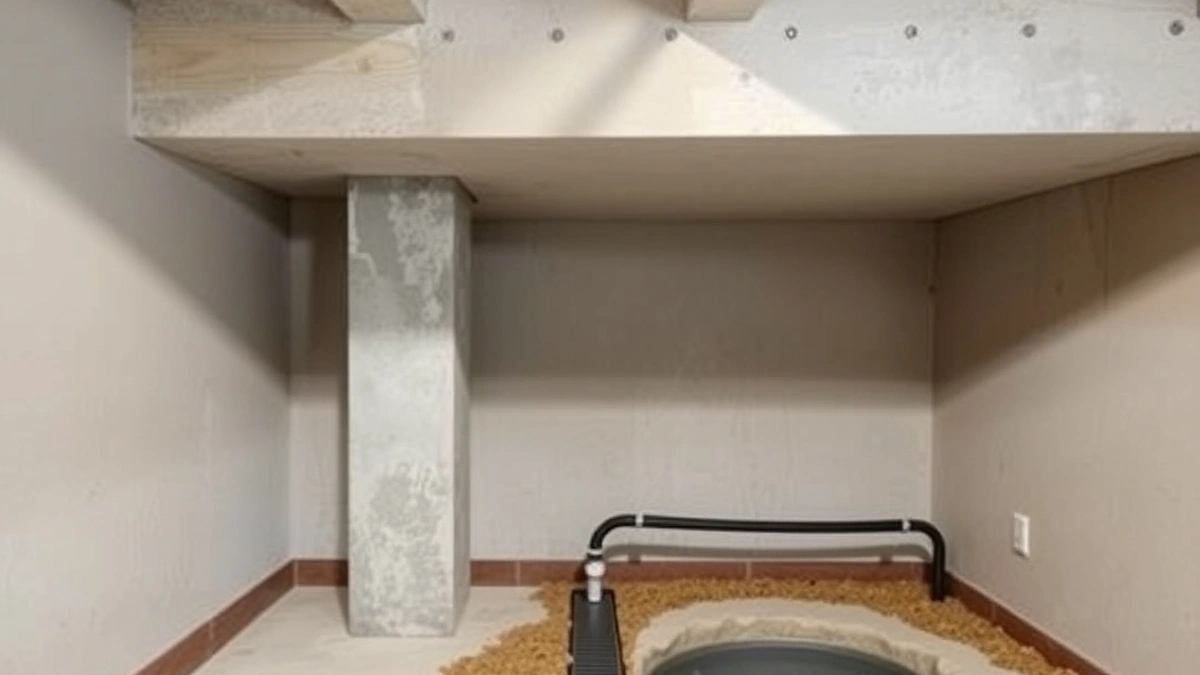
A sump pump sits in a sump basin, typically a 2- to 3-foot-deep pit in the basement floor or crawl space. Groundwater or perimeter drain water flows into the basin. When the water level reaches a preset height, a float switch activates the pump, which discharges water through a pipe to the exterior, usually at least 10 feet from the foundation.
Sump pumps require electricity. A 1/3-horsepower pump might move 30 to 40 gallons per minute against 10 feet of head, while a 1/2-horsepower unit can handle 50 to 60 gallons per minute. Actual output depends on pipe diameter, discharge height, and check-valve condition.
Equipment and installation typically range from $600 to $2,500. A battery backup adds $200 to $800, and a whole-home generator connection adds more. Annual operating cost is modest, often under $50 in electricity for a typical wet season, but replacement pumps and float switches recur every 5 to 10 years.
A sump pump does not prevent water from reaching the foundation. It manages water after collection. If the basin is undersized or the discharge line freezes or clogs, the pump can fail during the exact storm when it is needed most.
Key Differences at a Glance
| Factor | French Drain | Sump Pump |
|---|---|---|
| Power required | No | Yes |
| Primary action | Moves water away by gravity | Pumps water out of a basin |
| Best for | Subsurface groundwater, yard drainage | Basement or crawl space water collection |
| Failure mode | Clogged outlet or pipe | Power loss, float switch, pump burnout |
| Typical install cost | $2,000–$6,000 | $600–$2,500 |
| Maintenance | Outlet and pipe inspection | Quarterly testing, battery replacement |
These figures are estimates. Actual prices vary by region, contractor, and site conditions.
When to Use a French Drain
A French drain makes sense when water is arriving through the soil before it reaches the structure. Common situations include:
- Yard water pooling against the foundation after rain
- Hydrostatic pressure pushing moisture through basement walls
- Sloped lots where a daylight outlet is available downhill
- Crawl spaces with damp soil but no standing water
If the foundation already shows settlement cracks wider than 1/8 inch or wall movement approaching 2 inches, drainage work should follow a structural evaluation. Foundation repair costs such as pier installation typically run $6,000 to $30,000 per job, and pushing water around a moving foundation without addressing the structure can waste money.
When to Use a Sump Pump
A sump pump is appropriate when water has already entered the basement or crawl space, or when gravity drainage is impossible. Common situations include:
- Flat lots with no downhill daylight outlet
- Finished basements where interior water control is required
- High water tables that push water through the slab
- Homes with existing interior perimeter drains that terminate in a pit
Because pumps depend on power, homes in storm-prone areas should consider battery backup or generator capacity. A pump that cannot run during a multi-hour outage offers little protection during the storms that cause basement flooding.
Using Both Together
Many wet basements benefit from both systems. The French drain lowers groundwater around the perimeter, reducing the volume that reaches the interior. Any water that still enters flows to the sump basin, where the pump discharges it.
For example, if an exterior French drain handles 10 gallons per minute during a storm and the interior sees 2 gallons per minute of seepage, the sump pump only needs to manage the 2 gallons per minute. This reduces pump cycling and extends equipment life.
Installing both increases upfront cost. A combined exterior French drain and sump pump system might total $3,000 to $8,000 before interior finish repairs. That is still less than major structural repair, which can reach $20,000 to $40,000, and far below foundation replacement at $40,000 to $150,000.
Cost Context Within Foundation Repair
Drainage is one part of a broader foundation maintenance budget. For comparison:
- Push piers: $1,000–$3,000 each; typical job $6,000–$30,000
- Helical piers: $700–$2,500 each
- Mudjacking: $3–$8 per square foot
- Polyurethane foam lifting: $5–$15 per square foot
- Carbon fiber straps: $400–$1,200 each
- Wall anchors: $500–$1,500 each
- Crawl space encapsulation: $3–$8 per square foot; typical job $4,000–$15,000
- Engineer inspection: $400–$1,500
Average foundation repair runs $4,000 to $15,000. Drainage work often precedes or follows these repairs, especially when water contributed to soil movement or concrete deterioration.
Maintenance and Realistic Expectations
French drains need outlet checks after heavy rain and occasional snaking if flow slows. Sump pumps need quarterly testing: pour water into the basin, confirm the float rises, verify the pump starts, and check that discharge flows away from the house. Battery backups should be tested under load annually.
Neither system fixes structural settlement. If cracks exceed 1/8 inch or walls move more than 2 inches, consult a structural engineer before spending on drainage. Permits vary by city and county and typically take 1 to 3 weeks; inspection lead times are usually 1 to 2 weeks.
Water management protects the foundation, but it is not a substitute for structural repair when the foundation has already failed. Measure the crack width, document displacement, and get a professional inspection before selecting a method.
Next, compare foundation repair cost, pier and beam foundation repair cost, foundation crack repair cost before you commit.
Frequently asked questions
What is the main difference between a French drain and a sump pump?
A French drain is a passive drainage system that carries water away from the foundation through a gravel-filled trench and perforated pipe, while a sump pump is an active device that pumps collected water out of a basin and discharges it away from the house.
Can a French drain work without electricity?
Yes. A French drain relies on gravity and slope to move water, so it operates without power as long as the outlet remains lower than the trench and unobstructed.
Does a sump pump stop water from entering the basement?
Not entirely. A sump pump removes water after it collects in the sump basin, so it manages water that has already entered rather than preventing entry at the foundation wall.
Should I install both a French drain and a sump pump?
In many high-water-table or chronically wet basements, yes. The French drain lowers groundwater pressure around the slab, and the sump pump handles any water that still reaches the interior.
How often should a sump pump be tested?
Test the pump every few months by pouring water into the basin until the float activates, and inspect the discharge line before heavy rain seasons or winter freezes.
Do foundation repairs affect drainage choices?
Yes. If the foundation already shows settlement or wall movement, drainage work should follow a structural assessment; repair costs such as pier installation run $6,000–$30,000 per job.
Sources
Some links are affiliate links.If you buy through them we may earn a commission at no extra cost to you. We do not accept payment for rankings. Read the full disclosure.