Stair Step Cracks Repair: Reading the Diagonal
A stair-step crack in block follows the mortar joints and usually means settlement. See how to measure it and what repair costs.
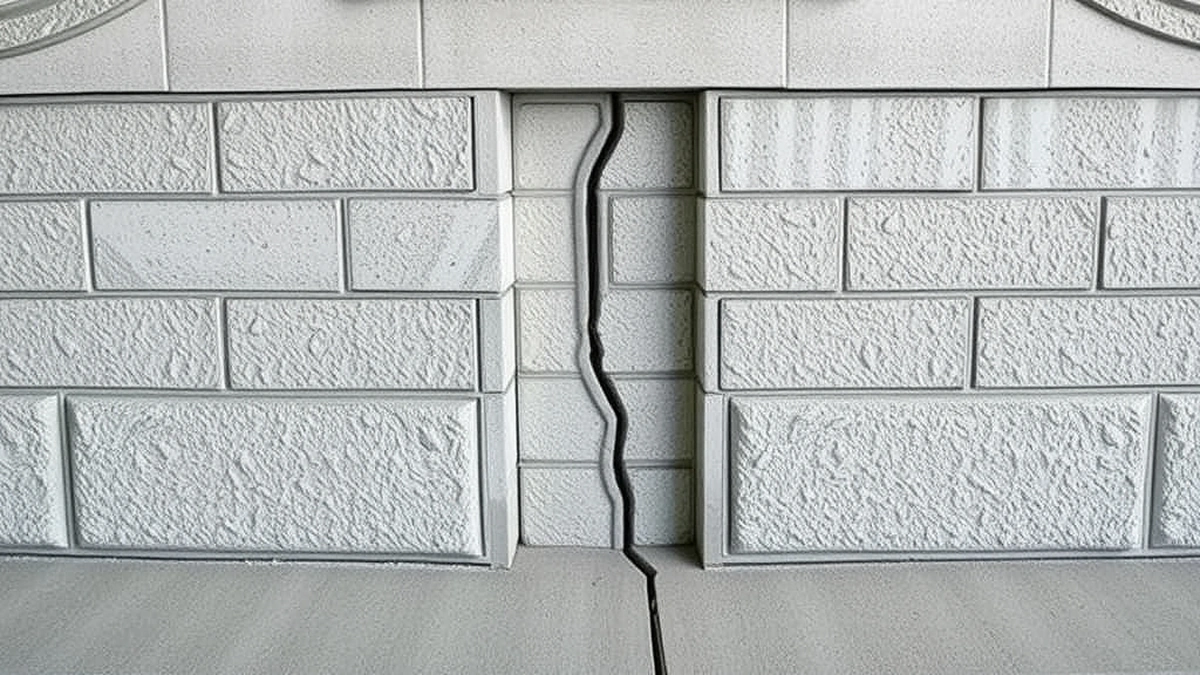
Stair-step cracks follow the mortar joints in a block wall and usually indicate settlement at one end. Repair costs $6,000 to $30,000 when piers are needed, or $400 to $1,200 for injection if the wall is stable.
- Pier repair
- $6,000 - $30,000
- Crack injection
- $400 - $1,200
- Monitor at
- 1/8 inch
- Engineering report
- $400 - $1,500
- Push pier each
- $1,000 - $3,000
Some links on this page are affiliate links.If you buy through them we may earn a commission at no extra cost to you. We do not accept payment for rankings. Read the full disclosure.
Stair-step cracks repair depends on whether the wall is still moving. The crack follows the mortar joints in a block wall in a diagonal pattern, and it usually means one end of the wall has settled. A stable crack can be sealed for $400 to $1,200. A wall on a settling footing needs piers at $6,000 to $30,000.
Why the Crack Steps
Concrete block is laid in a running bond, so the vertical joints are offset by half a block and the mortar joints form a diagonal path. When the wall is subjected to differential movement, it cracks along that path because the mortar is weaker than the block.
That is why the pattern is diagnostic. A diagonal crack that steps through the mortar is a movement crack. A crack that runs straight through the block units is more likely a point load or a manufacturing defect.
Measuring the Movement
| Reading | What it suggests | Action |
|---|---|---|
| Hairline, no step | Shrinkage or curing | Monitor |
| Under 1/8 inch, no offset | Minor movement | Monitor monthly |
| 1/8 inch or wider | Active movement | Engineer |
| Visible offset across the crack | Differential settlement | Engineer promptly |
| Crack wider at one end | Rotation or drop | Engineer promptly |
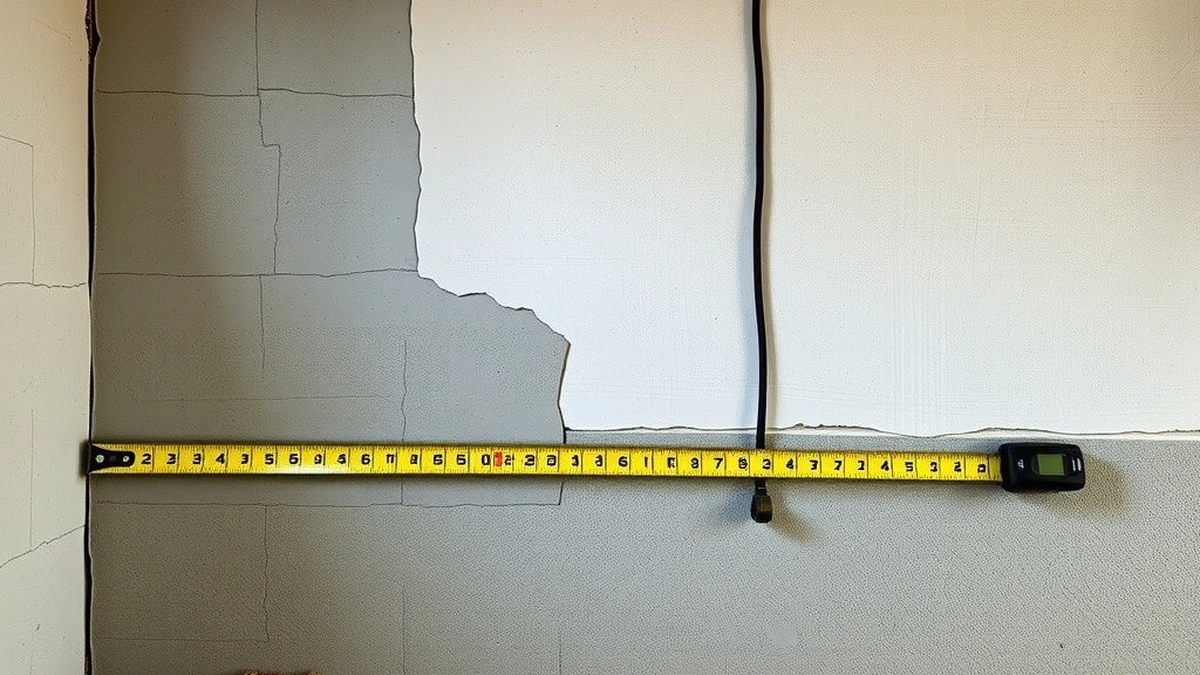
Measure the widest point and note which end is wider. A crack that is wider at the bottom means the wall has rotated outward at the base. Wider at the top usually means the footing dropped at that end and the wall hinged.
What Causes the Settlement
Water is the usual cause. A downspout that discharges at the corner, a lot that slopes toward the house, or a missing footing drain will carry soil fines away from under the footing. The footing loses support at one end and drops.
Tree roots can do the same work by drying the soil and causing it to shrink, especially on expansive clay. A plumbing leak under the slab washes out soil and creates a void that the footing bridges until it cannot.
Repair Options and Costs
| Repair | Cost | When it applies |
|---|---|---|
| Tuckpointing | $300 - $900 | Cosmetic, stable crack only |
| Injection | $400 - $1,200 | Stable crack that leaks |
| Underpinning | $6,000 - $30,000 | Settled footing |
| Drainage correction | $1,500 - $4,000 | Water-driven movement |
Tuckpointing is the repair most homeowners ask for and the one most likely to fail, because it addresses the joint rather than the footing. If the wall is still settling, the new mortar cracks within a season.
A Costed Repair
A 1955 ranch has a stair-step crack at the front corner, 3/16 inch wide with a visible offset. The engineer specifies five push piers at $2,000 each:
5 × $2,000 = $10,000
Add engineering at $900, drainage correction at $2,200, and tuckpointing after the lift at $600:
$10,000 + $900 + $2,200 + $600 = $13,700
That sits in the $6,000 to $30,000 band. The drainage line is not optional in a water-driven failure; without it the piers hold the wall but the soil keeps moving around them.
The Repair Sequence
- Measure the crack and photograph it with a scale.
- Check the wall for plumb and note any offset.
- Identify the water source and correct grading and downspouts.
- Get an engineer’s report if the crack is 1/8 inch or wider.
- Install piers to the design and lift if specified.
- Tuckpoint or inject the crack after the lift.
- Recheck after one wet season.
Cosmetic Versus Structural
A cosmetic crack is stable, narrow, and does not affect the wall’s ability to carry load. A structural crack is moving and has begun to separate the wall into two parts. The difference is not the pattern; it is the movement.
If you are unsure, put a glass or a pencil mark across the crack and measure the gap in 30 days. A change of 1/32 inch in a month is movement, and movement means the repair has to address the cause.
What to Ask a Contractor
Ask what the crack is doing and why. A contractor who says “we’ll tuckpoint it” without measuring is offering a cosmetic fix. A contractor who measures, checks the footing, and asks about drainage is diagnosing.
A stair-step pattern that starts at a window corner and runs down and out is often a lintel problem rather than a footing problem. The lintel spans the opening, and when it deflects or corrodes, the masonry above it cracks in the same diagonal pattern. The repair is a new lintel, not a pier.
That is why the location of the crack matters as much as its width. A crack that starts at the top corner of the wall and steps down toward a window is more likely settlement. A crack that radiates from the window itself is more likely a lintel or a missing header. Both look like a staircase, and only one of them needs underpinning.
Ask for the pier count and the design depth if underpinning is proposed. Ask whether the drainage correction is included. And ask what the warranty covers, because a tuckpointed crack that reopens is usually excluded from any warranty that was not written for movement.
For the broader diagnosis, read stair-step foundation crack and foundation crack types. If the wall is bowing rather than settling, carbon fibre versus wall anchors covers the restraint options.
Frequently asked questions
Are stair-step cracks serious?
They indicate movement, usually settlement at one end of the wall. A stable crack under 1/8 inch can be monitored, but a widening crack or one with displacement needs an engineer.
What causes a stair-step crack in a block wall?
Settlement of the footing at one end, soil washout, and poor drainage are the usual causes. The diagonal path follows the mortar joints because they are the weakest plane.
How much does stair-step crack repair cost?
If the wall is stable, injection runs $400 to $1,200. If the footing has settled, underpinning runs $6,000 to $30,000, with push piers at $1,000 to $3,000 each.
Can I just tuckpoint a stair-step crack?
Tuckpointing closes the joint but does not stop the movement. If the footing is still settling, the crack reopens, and the money is spent twice.
Do stair-step cracks always mean foundation failure?
No. A hairline crack with no displacement can be a shrinkage or curing issue. Width, displacement, and whether it is growing are what separate cosmetic from structural.
How long does the repair last?
A pier system reaching competent soil is designed for the life of the structure. A tuckpointed crack that is still moving may reopen within a season.
Sources
Some links are affiliate links.If you buy through them we may earn a commission at no extra cost to you. We do not accept payment for rankings. Read the full disclosure.