Carbon Fibre vs Wall Anchors for Basement Walls
Compare carbon fibre straps and wall anchors for bowing foundation walls, including cost, measurement, and when each method applies.
Carbon fibre straps stabilize walls with minor inward movement; wall anchors are for greater displacement and require exterior soil access. Measure crack width and wall movement first.
- Best for minor movement
- Carbon fibre straps
- Best for greater displacement
- Wall anchors
- Strap cost (each)
- $400–$1,200
- Anchor cost (each)
- $500–$1,500
- Wall movement limit
- 2 inches
Some links on this page are affiliate links.If you buy through them we may earn a commission at no extra cost to you. We do not accept payment for rankings. Read the full disclosure.
Carbon fibre straps and wall anchors both stabilize bowing basement walls, but they are not interchangeable. Carbon fibre straps work best for minor inward movement and tight cracks, while wall anchors are intended for greater displacement where exterior soil access is available. Measure crack width and wall displacement before selecting a method.
What Carbon Fibre Straps Do
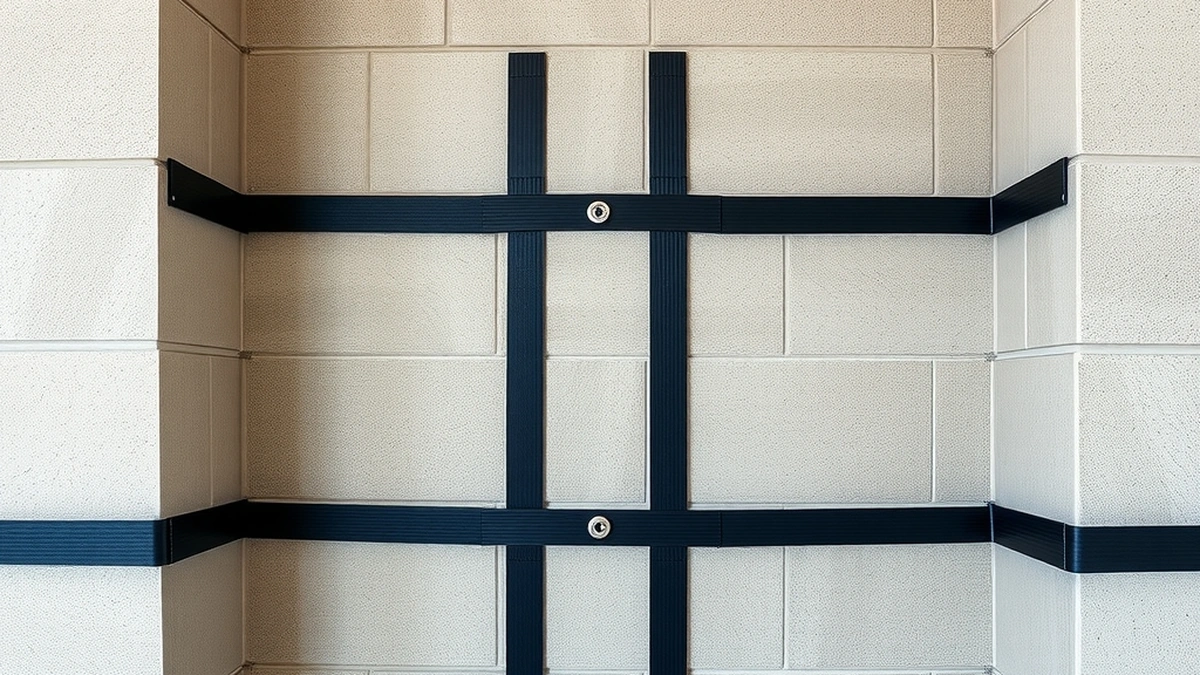
Carbon fibre straps are high-strength fabric strips bonded to the interior face of a foundation wall with epoxy. They resist tensile forces and hold the wall in its current position. Straps are typically spaced 4 to 6 feet apart, depending on wall height and engineer specifications.
This method is best suited to walls with limited movement and cracks at or below the watch threshold. A crack under 1/16 inch is generally cosmetic. A crack at or near 1/8 inch warrants monitoring. Once movement approaches 2 inches, carbon fibre alone is usually not the appropriate structural solution.
Because straps install from inside, they do not require excavation. That makes them practical for finished basements, tight lots, or homes where digging outside is blocked by decks, patios, or property lines.
What Wall Anchors Do
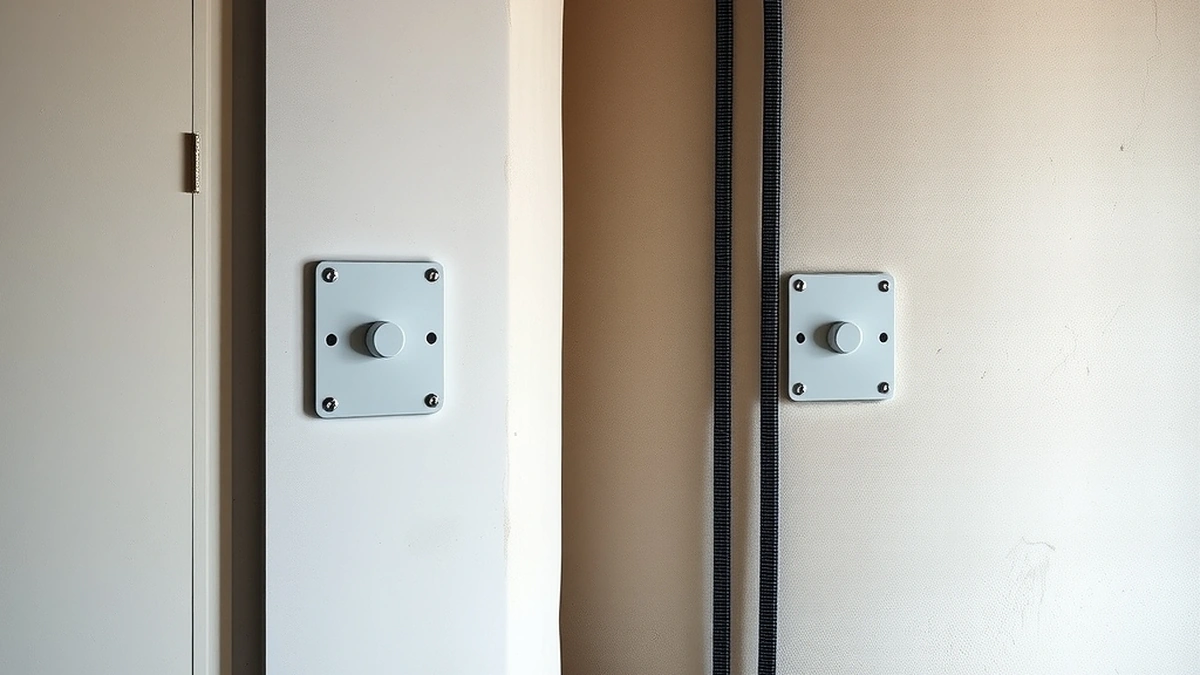
Wall anchors consist of an interior wall plate, a steel rod, and an exterior anchor buried in stable soil away from the foundation. The rod connects the two plates, and tightening the assembly can pull the wall back toward its original position over time.
Anchors are typically spaced 6 to 8 feet apart, though exact spacing depends on wall height, soil pressure, and engineer design. This method is appropriate when wall movement exceeds what straps can handle but has not reached a point where replacement is the only option.
The trade-off is site access. Installers must excavate outside the wall to place the exterior anchor. If the home sits close to a property line, driveway, or landscaping, excavation may be impractical or expensive.
Measure First: Crack Width and Displacement
Start with numbers, not product names. Measure the widest crack and the maximum inward displacement at the wall’s midline.
- Cosmetic crack: 1/16 inch or less
- Watch threshold: 1/8 inch
- Structural concern: movement approaching 2 inches
Use a crack comparator or feeler gauge for width. For displacement, stretch a taut string from the floor joist to the basement floor and measure the gap between the string and the wall at the point of greatest bow. Record both numbers in inches before calling a contractor or engineer.
If displacement is under 1 inch and cracks are narrow, carbon fibre straps may be sufficient. If displacement is between 1 and 2 inches, wall anchors are often the more appropriate choice. Beyond 2 inches, an engineer should evaluate whether the wall can be stabilized or whether replacement is necessary.
Cost Comparison
Material and labor costs are estimates and vary by region, wall height, and site conditions. Use these figures as planning ranges, not quotes.
| Item | Typical Cost (USD) |
|---|---|
| Carbon fibre strap, each | $400–$1,200 |
| Wall anchor, each | $500–$1,500 |
| Engineer inspection | $400–$1,500 |
| Average foundation repair job | $4,000–$15,000 |
| Major foundation repair job | $20,000–$40,000 |
Example arithmetic for an 8-strap carbon fibre job:
- 8 straps × $800 mid-point = $6,400
- Engineer inspection = $950 mid-point
- Estimated total = $7,350
Example arithmetic for a 6-anchor wall anchor job:
- 6 anchors × $1,000 mid-point = $6,000
- Engineer inspection = $950 mid-point
- Estimated total = $6,950
These examples exclude excavation repair, interior finishing, permits, and any drainage work. Wall anchor jobs often carry additional exterior restoration costs after backfilling.
Installation and Site Requirements
Carbon fibre installation requires surface preparation, epoxy application, and curing time. The wall must be structurally sound enough to accept the bond. If the wall is severely deteriorated or cracked through, straps may not adhere properly.
Wall anchor installation requires exterior excavation at each anchor location, typically 10 to 15 feet from the foundation, depending on soil conditions and anchor design. After drilling through the wall, installers drive or place the exterior anchor, connect the rod, and tighten the interior plate. The wall may be gradually tightened over weeks or months.
Permits vary by city and county and typically take 1–3 weeks. Lead time for an engineer inspection is usually 1–2 weeks.
When to Choose Each Method
Choose carbon fibre straps when:
- Wall movement is minor and well under 2 inches
- Cracks are narrow and stable
- Exterior access is limited or impossible
- The basement is finished and interior disruption must be minimized
Choose wall anchors when:
- Wall movement is significant but below replacement criteria
- Exterior soil access is available
- The wall needs active pull-back rather than passive restraint
- An engineer confirms the wall and footing can accept anchor loads
If movement has passed the point where stabilization is practical, or if roughly one-third of the wall section has failed, replacement may be the more durable path. Replacement costs range from $40,000 to $150,000 and should be compared against repeated repair attempts.
Warranty and Long-Term Expectations
Warranties differ by manufacturer and installer. Pier warranties are often lifetime and transferable, but carbon fibre and anchor warranties vary more widely. Transfer fees typically range from $100 to $500. Ask for written warranty terms before signing a contract, and confirm whether the warranty covers product failure, installation defects, or both.
Neither method waterproofs a basement. If water intrusion accompanies wall movement, address drainage and grading separately. Restoration typically represents 10–25 percent of structural repair cost, so budget for finish work after the wall is stabilized.
For related cost detail, see the carbon fibre repair cost page and the wall anchor cost page. For broader foundation pricing context, review the foundation repair cost guide.
Next, compare foundation repair cost, pier and beam foundation repair cost, foundation crack repair cost before you commit.
Frequently asked questions
What is the main difference?
Carbon fibre straps are bonded to the interior wall face, while wall anchors connect the interior wall to stable soil outside through steel rods.
How much does a carbon fibre strap cost?
A carbon fibre strap typically costs $400–$1,200 each, depending on wall height, product, and labor.
How much does a wall anchor cost?
A wall anchor typically costs $500–$1,500 each, including excavation, rod, anchor plate, and interior hardware.
Do I need an engineer?
A structural engineer inspection usually costs $400–$1,500 and is recommended before selecting a wall repair method.
Can carbon fibre fix a severely bowed wall?
Carbon fibre is generally suited to minor movement; walls approaching the 2-inch movement limit often need anchors or replacement review.
Are permits required?
Permit requirements vary by city and county and typically take 1–3 weeks to obtain.
Sources
Some links are affiliate links.If you buy through them we may earn a commission at no extra cost to you. We do not accept payment for rankings. Read the full disclosure.