Is Soil Stabilisation Worth It? Cost and Limits
Soil stabilisation costs $3 to $10 per sq ft and treats the ground rather than the foundation. See when it is worth it and when piers win.
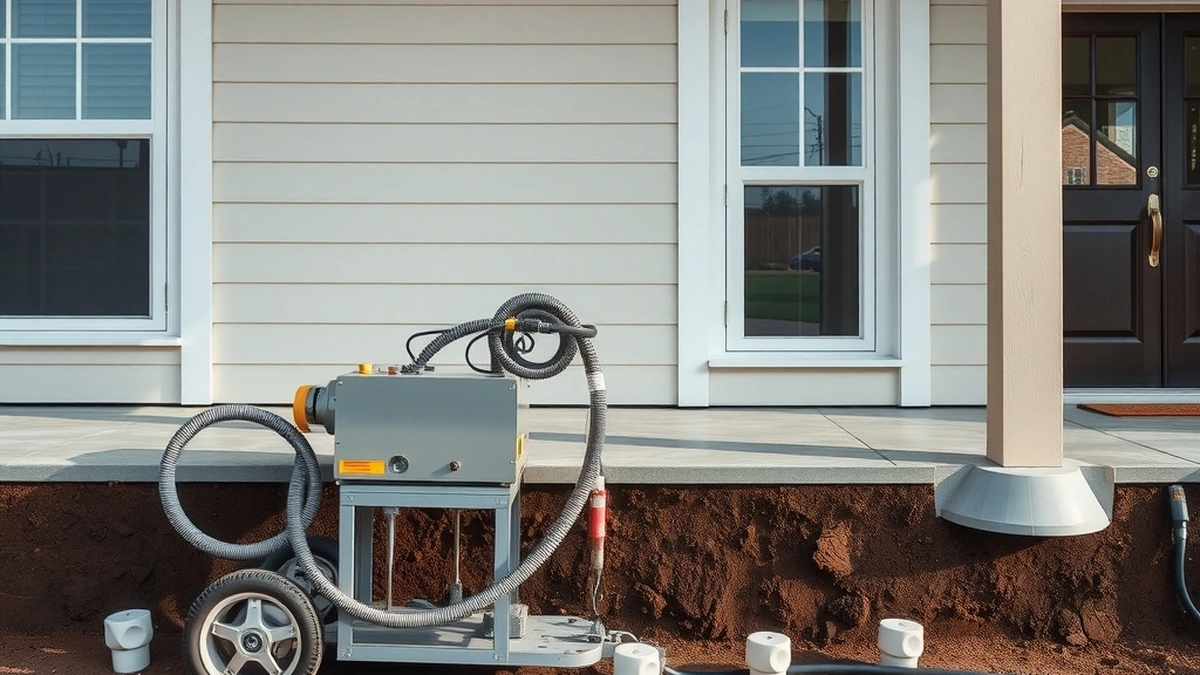
Soil stabilisation is worth it for voids, loose fill, and expansive clay where the footing has not dropped, at $3 to $10 per sq ft. It is not a substitute for underpinning when the footing has already settled.
- Grouting
- $3 - $10 per sq ft
- Lime treatment
- $2 - $6 per sq ft
- Typical job
- $2,000 - $15,000
- Underpinning
- $6,000 - $30,000
- Engineering report
- $400 - $1,500
Some links on this page are affiliate links.If you buy through them we may earn a commission at no extra cost to you. We do not accept payment for rankings. Read the full disclosure.
Soil stabilisation is worth it when the ground under a foundation is loose, voided, or swelling, and the footing has not yet dropped. At $3 to $10 per sq ft, it costs less than underpinning and addresses the soil rather than bypassing it. It is not worth it once the footing has settled, because improving the soil does not lift a structure back, and the money is better spent on piers.
What It Fixes
Stabilisation changes the engineering properties of the soil. Grouting fills voids and binds loose particles, lime reduces the volume change of clay, and compaction increases density.
Those are three different problems with three different treatments, and the price of the wrong one is the price of the right one plus the cost of the delay. The geotechnical report is what identifies which one applies, and it is the document that keeps the contractor from selling the technique they own.
The Cost Bands
| Technique | Cost | Best for |
|---|---|---|
| Cementitious grouting | $3 - $10 per sq ft | Voids, loose granular soil |
| Polyurethane grouting | $5 - $15 per sq ft | Slab voids |
| Lime treatment | $2 - $6 per sq ft | Expansive clay |
| Compaction grouting | $6 - $12 per sq ft | Loose fill at depth |
The price ranges overlap because the techniques do. The report should name the technique, the depth, and the dosage, and the contractor should be able to explain all three.
When It Is Worth It
It is worth it for a void under a slab that has not yet cracked, for fill that was never compacted, and for expansive clay where the movement is seasonal and the footing is still sound.
It is also worth it as preparation before a new slab or a new driveway, where treating the subgrade prevents the settlement that would otherwise appear in a few years.
When It Is Not
It is not worth it when the footing has already settled. The repair for a settled footing is a pier that reaches bearing soil, and stabilisation does not create that load path no matter how much grout goes in.
It is not worth it on a bowing wall, where the problem is lateral pressure rather than soil strength. And it is not worth it while the water that caused the problem is still active.
The Verification Question
Stabilisation without verification is a guess. For lifting, the verification is an elevation reading, taken at the same points before and after. For compaction and mixing, it is a density or penetration test.
Ask how the result will be measured before the work starts. A contractor who cannot describe the test is not planning to run one.
A Costed Example
A 600 sq ft garage slab with a void, treated with polyurethane grouting at $9 per sq ft:
600 × $9 = $5,400
Add mobilization at $400 and drainage at $1,500:
Total: $7,300
That sits in the upper half of the $2,000 to $15,000 band and is roughly a third of what underpinning would cost, which is the whole argument for treating the soil when the structure has not moved.
- Get a geotechnical report.
- Match the technique to the deficiency.
- Fix the water source.
- Treat the soil in the specified pattern.
- Verify with elevation or density testing.
- Recheck after a wet season.
The Verdict
Soil stabilisation is worth it when the soil is the problem and the structure has not moved. It is a targeted, relatively inexpensive repair with a measurable result, and the measurement is what makes it defensible. When the footing has already dropped, the money is better spent on piers.
A stabilisation project starts with a soil report and ends with a verification test, and the middle is a crew with a pump and a plan. The report is the part that makes the rest meaningful.
Ask what the treatment will not fix. A grouting job under a slab does not restore a settled footing, and a lime treatment does not stop a leak. Knowing the limits is how a homeowner avoids buying the same repair twice.
Ask, too, who is liable if the result is not achieved. A contract that promises a treatment but not an outcome is a contract that leaves the risk with the homeowner.
The cost of the report is $400 to $1,500, and it is the cheapest line in the project. It decides whether the budget goes to grout, lime, piers, or drainage.
A second limit is depth. Grouting treats the soil it can reach, and a void or a soft layer far below the injection point is outside that reach. The report’s boring logs show how deep the treatment has to go.
A third is water. The treatment improves the soil, and it does not stop water from arriving. Drainage work is part of the project, and a quote that excludes it is a quote for half the job.
A fourth is the verification method. Ask for the test, the frequency, and the acceptance criteria before the work starts, because a result that cannot be measured cannot be disputed.
For the method detail, read how soil stabilisation works and what soil stabilisation costs. If the footing has settled, is underpinning worth it covers the structural alternative.
Frequently asked questions
Is soil stabilisation worth the money?
Yes for voids, loose fill, and expansive clay before the footing has moved. It improves the soil the foundation sits on and costs less than underpinning.
How much does soil stabilisation cost?
Grouting runs $3 to $10 per sq ft and lime treatment $2 to $6 per sq ft. A typical residential job runs $2,000 to $15,000.
Does stabilisation replace underpinning?
No. Stabilisation improves the soil; underpinning adds a structural element that reaches bearing soil. A settled footing usually needs the latter.
Can stabilisation fix expansive clay?
Lime treatment can reduce the swell potential, and moisture control reduces the cycle. Severe cases may still need deep piers or soil replacement.
How is the result verified?
With elevation readings for lifting work and density or penetration tests for compaction and mixing. The method should be agreed before work starts.
When is stabilisation not worth it?
When the footing has already settled, when the wall is bowing, or when the water source that caused the problem is still active.
Sources
Some links are affiliate links.If you buy through them we may earn a commission at no extra cost to you. We do not accept payment for rankings. Read the full disclosure.