Soil Stabilisation Problems and Limits
Stabilisation fails when the wrong technique is used, the dosage is wrong, or the water is not controlled. See the limits and the checks.
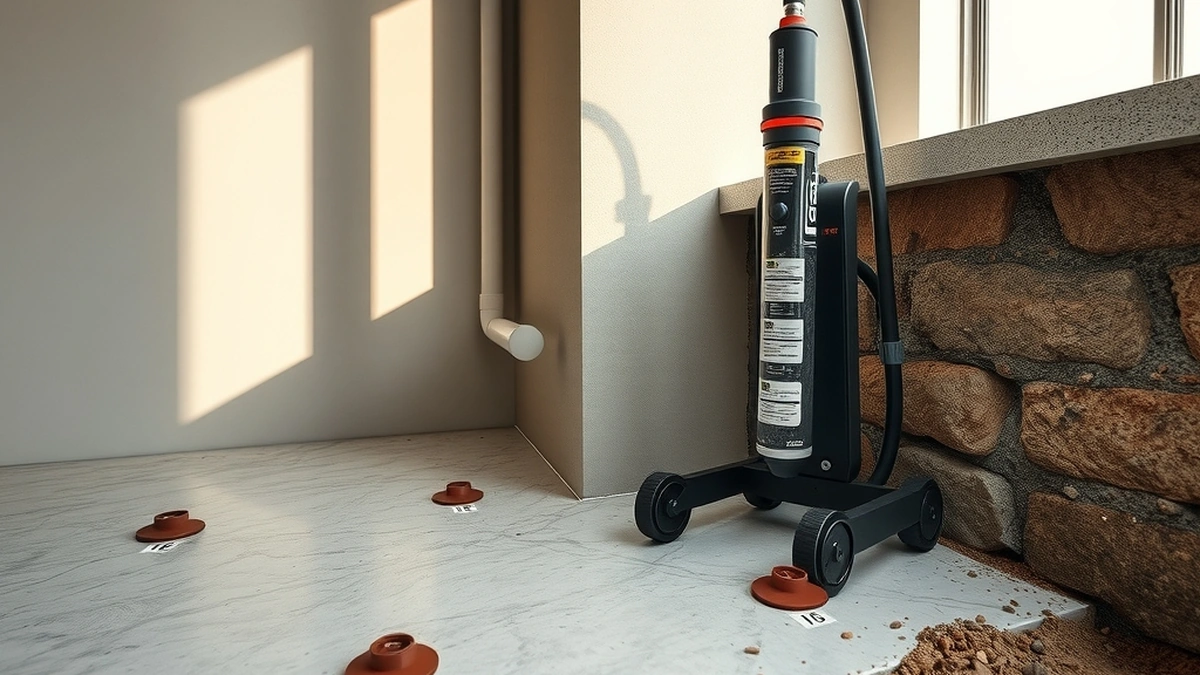
Soil stabilisation problems include treating the wrong soil type, incorrect dosage, uncontrolled grout pressure, and missing verification. A typical job costs $2,000 to $15,000, and the geotechnical report decides the method.
- Grouting
- $3 - $10 per sq ft
- Lime treatment
- $2 - $6 per sq ft
- Typical job
- $2,000 - $15,000
- Verification
- Elevation or density test
- Engineering report
- $400 - $1,500
Some links on this page are affiliate links.If you buy through them we may earn a commission at no extra cost to you. We do not accept payment for rankings. Read the full disclosure.
Soil stabilisation problems start with the soil report, or the lack of one. Grouting, lime treatment, and compaction each fix a specific deficiency, and applying the wrong one wastes the budget without changing the behaviour of the ground. The second group of problems is execution: dosage, pressure, and verification. Both groups are visible in the report and the log if the homeowner asks for them.
Wrong Technique for the Soil
Expansive clay that swells and shrinks needs a chemical treatment that reduces its volume change. Loose granular fill needs densification. A void under a slab needs filling. These are three different jobs, and a contractor who offers one for all three is offering a product rather than a diagnosis.
The geotechnical report is what separates them, and the report is cheaper than any of the treatments. It classifies the soil, measures its plasticity and density, and recommends a treatment. Without it, the crew is guessing at the cause and the dosage.
Dosage and Mixing
Lime treatment works within a narrow range. Too little lime leaves the clay reactive, and too much can create a brittle layer that cracks under load. The dosage comes from a mix design, usually developed in a lab with the actual soil from the site.
Field mixing adds another variable. The lime has to be spread evenly, tilled to the specified depth, and compacted within the working window. A crew that tills unevenly produces a site with soft spots that behave differently from the treated areas, and those spots show up as cracks in the slab above within a year.
Pressure and Lifting
| Risk | Cause | Control |
|---|---|---|
| Slab lifted too far | Excess volume | Level monitoring |
| Slab cracked | Uneven injection | Staged injection |
| Grout at the surface | Shallow cover | Probe before injecting |
| Structure movement | High pressure | Pressure limit and monitoring |
Grouting under a slab is a controlled lift, not a fill, and the difference is measurement. The crew should know the target elevation, the volume expected, and the pressure limit, and should stop when any of those is reached.
Missing Verification
Stabilisation without verification is an invoice without evidence, and evidence is the only thing that distinguishes a treatment from an attempt. For lifting, the evidence is an elevation reading before and after. For compaction, it is a density test. For mixing, it is a penetration test or a sample.
Ask how the result will be measured before the work starts. A contractor who cannot describe the test is not planning to run one.
What the Report Should Say
A geotechnical report that is worth paying for classifies the soil, states its plasticity and density, identifies the depth of the active zone if clay is present, and recommends a treatment with a dosage. It should also say what the treatment will not fix, because no stabilisation method solves every problem on a site.
Ask for the boring logs and the lab results, not just a summary page. The logs show where the samples came from and how deep the borings went, and that tells you whether the report actually covers the area under the foundation or only the front yard.
If the report recommends grouting, ask what volume and pressure are planned. If it recommends lime, ask for the mix design. If it recommends compaction, ask what density is the target and how it will be measured. A report without those numbers is a recommendation without a design.
A Costed Failure
A 600 sq ft slab treated with grouting at $8 per sq ft, which settles again because the soil was expansive clay rather than a void.
Grouting: 600 × $8 = $4,800 Later deep piers: 8 × $2,000 = $16,000 Engineering: $1,200
Total: $22,000, against a geotechnical report at $1,500 that would have identified the clay and pointed to a different repair.
Stabilisation improves the soil that is there, and it cannot improve soil that is not there. It does not create bearing capacity at depth, and it does not replace a pier that reaches a competent stratum. It also does not stop water, and water is what drives most soil movement, so the drainage work has to be part of the same project.
On a site with a high water table or a broken drain, the treatment will be undone by the same water that caused the problem. Drainage correction is part of the scope, not an optional extra.
The Sequence to Avoid Problems
- Get a geotechnical report with classification and testing.
- Match the technique to the deficiency.
- Develop a mix design for lime or cement.
- Protect utilities and set monitoring points.
- Treat the soil in the specified pattern.
- Verify with elevation, density, or penetration testing.
- Recheck after a wet season.
Checklist Before You Sign
Ask what technique and why, what dosage, and how the result will be verified. Ask whether the geotechnical report is included. Ask what happens if the target is not reached and who pays for the second pass. Ask for the injection log or the test results at completion, and keep them with the house documents.
For the method detail, read how soil stabilisation works and what soil stabilisation costs. If the footing has settled, underpinning problems and limits covers the structural alternative.
Frequently asked questions
What are the common problems with soil stabilisation?
Using the wrong technique for the soil, an incorrect lime or cement dosage, uncontrolled grout pressure that lifts or cracks a slab, and no verification of the result.
How do I know if soil stabilisation worked?
By elevation readings for lifting work and density or penetration tests for compaction and mixing. The method should be agreed before the work starts.
Can grouting lift a slab too much?
Yes. Uncontrolled pressure can raise a slab above grade or crack it. The crew should monitor a level and stop at the target.
Is lime treatment effective on all clay?
No. It depends on the clay minerals. Some clays respond well and others need cement or a different approach, which is why a soil test is required.
How long does stabilisation last?
Cementitious grout and lime treatment are permanent within their design life, provided the water management is maintained.
Does stabilisation replace underpinning?
No. Stabilisation improves the soil; underpinning adds a structural element that reaches bearing soil. A settled footing usually needs the latter.
Sources
Some links are affiliate links.If you buy through them we may earn a commission at no extra cost to you. We do not accept payment for rankings. Read the full disclosure.