Is Slab Lifting Worth It? Cost, Life, and Replacement
Slab lifting costs $3 to $12 per sq ft against $8 to $18 for replacement. See when lifting is worth it and when the slab should go.
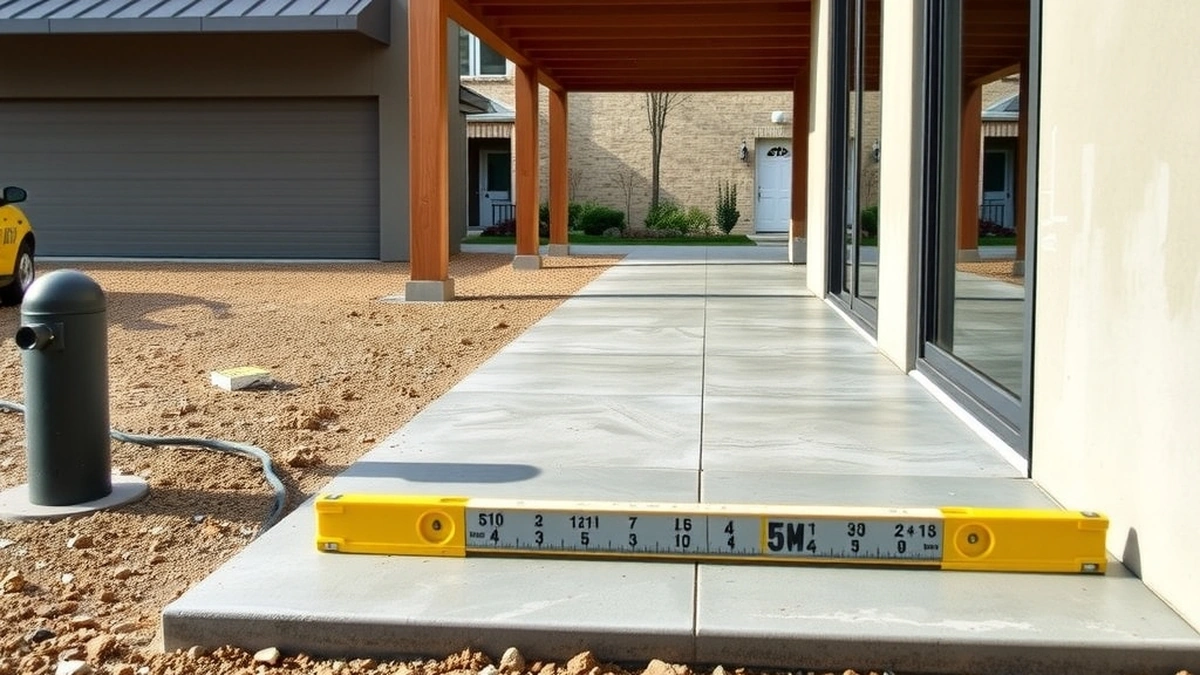
Slab lifting is worth it on an intact slab over a shallow void with the water controlled, at $3 to $12 per sq ft against $8 to $18 for replacement. It is not worth it on a slab that is broken into moving pieces.
- Lifting
- $3 - $12 per sq ft
- Replacement
- $8 - $18 per sq ft
- Service life
- 5 - 15 years
- Foam
- $5 - $15 per sq ft
- Target elevation
- Adjacent grade
Some links on this page are affiliate links.If you buy through them we may earn a commission at no extra cost to you. We do not accept payment for rankings. Read the full disclosure.
Slab lifting is worth it when the slab is intact, the void is shallow, and the water that made the void has been controlled. At $3 to $12 per sq ft it costs less than half of replacement at $8 to $18, and the job is usually finished in a day. It is not worth it on a slab that has broken into pieces that move independently.
What Lifting Achieves
Lifting restores elevation and fills the space under the slab. The surface stops ponding, the trip hazard goes away, and the slab is supported again instead of bridging a void.
It does not restore the slab’s strength, and it does not repair a crack that has separated the concrete into two independent pieces. A thin or under-reinforced slab will still flex under load, and a slab with a crack that has separated will still have that crack.
The Cost Comparison
| Area | Lifting at $6 | Replacement at $12 |
|---|---|---|
| 200 sq ft | $1,200 | $2,400 |
| 400 sq ft | $2,400 | $4,800 |
| 600 sq ft | $3,600 | $7,200 |
The savings are consistent, which is why lifting is the default for a settled slab that is otherwise sound. The gap widens on larger areas because the mobilization cost is spread over more square footage, which is why a big driveway is the strongest case for lifting.
When Lifting Is Worth It
It is worth it on a driveway that has settled at the garage, a walk that has heaved at a tree, a patio that ponds against the house, and a garage floor that has dropped at one corner. Those are intact slabs with local voids.
It is also worth it when the alternative is a trip hazard or water against the foundation. A $1,200 lift that restores drainage costs less than the foundation repair that ponding would eventually cause, and it removes a hazard that someone will trip over.
When It Is Not
It is not worth it on a slab that is cracked into separate panels, because the panels will not rise as one plane. It is not worth it on a heaving slab, because the movement is upward and the repair is soil correction.
It is not worth it on a house footing, and a lift on a slab over a settled footing can make the footing problem harder to see. A settled footing needs piers that reach bearing soil, and lifting the slab above it is a surface repair on a structural problem.
The Drainage Caveat
The lift lasts as long as the cause is corrected. If the downspout still discharges at the corner, the void will return, and the second lift will cost as much as the first.
Drainage correction is the highest-value line on the invoice. A $90 downspout extension and a $1,500 regrade can double the life of the lift, and they are cheaper than any material upgrade.
The material choice is a budget decision as much as a technical one. Slurry at $3 to $8 per sq ft is adequate on stable subgrade, and foam at $5 to $15 is the choice on soft soil or a tight schedule. The difference on a 450 sq ft driveway is roughly $1,800.
That $1,800 is better spent on drainage if the soil is stable. If the soil is soft, the foam is the repair that holds, and the drainage can follow.
A Costed Example
A 450 sq ft driveway lifted with slurry at $6:
450 × $6 = $2,700
Add drainage correction at $1,500 and patching at $150:
Total: $4,350
Replacement at $12 would be $5,400, and the lift plus drainage is $1,050 cheaper while keeping the original concrete.
What to Check Before You Commit
- Confirm the slab is intact with a crack map.
- Tap-test for hollow areas and estimate the void depth.
- Fix the water source before the lift.
- Set the target elevation and the method of measuring it.
- Compare slurry and foam quotes on the same area.
- Confirm the warranty and what it covers.
Ask, too, what happens if the lift does not reach the target in one pass. A crew that plans for a single visit and leaves the slab low has not finished the job, and the invoice should reflect that.
A lift is also an opportunity to improve the slab. If control joints are missing, they can be cut after the lift, and the joints can be sealed to keep water out of the base. Those additions are inexpensive while the crew is on site and expensive as a separate visit.
Ask whether the price includes joint cutting and sealing, and whether the crew will check the grade away from the building before leaving. A slab that is level but still drains toward the wall has not solved the problem.
The Verdict
Slab lifting is worth it for the right slab and a waste of money for the wrong one. The test is simple: intact, shallow void, controlled water. When those three conditions hold, the savings against replacement are real and the disruption is minimal, and the original concrete stays out of the landfill.
For the method detail, read how slab lifting works and slab lifting problems and limits. If the slab is broken, slab cracks repair explains when replacement is the honest answer.
Frequently asked questions
Is slab lifting worth it?
Yes on an intact slab that has settled over a shallow void, with the water controlled. It costs a fraction of replacement and restores the surface in a day.
How much does slab lifting cost?
It runs $3 to $12 per sq ft. Slurry is at the low end and polyurethane foam at the high end. Replacement runs $8 to $18 per sq ft.
How long does a lifted slab last?
Five to 15 years for slurry, longer for foam, and longer still when drainage is corrected. It is not a permanent repair in most cases.
When should a slab be replaced instead?
When it is broken into several moving panels, when the surface is deteriorating, or when the slab is too thin or under-reinforced for its use.
Can lifting make a slab worse?
Over-lifting can create a reverse slope or crack the slab. Staged lifting with a level reading prevents it.
Does lifting work on a garage floor?
Yes. Garage floors, driveways, patios, walks, and pool decks are common candidates. Structural footings are not.
Sources
Some links are affiliate links.If you buy through them we may earn a commission at no extra cost to you. We do not accept payment for rankings. Read the full disclosure.