Slab Lifting Problems: Failure Modes and Limits
Slab lifting fails on broken slabs, when water is not controlled, and when the lift overshoots. See the limits and the costs.
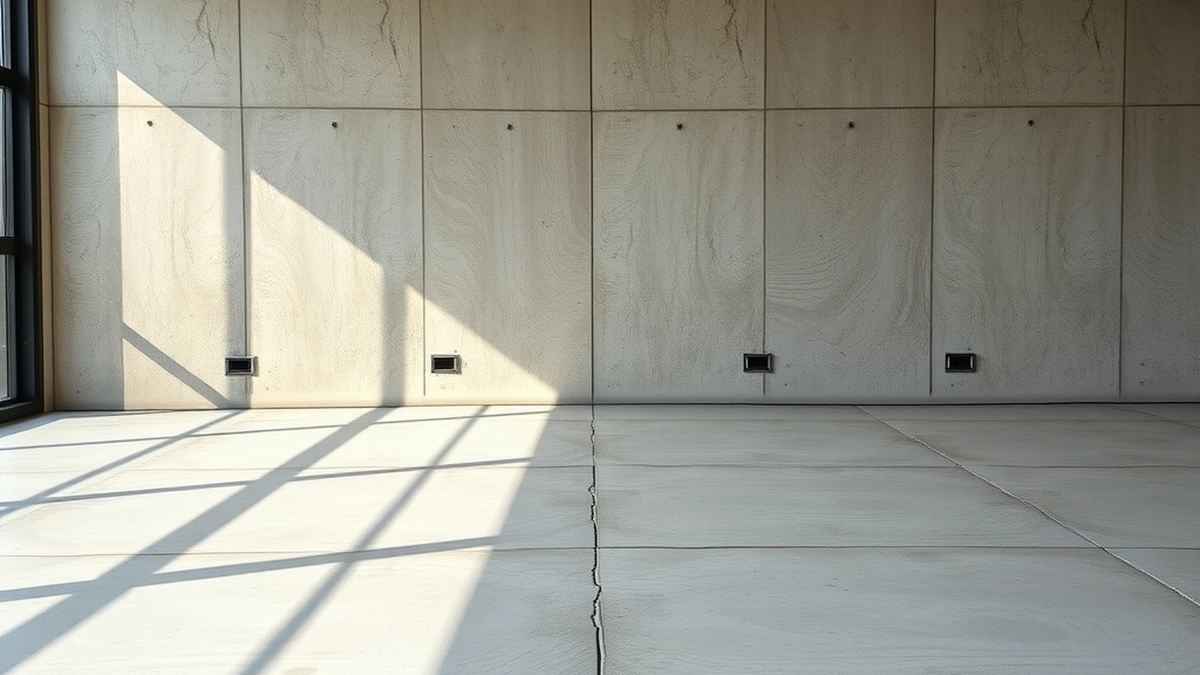
Slab lifting problems include lifting a slab that is broken into moving pieces, recurring voids from uncontrolled water, over-lifting that creates a reverse slope, and material that cannot reach a deep void. Costs run $3 to $12 per sq ft.
- Lift cost
- $3 - $12 per sq ft
- Common failure
- Void returns
- Replacement
- $8 - $18 per sq ft
- Service life
- 5 - 15 years
- Monitor after
- One wet season
Some links on this page are affiliate links.If you buy through them we may earn a commission at no extra cost to you. We do not accept payment for rankings. Read the full disclosure.
Slab lifting problems are usually candidate problems, not material problems. Lifting works on an intact slab over a shallow void with the water controlled. Remove any one of those conditions and the lift either fails or creates a new issue. The material is the least variable part of the job, and the proposal is where the variables show up.
Wrong Candidate: Broken Slab
A slab that is cracked into separate panels cannot be lifted as one plane. Each panel responds to the material beneath it, and the joints either open or the surface becomes uneven.
| Condition | Lift? | Why |
|---|---|---|
| Intact, settled | Yes | One plane, supported |
| Single stable crack | Yes | Crack can be sealed after |
| Several moving panels | No | No longer one slab |
| Crumbling surface | No | No sound material to lift |
| Heaving | No | Wrong direction of movement |
The test is simple. Tap the slab and watch the crack. If the panels move independently when walked on, the slab is not a candidate. A slab that rocks underfoot is a slab that has already separated from its base, and lifting it will only make the rocking more visible. Walk the slab in shoes, not bare feet, and listen for the hollow change in sound. A single hollow spot under a corner is a candidate; a slab that sounds hollow everywhere is a slab that has lost its base entirely.
Wrong Cause: Water
A lift restores elevation. It does not stop water from washing out the soil that supports the slab. If the downspout still discharges at the corner, the void will return.
The repair sequence is drainage first, lift second, and a recheck after one wet season. Skipping the drainage is the most common reason a lift fails within a few years, and it is the cheapest thing to add to the job.
Over-Lifting
Over-lifting raises the slab above the surrounding grade, creates a reverse slope, and can crack the concrete. It happens when the crew pumps until the material runs out rather than stopping at a target, and it is more common on small jobs where the crew wants to finish in one pass.
A target elevation should be set before the work starts and checked with a level during the lift. The target is usually the adjacent surface, not the highest point the slab can reach. A slab that ends up 2 inches above the garage apron is worse than the one that was 1 inch below it.
Material Problems
| Material | Problem | Result |
|---|---|---|
| Slurry, too wet | Weak fill | Compacts under load |
| Slurry, too dry | Will not flow | Voids remain |
| Foam, low density | Low strength | Slab flexes |
| Foam, over-injected | Excess expansion | Cracking, reverse slope |
The mix and the density should be specified in the proposal. Ask for the numbers, not a description. A proposal that says “high-density foam” without a density figure is a proposal that cannot be checked against the manufacturer’s data.
A Costed Failure
A 350 sq ft patio lifted for $2,800 at $8 per sq ft, which fails after two wet seasons. Re-lifting with drainage correction:
Lift: 350 × $10 = $3,500 Drainage: $1,800
Total second spend: $5,300
The first lift plus the second is $8,100, against $2,800 for the original lift plus $1,800 in drainage done once. The total for the correct approach is $4,600, which is $3,500 less than the do-over.
The Limits
Lifting works on flatwork, not on house footings, and it works best on slabs that are still acting as a single piece. It does not add structural capacity to a thin slab. It does not correct heave. And it does not work when the void is too deep or too narrow for the material to reach.
A footing that has settled needs piers, which is a different trade and a different price. A lift on a slab over a settled footing can even make the problem worse, because it raises the slab away from the soil that is still moving.
Deep voids are another limit. If the void is more than a few inches deep, the volume of material required rises quickly and the cost per square foot climbs. At some point replacement is the more sensible spend, and the contractor should say so. Lifting a slab over a settled footing is a surface repair on a structural problem.
The Sequence to Avoid Problems
- Confirm the slab is intact and the void is shallow.
- Correct the water source.
- Set a target elevation with a level.
- Drill and inject in stages, checking the level.
- Stop at the target.
- Patch the holes and confirm drainage.
- Recheck after one wet season.
What to Ask a Contractor
Ask for the material and the mix, the target elevation, and the injection plan. Ask whether drainage correction is included and, if not, what it costs. Ask what warranty covers a re-settlement and for how long, and ask for the answer in the written proposal rather than in conversation.
For the method detail, read how slab lifting works and slab lifting cost. If the slab is broken, slab cracks repair explains when replacement is the honest answer.
Frequently asked questions
What are the common problems with slab lifting?
The void returning when water is not fixed, lifting a slab that is cracked into independent pieces, over-lifting, and material that cannot flow into a deep or narrow void.
Why does a lifted slab settle again?
Because the soil under it is still moving. Water washes out fines, the fill compacts, and the slab drops. Fixing the water is part of the repair.
Can slab lifting crack concrete?
Over-lifting or uneven injection can crack a slab, especially a thin one. Lifting in stages with a level reading prevents it.
How long does slab lifting last?
Five to 15 years for slurry, longer for foam, and longer still when the water source is corrected. It is not a permanent repair in most cases.
Is it cheaper to lift or replace?
Lifting at $3 to $12 per sq ft is cheaper than replacement at $8 to $18 per sq ft, but only when the slab is a good candidate.
What should I ask before hiring?
Ask for the material, the target elevation, the injection plan, and whether drainage correction is included in the price.
Sources
Some links are affiliate links.If you buy through them we may earn a commission at no extra cost to you. We do not accept payment for rankings. Read the full disclosure.