How Slab Lifting Works: Slurry, Foam, and Holes
Slab lifting pumps material under settled concrete to raise it. See the holes, the materials, the lift targets, and the costs.
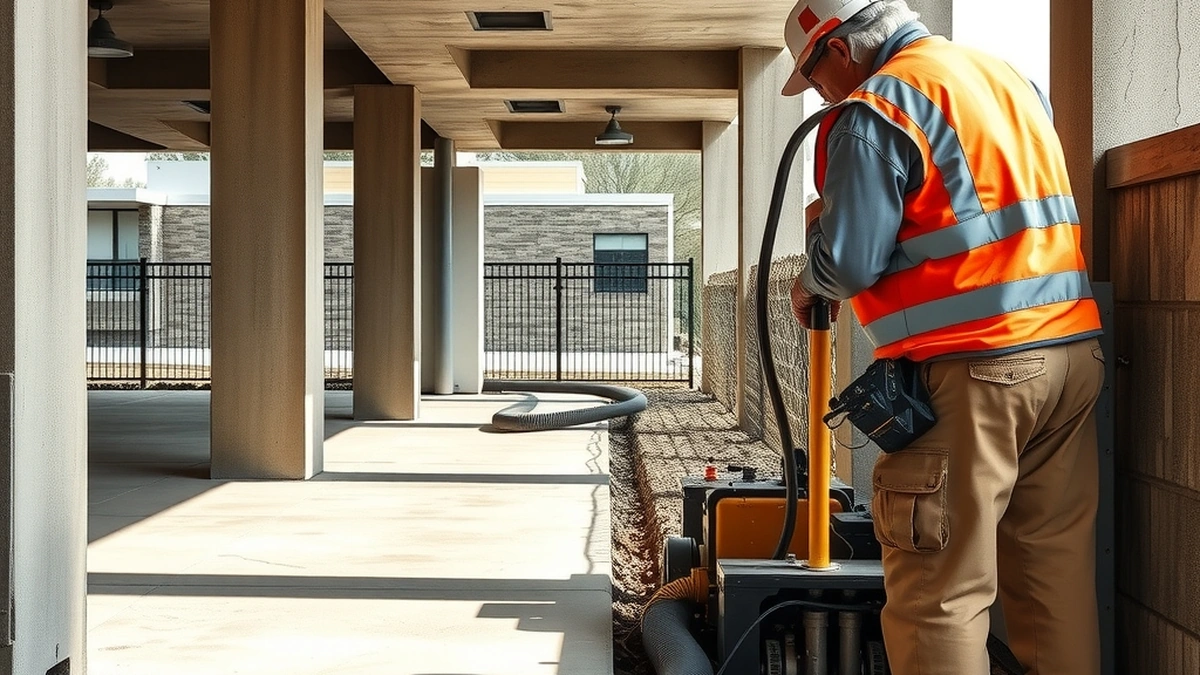
Slab lifting works by pumping a sand-cement slurry or expanding polyurethane foam through small drilled holes under settled concrete. The material fills voids and raises the slab to a target elevation, at $3 to $12 per sq ft.
- Cost per sq ft
- $3 - $12
- Slurry
- $3 - $8 per sq ft
- Foam
- $5 - $15 per sq ft
- Hole size
- 5/8 - 2 inches
- Cure to traffic
- 15 minutes to 24 hours
Some links on this page are affiliate links.If you buy through them we may earn a commission at no extra cost to you. We do not accept payment for rankings. Read the full disclosure.
Slab lifting works by putting material back under concrete that has lost its support. Holes are drilled through the slab, a slurry or foam is pumped in, and the pressure fills the void and raises the concrete to a target elevation. It costs $3 to $12 per sq ft, and it works on flatwork rather than on a house foundation.
Drilling the Holes
The crew drills a grid of holes through the slab, typically 1 to 2 inches in diameter for slurry and 5/8 inch for foam. Spacing is usually 4 to 6 feet, tighter where the settlement is greatest.
The holes are the access points, and their placement is part of the skill. Too few and the material cannot spread; too many and the slab is weakened. A good crew marks the low spots first and places holes where the lift is needed, not on a rigid grid.
Hole patching is part of the finished job. A patched hole that sits proud of the surface is a trip hazard, and one that sits low collects water. Ask how the holes will be patched and whether the patch is colour-matched to the surrounding concrete.
The Material
Slurry is a mix of sand, cement, and water, sometimes with bentonite for flow. It is heavy, inexpensive, and strong enough to support a driveway. Foam is a two-part polyurethane that expands on mixing, weighs a fraction as much, and cures in minutes.
The choice is a trade between cost and weight. A third option, cementitious grout at $6 to $12 per sq ft, sits between them and is used where a stronger fill is needed in a deep void. Slurry at $3 to $8 per sq ft is the budget option on stable soil. Foam at $5 to $15 per sq ft is the choice on weak soil, on a fast turnaround, or where the slab is thin.
The Lift
The pump injects material at low pressure while the crew watches a level or a laser target. As the void fills, pressure builds and the slab rises. The crew moves from hole to hole, lifting in stages rather than all at once.
Stopping is a judgment. The target is usually the surrounding grade or a stated elevation, not the maximum the pump can deliver. Over-lifting cracks the slab and can raise it above the adjacent surface, which creates a trip hazard and a drainage problem.
A Costed Example
A 250 sq ft walkway has settled 1.5 inches toward the house. The contractor proposes slurry at $6 per sq ft:
250 × $6 = $1,500
Add a mobilization minimum of $300 and patching of the holes at $150:
$1,500 + $300 + $150 = $1,950
That is a small job at the low end of the $3 to $12 band. A foam lift on the same walkway at $11 per sq ft would be $2,750 plus the same extras.
What Slab Lifting Fixes
| Problem | Lifting helps | Lifting does not help |
|---|---|---|
| Settled slab over a void | Yes | No |
| Slab with a height offset | Sometimes | No, if broken |
| Slab cracked into pieces | No | Replace |
| Heaving slab | No | Heave needs soil correction |
| Settled house footing | No | Piers required |
The distinction is support. A slab that has settled because the soil underneath washed away can be lifted and supported. A slab that is broken into independent pieces cannot be made to act as one again by lifting.
The Sequence
- Map the low spots and confirm the void with tap tests.
- Fix the water source that created the void.
- Drill the holes and set the injection ports.
- Pump material in stages, checking elevation.
- Stop at the target and patch the holes.
- Clean the joints and confirm drainage away from the building.
What Can Go Wrong
Over-lifting is the most common error. It cracks the slab and can create a reverse slope that sends water toward the house. A crew that lifts until the material runs out rather than until the target is reached is a crew that will cause a call-back.
Under-lifting is the second. A slab that is still low will pond water, and the ponding will find its way back under the slab. If the lift does not reach the target, the job is not finished.
A third error is lifting a slab that should have been replaced. Concrete that is cracked into separate panels will not rise as one plane, no matter how carefully the material is injected. The crack will reopen, and the money spent on the lift is gone.
Getting a Fair Price
Ask for the square footage, the material, the number of injection points, and whether patching is included. Compare the per-square-foot rate and the mobilization fee together, because a low rate with a high minimum can cost more than a higher rate on a small job. Ask for the total, then ask what would change it: extra depth, a second lift visit, or a slab that turns out to be thicker than expected.
For the method comparison, read mudjacking cost and slab lifting cost. If the settled concrete is a house foundation rather than flatwork, slab foundation repair covers the structural alternative. If the slab is part of a garage or a driveway, the same methods apply, but the load rating and the finish expectations are lower.
Frequently asked questions
How does slab lifting work?
Small holes are drilled through the slab, material is pumped underneath, and the pressure fills voids and raises the concrete. The crew stops when the slab reaches the target elevation.
How much does slab lifting cost?
It runs $3 to $12 per sq ft. Slurry is at the low end at $3 to $8, and polyurethane foam is at the high end at $5 to $15.
How long does slab lifting last?
The lift lasts as long as the cause is corrected. If water continues to wash out soil, the void returns and the slab settles again.
Can slab lifting raise a driveway?
Yes. Driveways, sidewalks, patios, garage floors, and pool decks are common candidates. A slab that is broken into moving pieces is not.
Does slab lifting work on a house foundation?
It lifts flatwork, not a footing. Structural settlement of a house needs piers that reach bearing soil, which is a different repair.
How soon can I drive on a lifted slab?
Vehicle traffic is usually held for 24 hours with slurry. Foam cures in about 15 minutes and can often take traffic the same day.
Sources
Some links are affiliate links.If you buy through them we may earn a commission at no extra cost to you. We do not accept payment for rankings. Read the full disclosure.