Slab Foundation Repair: Cracks, Voids, and Lifting
Slab foundations fail through voids, cracking, and settlement. Repair costs run $3 to $12 per sq ft for lifting and $6,000 to $30,000 for piers.
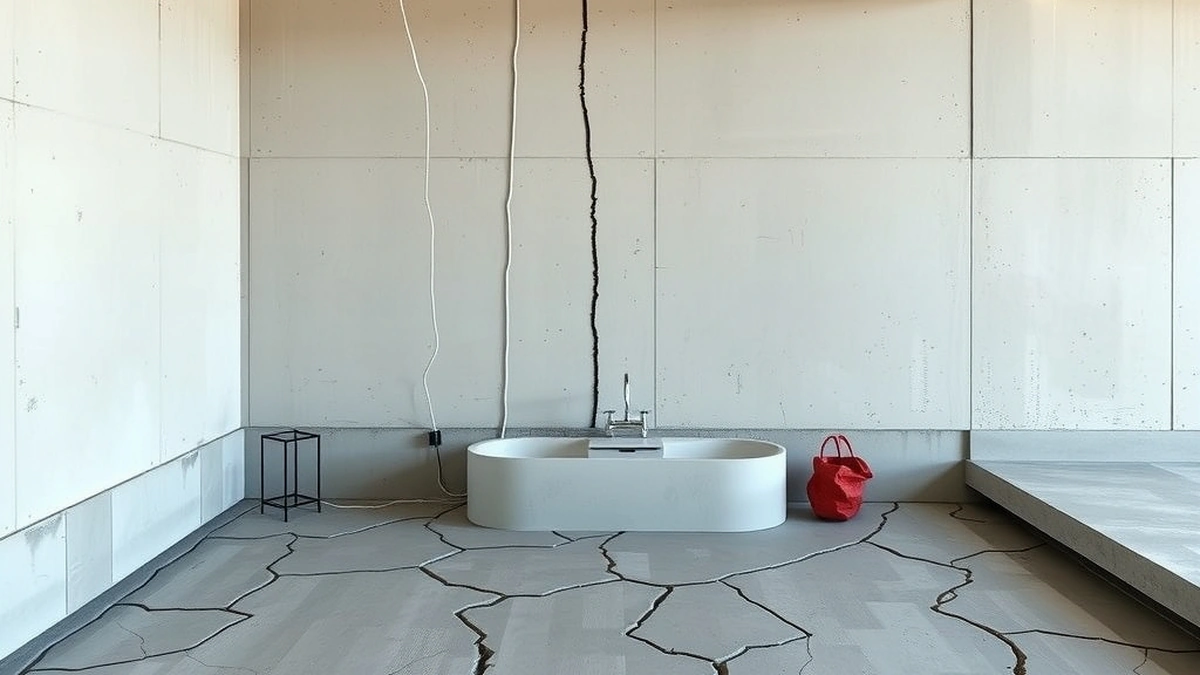
Slab foundation repair costs $3 to $12 per sq ft for lifting and $6,000 to $30,000 for structural underpinning. Cracks under 1/8 inch are usually cosmetic; widening cracks, voids, and displaced panels need investigation.
- Slab lifting
- $3 - $12 per sq ft
- Void filling
- $3 - $8 per sq ft
- Polyurethane foam
- $5 - $15 per sq ft
- Underpinning job
- $6,000 - $30,000
- Monitor crack at
- 1/8 inch
Some links on this page are affiliate links.If you buy through them we may earn a commission at no extra cost to you. We do not accept payment for rankings. Read the full disclosure.
Slab foundation repair costs $3 to $12 per sq ft for lifting and $6,000 to $30,000 for structural underpinning. The right repair depends on what failed: a crack in a sound slab, a void underneath it, or a footing that has settled. Those are three different jobs at three different prices.
The Three Slab Types
A slab on grade is a concrete slab poured directly on prepared soil, thickened at the perimeter to form a footing. A monolithic slab pours the footing and the floor in one continuous placement. A post-tension slab adds tensioned steel cables that compress the concrete and resist cracking.
Each type fails differently. A conventional slab cracks at shrinkage points and settles where the soil compacts. A monolithic slab moves as one unit, so a void at one corner tilts the whole floor. A post-tension slab resists cracking well but cannot be cut without a cable scan, which limits repair options.
Reading the Cracks
| Crack | Width or pattern | Meaning |
|---|---|---|
| Hairline, random | Under 1/16 inch | Shrinkage, usually cosmetic |
| Straight, full depth | Around 1/8 inch | Monitor and seal |
| Widening with offset | Over 1/8 inch | Movement, investigate |
| Map cracking | Network pattern | Surface shrinkage or alkali reaction |
| Crack around a corner | Diagonal from corner | Void or settlement at that corner |
Measure the width at the same point each month. A crack that grows is telling you the slab is still moving, and sealing it before the movement stops wastes the seal.
Lifting and Void Filling
Slab lifting raises a settled slab by injecting material underneath. A sand-cement slurry costs $3 to $8 per sq ft, and polyurethane foam costs $5 to $15 per sq ft. The same injection fills the void that let the slab settle.
The arithmetic is simple. A 500 sq ft garage floor lifted with slurry at $6 per sq ft:
500 × $6 = $3,000
The same floor with foam at $11 per sq ft:
500 × $11 = $5,500
Foam costs more but weighs a fraction of slurry and cures in minutes, which matters on weak soil or when the floor has to be back in service the same day.
Structural Repair
When the slab’s footing has settled, lifting the slab alone will not fix it. The footing needs support from below, which means piers. Push piers run $1,000 to $3,000 each and helical piers run $700 to $2,500 each, and a typical house needs several.
A full underpinning job at $6,000 to $30,000 reflects that count. The slab is then patched where the piers were installed, and the lift restores the floor elevation.
A Costed Example
A 1,700 sq ft house has settled 1 inch at one corner. The engineer specifies six push piers at $1,900 each and slab patching afterward.
6 × $1,900 = $11,400
Add engineering at $900 and patching at $1,200:
$11,400 + $900 + $1,200 = $13,500
That sits in the $6,000 to $30,000 underpinning band and well above a simple lift, which is the difference between supporting a footing and lifting a slab.
Repair Versus Replace
| Condition | Repair | Replace |
|---|---|---|
| Stable crack under 1/8 inch | Seal or inject | No |
| Void with intact slab | Fill and lift | No |
| Settled footing | Underpin | No |
| Slab broken into moving pieces | Unlikely to hold | Yes |
| Widespread map cracking with deterioration | Assess | Often yes |
Replacement of a slab is a larger project than most homeowners expect, because it involves removing the floor, protecting or relocating services, and restoring the interior. It is justified when the slab can no longer act as a unit.
Post-tension slabs need one extra step before any repair. The cables are under high tension, and cutting one can release that energy violently, so no contractor should drill or cut a post-tension slab without a cable scan and a plan. The scan typically adds $300 to $700 to the job. It is not optional, and a contractor who dismisses the concern is a contractor to replace.
The Repair Sequence
- Map the cracks and photograph them with a scale.
- Tap-test the slab and check for hollow areas and flexing.
- Confirm whether the slab is post-tensioned before any drilling.
- Fix the water source that created the void or the settlement.
- Fill voids and lift, or underpin the footing, to the engineer’s design.
- Patch the injection holes and restore the floor finish.
When to Call an Engineer
Call one when a crack reaches 1/8 inch, when a floor has dropped more than an inch across a room, when doors and windows bind, or when the slab is post-tension and needs work. The inspection runs $400 to $1,500 and produces the scope that makes the repair price meaningful.
For the type comparison, read slab foundation and floating slab. If the slab is post-tension, post-tension slab explains the scanning requirement, and slab lifting cost covers the injection pricing in more detail.
A repaired slab should be watched for one full year. Note the cracks that were sealed, photograph them in the same light, and compare widths in the spring and again in the fall. If a sealed crack reopens, the cause was not corrected, and the next step is drainage or underpinning rather than another seal.
Frequently asked questions
How much does slab foundation repair cost?
Lifting and void filling run $3 to $12 per sq ft. Structural underpinning for a settled slab runs $6,000 to $30,000, and full replacement of a failed slab is priced separately.
Can a cracked slab foundation be repaired?
Yes. Stable cracks are injected or sealed, voids are filled, and settled areas are lifted. A slab cracked into several independently moving pieces is usually replaced rather than repaired.
How do I know if my slab has a void under it?
A hollow sound when tapped, a floor that flexes, cracks radiating from a corner, and a difference in sound across the slab are the common signs. A contractor can confirm with probe holes.
Is slab lifting permanent?
It is permanent when the cause has been corrected. If water continues to wash out soil under the slab, the void returns and the lift fails, so drainage work usually accompanies the repair.
What is a post-tension slab?
A slab reinforced with tensioned steel cables rather than ordinary rebar. It is strong but cannot be cut or drilled without a cable scan, which changes how repairs are done.
Does slab repair require a permit?
Structural underpinning and post-tension work usually require a permit. Cosmetic crack sealing and small void fills often do not, but the rule varies by jurisdiction.
Sources
Some links are affiliate links.If you buy through them we may earn a commission at no extra cost to you. We do not accept payment for rankings. Read the full disclosure.