How a Root Barrier Works: Panel, Depth, Roots
A root barrier redirects tree roots away from a foundation. See the panel, the depth, the installation, and the limits.
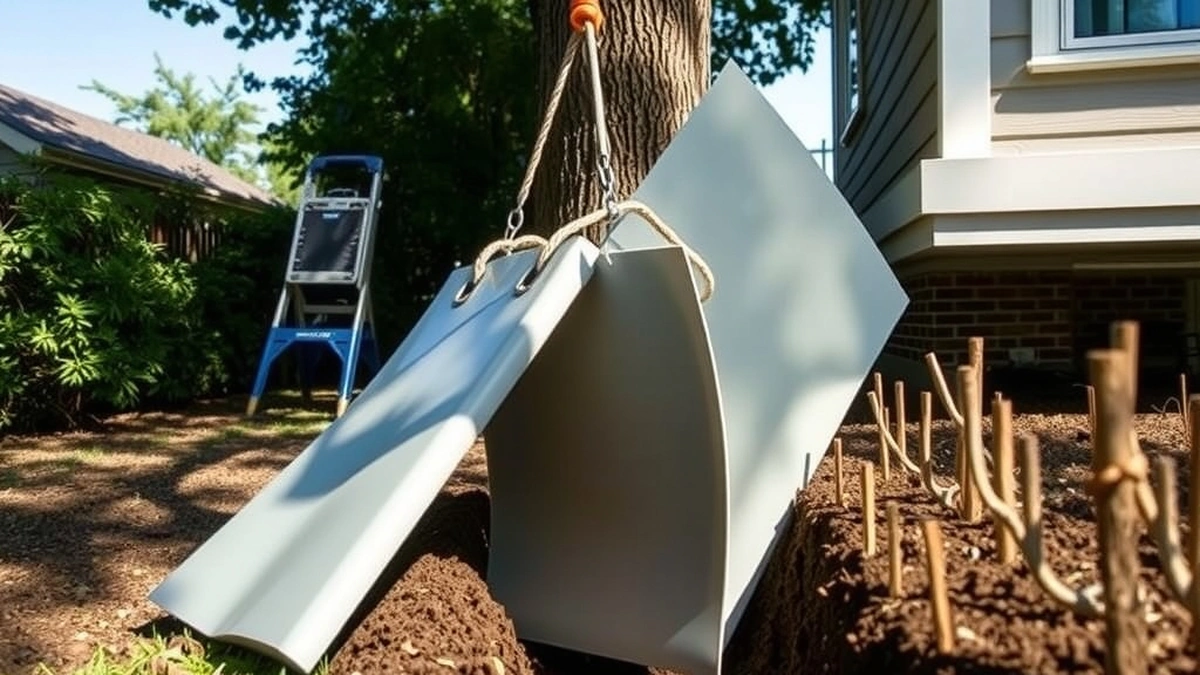
A root barrier works by placing a rigid panel in the soil between a tree and a foundation, so roots turn along it instead of growing into the protected zone. Installed cost runs $8 to $20 per linear foot, which is a small fraction of the structural repair it is meant to prevent.
- Cost per linear ft
- $8 - $20
- Panel depth
- 24 - 36 inches
- Common material
- HDPE
- Distance from wall
- At least 4 feet
- Typical job
- $500 - $4,000
Some links on this page are affiliate links.If you buy through them we may earn a commission at no extra cost to you. We do not accept payment for rankings. Read the full disclosure.
A root barrier works by making the roots take a different path. A rigid panel is set vertically in the soil between a tree and a foundation, and roots that reach it turn and run along the face instead of pushing into the protected zone. Installed cost runs $8 to $20 per linear foot, which is a small fraction of the structural repair it is meant to prevent.
The Problem It Solves
Tree roots do not usually break a foundation. They dry the soil, and on expansive clay that drying shrinks the soil and drops the footing nearest the tree. Roots also lift slabs and walks as they grow beneath them.
A barrier interrupts the first mechanism by keeping new roots out of the zone beside the foundation. It does not reverse damage that has already happened, but it stops the process from continuing.
That is why timing matters more than material. A barrier installed before the roots arrive is cheap protection. A barrier installed after the footing has dropped is an add-on to an expensive repair, and the repair is what the homeowner remembers.
The Panel
HDPE is the standard residential material. It is flexible enough to install in a trench, rigid enough to deflect roots, and resistant to rot and corrosion. Thickness typically ranges from 40 to 60 mil.
Steel panels are used where roots are particularly aggressive or where the barrier has to be very durable. They cost more and are harder to install, but they last longer in difficult soils.
The Depth
| Tree type | Distance from wall | Barrier depth |
|---|---|---|
| Small ornamental | 8 - 10 feet | 18 - 24 inches |
| Medium shade tree | 10 - 15 feet | 24 - 30 inches |
| Large shade tree | 15 - 20 feet | 30 - 36 inches |
| Aggressive species | 20 feet or more | 36 inches |
The depth matters because the roots that dry the soil under a footing are often deeper than the surface roots homeowners see. A shallow barrier looks tidy and does very little. Roots below the panel simply pass under it and continue to the foundation.
Installation
The trench is dug along the barrier line, usually with a trencher or a mini-excavator. Utilities must be located first. The panel is set in the trench with overlaps facing the tree so roots cannot find a seam, and the trench is backfilled and compacted. The top edge should sit at or just above grade so the barrier is visible for future reference.
Roots that cross the line are cut cleanly with a sharp tool rather than torn. A torn root is more likely to decay and to send up suckers. If a large structural root has to be cut, an arborist should make that call. Removing more than a small fraction of a tree’s root system can destabilize it, and a tree that falls on the house is a worse outcome than a cracked slab.
A Costed Example
A 45-foot barrier at $12 per linear foot:
45 × $12 = $540
Add root pruning at $250 and soil disposal at $150:
$540 + $250 + $150 = $940
That is a typical job and sits in the $500 to $4,000 range.
The Sequence
- Identify the tree and its root spread with an arborist.
- Call 811 and locate utilities.
- Mark the barrier line at least 4 feet from the wall.
- Excavate to the specified depth.
- Set the panels with overlaps facing the tree.
- Backfill and compact, then restore the surface.
- Monitor the tree for stress in the first year.
Limits
A barrier does not stop roots that are already inside the protected zone. It also does not stop roots from going under the panel if it is too shallow, or around the ends if it is too short.
It does not repair foundation movement. If the footing has already settled, the barrier is paired with structural repair, and the structural repair is the larger cost.
And it does not stop a tree from growing. The panel redirects roots, but the trunk and canopy keep expanding, and a tree that is too close to the house will eventually need to be removed or the barrier will need to be extended.
What to Ask a Contractor
Ask for the material, the thickness, and the depth in inches. Ask how the ends will be terminated so roots cannot go around. Ask whether an arborist will assess the tree before roots are cut, and ask for the utility locate ticket. Ask how the crew will deal with a root larger than the panel can deflect, because that decision should be made before the trench is open.
Ask, too, whether the barrier will be recorded on a site plan. A future fence post or planting hole can cut through a barrier nobody knows is there.
Finally, water the tree evenly during drought. A tree that is stressed will send roots farther in search of water, and roots that reach the barrier will run along it toward any gap. Consistent irrigation keeps the root system where it belongs.
For the cost detail, read what root barrier costs and tree roots repair. If the foundation has already moved, foundation settlement repair covers the structural work.
Frequently asked questions
How does a root barrier work?
A rigid panel is installed vertically between the tree and the foundation. Roots that reach it turn and grow along it, staying out of the protected zone.
How deep should a root barrier go?
Most residential barriers are 24 to 36 inches deep. The depth depends on the tree species and the soil, and an arborist can set it.
When should a root barrier be installed?
Before roots reach the foundation. It is prevention, not repair, and it works best on a tree that is 10 to 20 feet from the house.
Can a root barrier damage the tree?
A properly placed barrier outside the critical root zone has little effect. Cutting too close to the trunk can destabilize the tree, which is why an arborist should be involved.
What material is best for a root barrier?
HDPE is the common residential choice. Steel is used where roots are aggressive, and flexible membranes are cheaper but less durable.
Does a root barrier stop foundation movement?
It prevents new root growth from drying the soil. Movement that has already occurred needs structural repair in addition.
Sources
Some links are affiliate links.If you buy through them we may earn a commission at no extra cost to you. We do not accept payment for rankings. Read the full disclosure.