Foundation Settlement Repair: Methods and Costs
Settlement repair stabilizes a footing that has dropped into weak soil. Compare piers at $700 to $3,000 each with grouting and slab lifting.
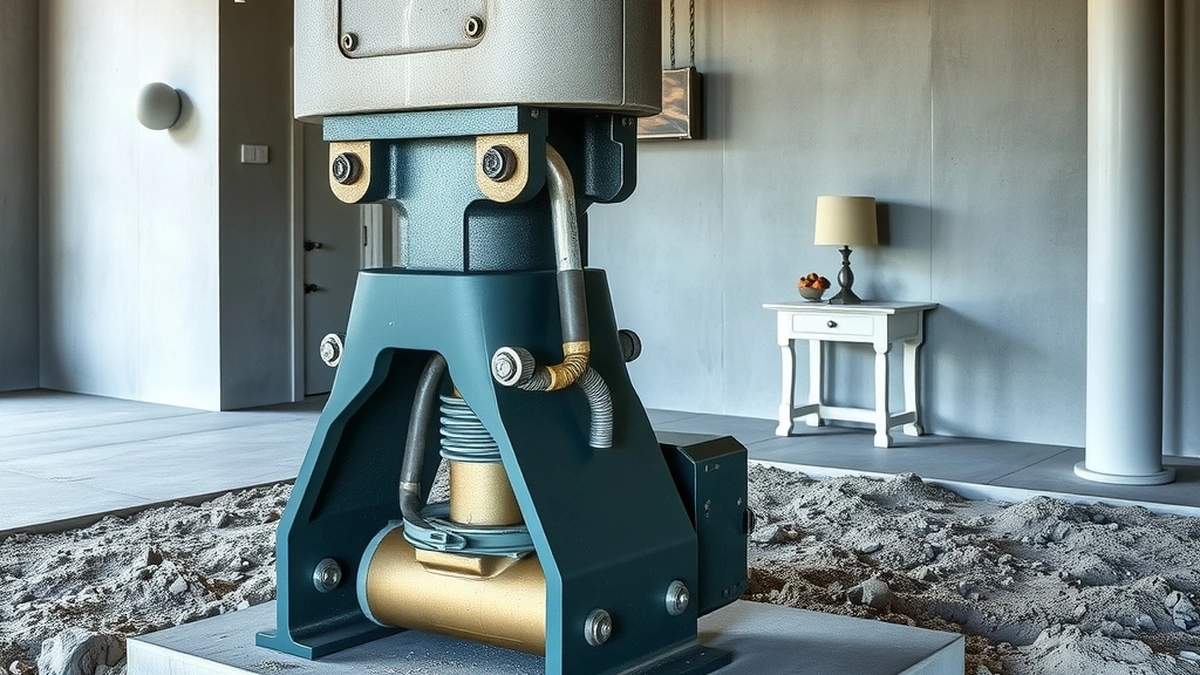
Foundation settlement repair costs $6,000 to $30,000 for pier work, rising to $20,000 to $40,000 for major structural movement. Piers at $700 to $3,000 each transfer load to bearing soil; grouting and slab lifting suit shallow voids.
- Pier repair range
- $6,000 - $30,000
- Push pier each
- $1,000 - $3,000
- Helical pier each
- $700 - $2,500
- Major repair
- $20,000 - $40,000
- Movement limit
- 2 inches
Some links on this page are affiliate links.If you buy through them we may earn a commission at no extra cost to you. We do not accept payment for rankings. Read the full disclosure.
Foundation settlement repair costs $6,000 to $30,000 for a pier system, and the goal is to stop the footing from dropping further before lifting it back. Settlement is vertical movement caused by soil that cannot carry the load. Repair transfers that load to soil that can, and the method depends on how deep that soil sits.
What Settlement Is
Foundation settlement is the downward movement of a footing or slab into soil that has compressed, washed away, or failed to compact in the first place. It differs from heave, which is upward movement from expanding soil, and from lateral movement, which is a wall being pushed inward.
The distinction matters because the repairs are opposite. Settlement is fixed by supporting from below. Heave is fixed by removing or isolating the expansive material. A crew that treats heave as settlement will drive piers into soil that is already pushing up.
The Causes
| Cause | Sign | Fix |
|---|---|---|
| Uncompacted fill | Settlement soon after construction | Piers through fill |
| Plumbing leak | Localized dip, wet soil | Fix pipe, then piers |
| Poor drainage | Settlement at one corner | Drainage, then piers |
| Drought-shrunk clay | Seasonal movement, returns when wet | Deep piers or soil treatment |
| Organic soil | Steady, long-term drop | Piers to bearing |
The plumbing leak is the one homeowners miss most often. A slow supply line leak under a slab washes out fines for months, and the first visible sign is a dip in the floor. Fixing the pipe without addressing the void leaves the slab unsupported.
The Repair Methods
| Method | Cost | Depth | Best for |
|---|---|---|---|
| Push piers | $1,000 - $3,000 each | Deep | Structural settlement |
| Helical piers | $700 - $2,500 each | Medium to deep | Lighter loads, tight access |
| Soil grouting | $3 - $10 per sq ft | Shallow | Voids under slabs |
| Slab lifting | $3 - $12 per sq ft | Shallow | Flatwork, not structure |
Push piers are driven to refusal, which means they stop when the soil stops them. That is the point: the pier finds competent ground rather than assuming a depth. Helical piers reach a specified torque, which correlates with capacity, and are installed by rotation rather than driving.
Measuring Before You Repair
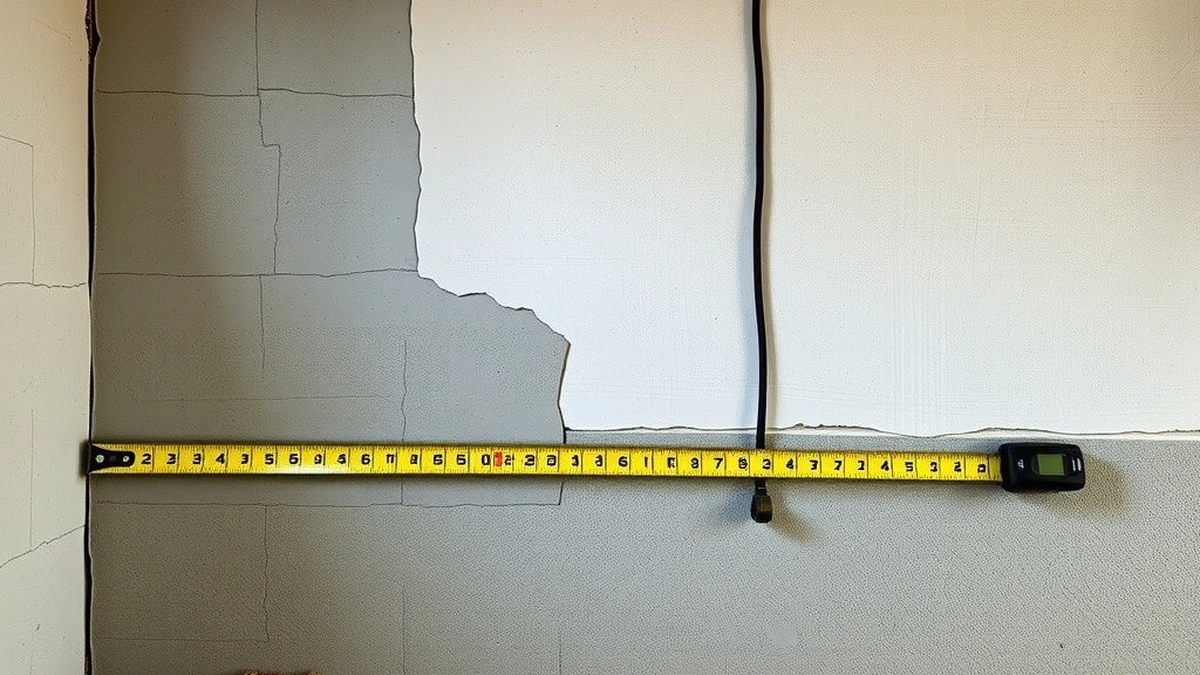
Record the floor elevation at the high and low points of each room. A drop of half an inch across a room is noticeable; an inch is significant; more than 2 inches is the practical limit for lifting without major structural work.
Measure the cracks too. A crack at 1/16 inch is cosmetic, 1/8 inch is the monitoring threshold, and a widening crack with vertical offset confirms active settlement. Photograph each reading with a scale so the next measurement is comparable.
A Costed Repair
A 1,600 sq ft house has settled 1.5 inches at the front corner. The engineer specifies eight push piers at $2,000 each:
8 × $2,000 = $16,000
Add engineering at $1,000, a plumbing repair at $1,200, and interior restoration at 10% to 25%:
$16,000 × 0.10 = $1,600 $16,000 × 0.25 = $4,000
All-in: $19,800 to $22,200. That is a major repair, and it reflects the combination of structural work and cause correction. Skipping the plumbing repair would save $1,200 and guarantee a second settlement.
The Sequence
- Measure floor elevations and crack widths, and photograph everything.
- Find the water source: plumbing test, drainage survey, and grading check.
- Book an engineer for a design and a lift tolerance.
- Fix the cause, whether that is a pipe, a downspout, or a slope.
- Install piers to the design and lift in small increments.
- Lock off, record the lift, and backfill.
- Repair interior finishes after a settling period.
Settlement Versus Heave
Settlement goes down; heave goes up. Heave usually shows as a crack that is wide at the top and narrow at the bottom, a floor that is high in the middle, and doors that bind in wet weather and free up in dry weather. Driving a pier under a heaving footing makes the heave worse, because the pier holds the slab against the expanding soil.
If the movement reverses with the seasons, get the soil tested before any repair. Expansive clay is common across large parts of Texas, Colorado, and the Midwest, and the correct repair there is often a deeper pier that isolates the structure from the active zone rather than a shallow lift.
A useful field test costs nothing. Watch the doors and the cracks across a wet spring and a dry August. If the gaps open in drought and close after rain, the soil is the variable, and the repair has to account for the full seasonal range rather than the condition on the day of the estimate.
Choosing a Contractor
Ask for the pier count, the design depth, and the refusal criteria. Ask what happens if the piers reach refusal early. Ask whether the price includes fixing the water source, because a repair that ignores the cause is a deposit on the next repair.
For the method comparison, read underpinning cost and differential settlement. If the soil is the problem rather than the footing, expansive clay soil explains what the engineer is likely to specify.
Frequently asked questions
How much does foundation settlement repair cost?
Most settlement repairs run $6,000 to $30,000 for pier systems. Major structural movement can reach $20,000 to $40,000 once lifting, restoration, and drainage work are included.
What causes a foundation to settle?
Soil compression, washed-out soil from a plumbing leak or poor drainage, fill that was never compacted, and shrinking clay during drought are the common causes.
Can a settled foundation be lifted back?
Yes, within limits. Lifting is practical up to about 2 inches of movement, and the engineer sets the tolerance. Beyond that, the frame and plumbing may not tolerate the correction.
Is underpinning the same as settlement repair?
Underpinning is the main method of settlement repair. It installs deeper support beneath the footing. Other methods, such as grouting, address the soil rather than the structure.
How long does settlement repair last?
A steel pier driven to competent bearing soil is designed to last the life of the structure and is typically warranted as such, with transferable coverage.
Can I just fill the crack and ignore the settlement?
No. Filling hides the symptom while the footing continues to drop, and the crack reopens. The settlement has to be arrested before cosmetic repair makes sense.
Sources
Some links are affiliate links.If you buy through them we may earn a commission at no extra cost to you. We do not accept payment for rankings. Read the full disclosure.