How Basement Waterproofing Works: Exterior vs Interior
Waterproofing stops water at the wall or manages it inside. See the membrane, the drain, the sump, and how each part works together.
Basement waterproofing works either by stopping water at the outside face with a membrane and footing drain, or by collecting it inside with a drain and sump. Exterior systems cost $4,000 to $12,000; interior systems cost $2,000 to $8,000.
- Exterior system
- $4,000 - $12,000
- Interior system
- $2,000 - $8,000
- Sump pump
- $600 - $3,000
- Crack injection
- $400 - $1,200
- Grading fix
- $1,500 - $4,000
Some links on this page are affiliate links.If you buy through them we may earn a commission at no extra cost to you. We do not accept payment for rankings. Read the full disclosure.
Basement waterproofing works in one of two ways. An exterior system stops water before it reaches the wall, using a membrane and a footing drain. An interior system collects water that has already entered and pumps it out. The first is more effective and more expensive; the second is cheaper and faster and leaves the wall under pressure.
The Water Path
Water reaches a basement in three ways. It runs down the surface and soaks the backfill, it flows through the soil to the footing, and it rises as a water table. Each path needs a different intervention.
Surface water is the easiest to fix. Gutters, downspouts, and grading handle it for a few hundred dollars. Water at the footing needs a drain. A rising water table needs a sump and a pump, because no membrane will hold back a head of water indefinitely.
Damp Proofing Is Not Waterproofing
Damp proofing is a thin coating applied to the wall to resist soil moisture. It is cheap, and it is what many production builders applied for decades. It is not waterproofing, because it cannot resist hydrostatic pressure, and it breaks down under a head of water.
Waterproofing is a membrane system designed for pressure. It costs more and it is installed differently, with protection board and a drain. If a contractor quotes a coating and calls it waterproofing, the quote is for damp proofing, and it will not solve a wet basement.
The Exterior System
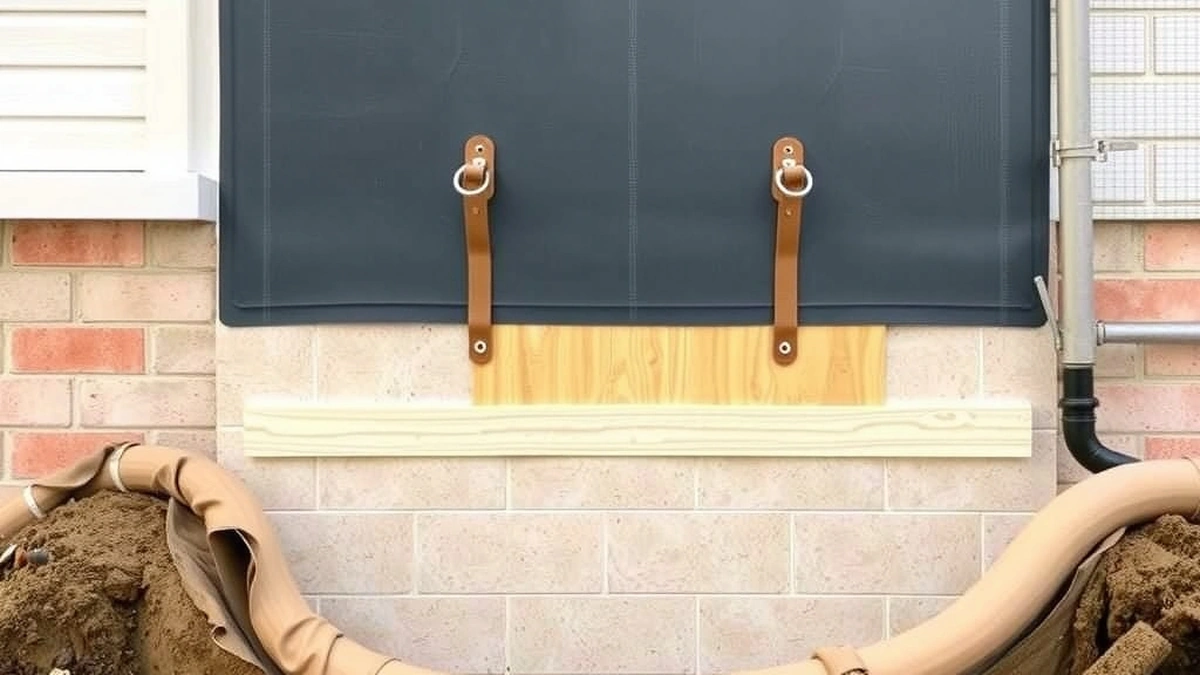
The exterior system starts with excavation to the footing. The wall is cleaned and repaired, a waterproof membrane is applied, and drainage board is set against it to protect the membrane and channel water down. A perforated footing drain is placed at the base and covered in gravel.
The drain leads to a discharge point, often a gravity line to a lower grade or a sump pit. The trench is backfilled with gravel and soil, and the grading is restored so surface water runs away. The whole system works because water never reaches the wall. The catch is that the excavation has to be complete and the membrane has to be continuous, because a single gap becomes the path for all the water the system was meant to stop.
The Interior System
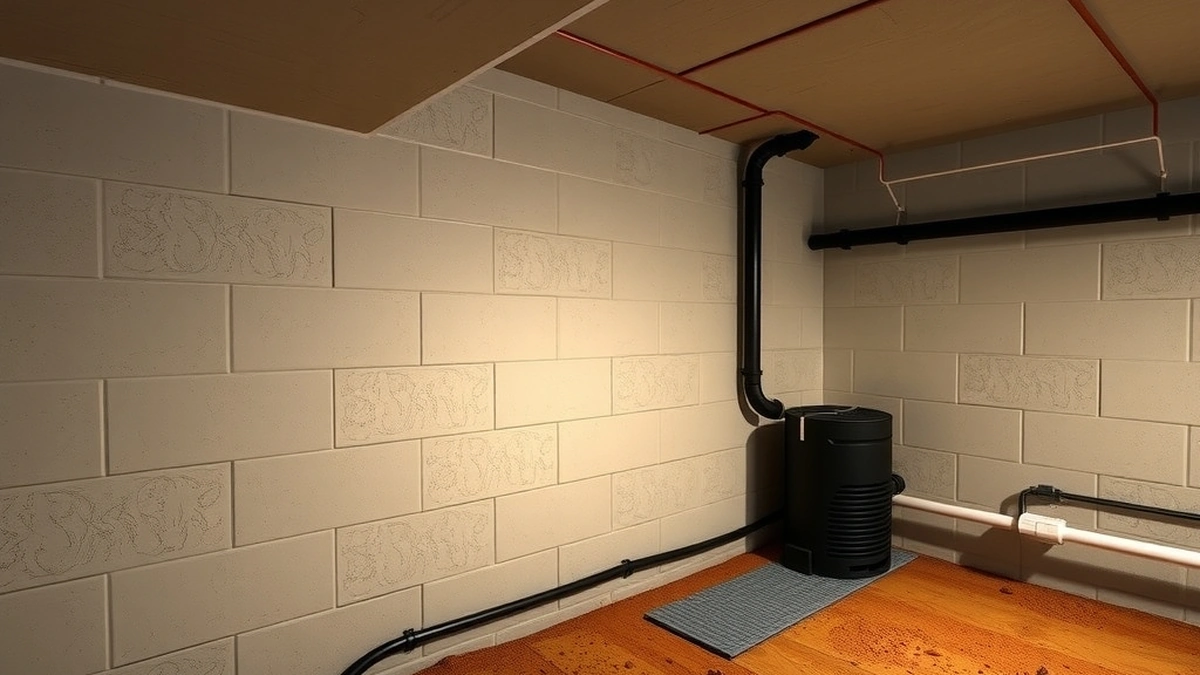
The interior system starts inside. A trench is cut along the floor-wall joint, a perforated pipe is laid in gravel, and the pipe leads to a sump pit. The floor is patched over the trench, and a pump lifts the water out.
This system does not stop water from entering the wall. It intercepts the water at the base and removes it before it spreads across the floor. The wall stays wet, and in a cold climate that can mean efflorescence and freeze-thaw damage.
The Comparison
| Feature | Exterior | Interior |
|---|---|---|
| Stops water at the wall | Yes | No |
| Cost | $4,000 - $12,000 | $2,000 - $8,000 |
| Disruption | Excavation, landscaping | Floor cutting |
| Wall pressure | Relieved | Unchanged |
| Best for | Bowing walls, high water | Minor seepage |
A wall that is bowing needs the exterior approach, because reducing the pressure is part of the structural fix. A dry basement with one damp corner may only need an interior drain or a crack injection. The honest recommendation follows the wall condition, not the product the company prefers to sell.
A Costed Example
A 36-foot wall waterproofed on the exterior:
Excavation: 36 × $100 = $3,600 Membrane and board: 36 × $45 = $1,620 Footing drain: 36 × $35 = $1,260 Sump and discharge: $1,400
Total: $7,880, which sits in the middle of the $4,000 to $12,000 band.
The Sequence
- Find the water source with a hose test and a look at the grading.
- Fix gutters, downspouts, and grading first.
- Choose exterior or interior based on the wall condition.
- Install the membrane and drain, or the interior drain and sump.
- Route the discharge to a legal point away from the house.
- Restore the surface and test with water.
What Homeowners Get Wrong
The most common error is buying an interior system for a wall that is bowing. The water gets managed, but the wall keeps moving because the pressure is unchanged. The second is sealing cracks without fixing the water, which produces a dry basement for a season and a wet one after.
The third is a discharge that dumps beside the foundation. A homeowner can check the outlet in five minutes and extend it with a $20 length of corrugated pipe, which is the cheapest repair in this article.
The fourth is skipping the hose test. Run water against the wall for 30 minutes before the crew leaves and watch for it inside. A system that has not been tested is a system that has not been proven, and the crew is the easiest audience to have when a problem appears. A sump that pumps water out and drops it at the wall is recycling it. Extend the discharge 4 to 6 feet or run it to a dry well.
For the cost detail, read basement waterproofing cost and basement waterproofing methods. If the wall is also cracked or bowing, basement wall repair cost covers the structural work that waterproofing does not do.
Frequently asked questions
How does exterior basement waterproofing work?
The wall is excavated to the footing, a waterproof membrane and drainage board are applied, and a footing drain carries water away. The system stops water before it reaches the wall.
How does interior waterproofing work?
A drain is installed along the floor-wall joint and leads to a sump pit, where a pump lifts the water outside. It collects water that has already entered.
Which is better, interior or exterior?
Exterior is more effective because it addresses the water before it reaches the wall. Interior is cheaper and less disruptive, and it is adequate for minor seepage.
Does waterproofing fix a cracked wall?
It stops water but does not restore structural capacity. A cracked or bowing wall needs structural repair in addition to waterproofing.
How long does basement waterproofing last?
An exterior membrane and footing drain can last 20 to 30 years. An interior system lasts as long as the pump and drain are maintained.
Can I waterproof only part of a basement?
Yes. A single wet wall can be waterproofed on its own, and interior drains are often installed along one or two walls rather than the full perimeter.
Sources
Some links are affiliate links.If you buy through them we may earn a commission at no extra cost to you. We do not accept payment for rankings. Read the full disclosure.