Polyurethane Foam Lifting Problems and Limits
Foam lifting fails when the cause is not fixed, the slab is broken, or the foam is injected too deep. See the limits and the checks.
Polyurethane foam lifting problems include unaddressed water that recreates the void, lifting a slab that is broken, over-expansion that cracks concrete, and foam that is too dense or too thin. It costs $5 to $15 per sq ft.
- Cost per sq ft
- $5 - $15
- Cure time
- 15 minutes
- Common failure
- Void returns
- Repair of failure
- $3,000 - $8,000
- Mudjacking alternative
- $3 - $8 per sq ft
Some links on this page are affiliate links.If you buy through them we may earn a commission at no extra cost to you. We do not accept payment for rankings. Read the full disclosure.
Polyurethane foam lifting problems fall into two groups: problems with the slab and problems with the cause. A broken slab cannot be lifted as one plane, and a slab over an active water path will settle again no matter how good the foam is. The material is reliable; the diagnosis is where jobs fail, and the diagnosis is the part the homeowner can check before signing.
The Void Returns
Foam fills the space under a slab, and it does not absorb water. That makes it more durable than slurry in wet conditions. It does not, however, stop water from washing soil out from under the foam.
If the downspout still discharges at the corner and the grade still slopes toward the house, the soil under the foam will continue to erode. Extending the downspout is a $90 fix; a regrade is $1,500 to $4,000. The foam becomes a bridge, and eventually the slab drops again. Drainage correction is not an upsell; it is part of the repair. A lift without it is a temporary correction of a permanent water problem.
The second issue is soil type. Foam fills a void, but it does not compact loose soil around it. If the subgrade is soft over a wide area, the slab can settle again at the edge of the foam, which is why the injection pattern has to extend beyond the visibly low spot.
Broken Slabs
| Condition | Foam lifting | Better option |
|---|---|---|
| Intact slab, settled | Good | Foam or slurry |
| Cracked into moving pieces | Poor | Replacement |
| Heaving slab | Wrong | Soil correction |
| Slab with a void only | Good | Foam or slurry |
| Settled footing | Wrong | Piers |
A slab that has broken into panels will not rise as a unit. The foam lifts whatever is above the injection point, and the joints open or the surface becomes uneven. Lifting a broken slab is money spent on a surface that will not stay flat.
Over-Expansion
The foam expands many times its injected volume. That is efficient, and it is also the reason over-injection is a risk. Too much material lifts the slab above the target, creates a reverse slope, and can crack the concrete.
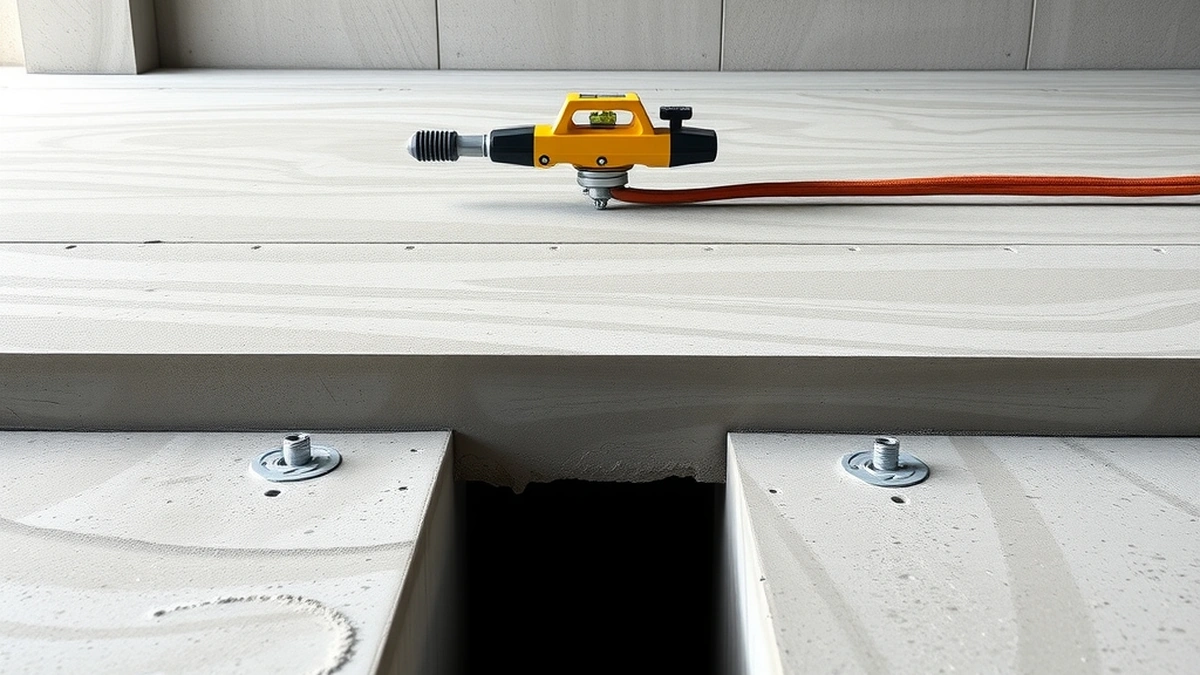
The control is staged injection with a level or laser reading. The crew injects, checks, and injects again. A crew that fills each hole to refusal is not measuring the result, and the result is what matters. The level reading is the only evidence that the slab ended up where it was supposed to, so ask to see it during the work rather than after.
Foam Quality
| Property | Good sign | Warning sign |
|---|---|---|
| Density | Specified in the proposal | Not stated |
| Rise time | Controlled, gradual | Instant, violent |
| Cell structure | Uniform, closed | Brittle or crumbly |
| Water resistance | Closed cell | Open cell |
Density and formulation vary, and a low-density foam may not support the load. Ask what density is specified and why. Ask, too, whether the foam is closed cell, because closed cell resists water better in a wet subgrade. Ask for the manufacturer’s data sheet and compare the compressive strength with the load the slab carries.
A Costed Failure
A 300 sq ft patio lifted for $3,300 at $11 per sq ft, which settles again after two years because the grading was not corrected. Re-lifting and correcting drainage:
Lift: 300 × $11 = $3,300 Drainage: $1,800
Total second spend: $5,100
The first lift plus the second is $8,400, against $2,400 for the drainage correction that would have prevented it. The arithmetic is the argument for doing the whole job once.
The Limits
Foam lifting works on intact slabs over shallow voids with the water controlled. It does not work on broken slabs, heaving slabs, or structural footings. It is a flatwork repair, and it does not create a load path to bearing soil. A driveway, a patio, a garage floor, and a sidewalk are the appropriate targets.
It also does not replace missing support at depth. A slab over a settled footing can be lifted and will drop again, because the footing has not moved back.
The Sequence to Avoid Problems
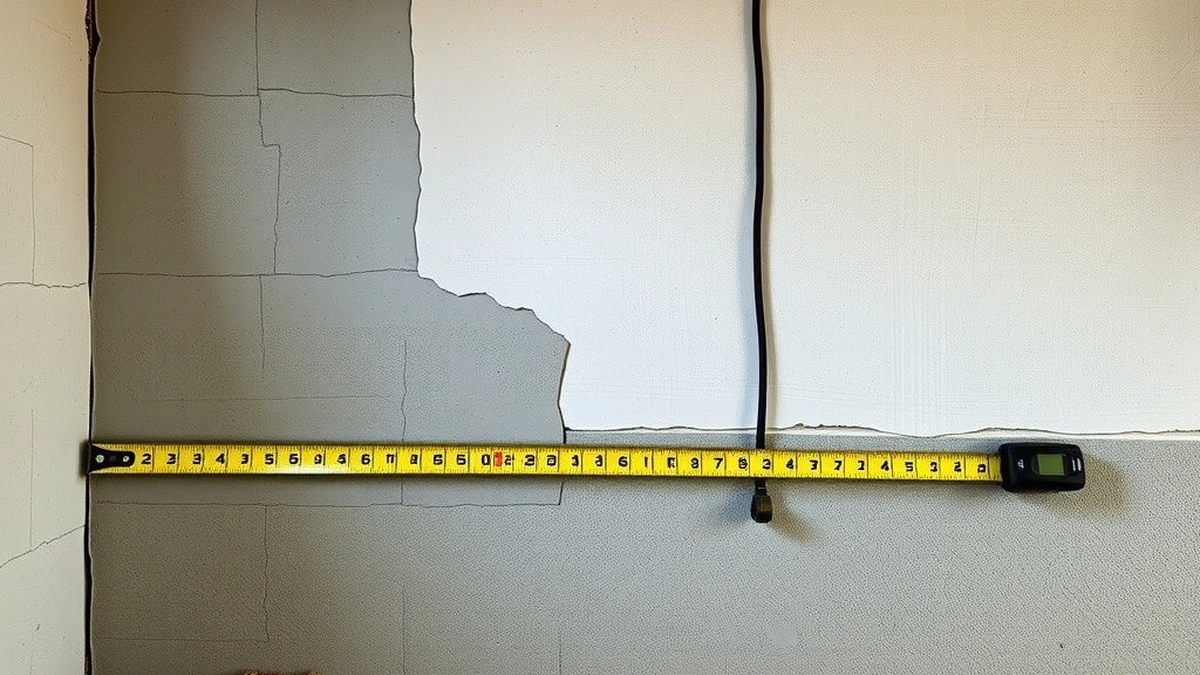
- Confirm the slab is intact with a crack map.
- Fix the water source before injection.
- Specify the foam density and the target elevation.
- Inject in stages, checking the level.
- Stop at the target, not at material refusal.
- Patch the holes and confirm drainage.
- Recheck after one wet season.
What to Ask a Contractor
Ask for the foam density and the injection plan. Ask how the lift will be measured and who records the readings. Ask what happens if the target is overshot, because the remedy is a second, careful lift or a grind, and both should be priced before the crew starts. Ask whether drainage correction is included, and if it is not, get a price for it before the lift is scheduled. A contractor who cannot explain why the void formed is a contractor who is treating the symptom.
For the method detail, read polyurethane foam lifting cost and how slab lifting works. If the slab is broken, slab cracks repair explains when replacement is the honest answer.
Frequently asked questions
What are the problems with polyurethane foam lifting?
The void can return if water is not controlled, a broken slab cannot be lifted as one plane, and over-injection can lift a slab too far or crack it.
How long does foam lifting last?
The foam itself is stable for decades. The repair lasts as long as the cause is corrected, so drainage has to be addressed for the lift to hold.
Can foam lifting crack concrete?
Yes, if the foam expands too much or is injected under a slab that is already broken. The lift should be done in stages with elevation monitoring.
Is foam better than mudjacking?
Foam is lighter and cures faster, which suits weak soil and fast turnarounds. Mudjacking costs less and is adequate on stable subgrade.
Can foam be used under a house foundation?
It can fill voids and lift slabs, but structural settlement of a house needs piers that reach bearing soil. Foam does not create a load path to depth.
What should I ask before hiring a foam contractor?
Ask for the foam density, the injection plan, the target elevation, and whether drainage correction is included. Ask how the lift will be measured.
Sources
Some links are affiliate links.If you buy through them we may earn a commission at no extra cost to you. We do not accept payment for rankings. Read the full disclosure.