Polyurethane Foam Lifting Cost: Slab and Soil
Polyurethane foam lifting costs $5 to $15 per sq ft, against $3 to $8 for mudjacking. See what the extra money buys and when it is worth it.
Polyurethane foam lifting costs $5 to $15 per sq ft, compared with $3 to $8 for mudjacking. The foam is lighter, cures in minutes, and resists water, which makes it the better choice on weak soil or a fast turnaround.
- Foam lifting
- $5 - $15 per sq ft
- Mudjacking
- $3 - $8 per sq ft
- Slab lifting range
- $3 - $12 per sq ft
- Cure time
- 15 minutes
- Hole diameter
- 5/8 inch
Some links on this page are affiliate links.If you buy through them we may earn a commission at no extra cost to you. We do not accept payment for rankings. Read the full disclosure.
Polyurethane foam lifting costs $5 to $15 per sq ft, against $3 to $8 for a sand-cement slurry. The foam costs roughly twice as much and does three things the slurry cannot: it weighs almost nothing, it cures in about 15 minutes, and it does not absorb water. Whether that is worth the difference depends on the soil and the schedule.
What Foam Lifting Is
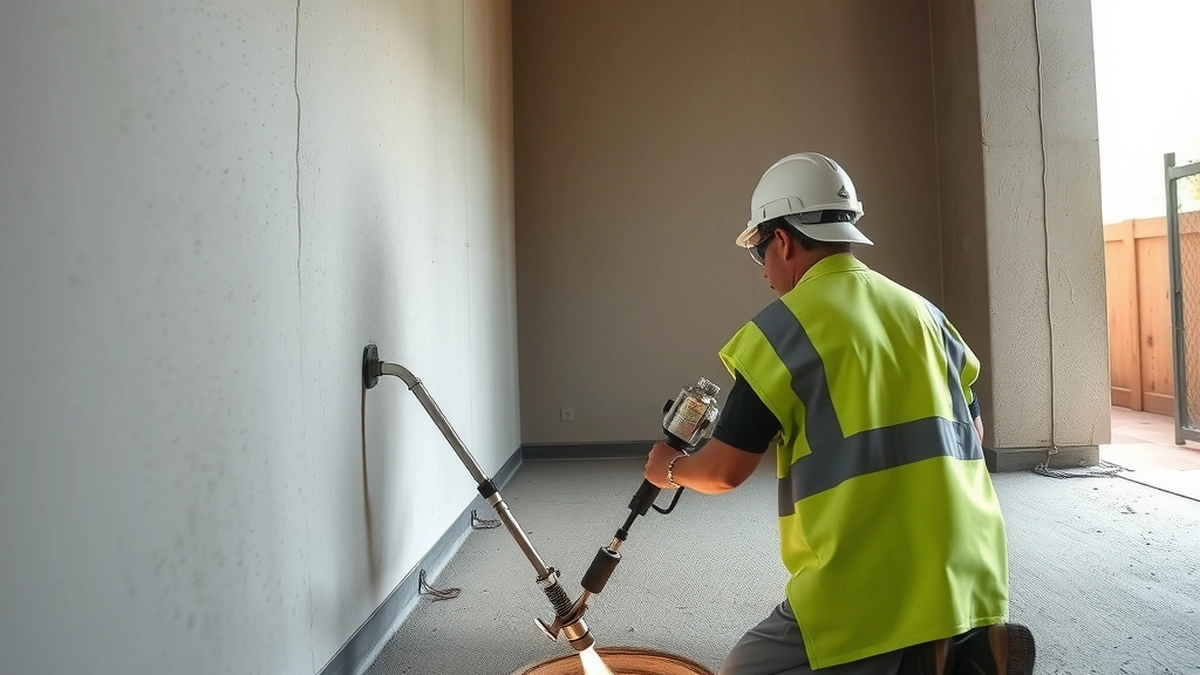
Polyurethane foam lifting is the injection of a two-part polymer beneath a settled slab, where it expands and raises the concrete. The reaction is exothermic, the foam fills voids as it grows, and the slab is lifted against a level or laser target.
The material is delivered through 5/8 inch holes, which is smaller than the 1 to 2 inch holes used for slurry. That means less patching and a cleaner finished surface, which matters on an interior floor or a finished patio.
What the Price Buys
| Property | Polyurethane foam | Sand-cement slurry |
|---|---|---|
| Cost per sq ft | $5 - $15 | $3 - $8 |
| Density | 3 - 6 lb per cu ft | About 100 lb per cu ft |
| Cure time | 15 minutes | 24 hours |
| Hole size | 5/8 inch | 1 - 2 inches |
| Water resistance | Good | Poor to moderate |
| Best use | Weak soil, fast turnaround | Stable subgrade |
The density difference is the important one. A slurry adds about 100 lb per cubic foot to soil that has already failed. Foam adds a small fraction of that, so it does not worsen the settlement it is correcting.
Cost Arithmetic
A 500 sq ft driveway lifted with foam at $10 per sq ft:
500 × $10 = $5,000
The same driveway with slurry at $5 per sq ft:
500 × $5 = $2,500
The foam costs $2,500 more. If the subgrade is stable and the void is shallow, the slurry does the same job for half the price. If the soil is soft, the slurry’s weight may cause a second settlement, and the foam is the cheaper decision over five years.
When Foam Is the Right Choice
Foam is the better choice on weak or organic soil, where added weight is a liability. It is also better when the slab must be returned to service quickly, such as a commercial floor or a garage that cannot be closed for a day.
It is better on interior slabs where a 2-inch hole and a patch would be visible, and in cold weather, because the reaction cures quickly and does not depend on hydration. It is also better where water is present, because cured foam does not break down in wet soil.
When Slurry Is the Right Choice
Slurry is the right choice on stable subgrade where the void is shallow and the load is light. A driveway with a 1-inch void over compacted gravel does not need foam; it needs fill and a lift.
Slurry is also the right choice when budget is the deciding factor and the soil conditions are favorable. The $2,500 saved on a 500 sq ft job can go toward the drainage correction that prevents the void from returning.
The Installation Sequence
- Map the low spots and confirm the void with tap tests or probe holes.
- Fix the water source before injection.
- Drill 5/8 inch holes on a 4 to 6 foot grid.
- Inject foam in stages, checking elevation as the slab rises.
- Stop at the target elevation, not when the material runs out.
- Patch the holes and restore the surface.
- Recheck after one wet season.
Limits
Foam lifting does not add structural capacity to an undersized slab. It restores support, and it fills voids, but it does not turn a 3-inch slab into a 5-inch slab. A slab that is cracked into independent pieces will still move after the lift, because the pieces are no longer connected.
Foam also does not fix heave. Injecting under a slab that is rising from expansive soil adds material to a space that is already being pushed, and the movement continues.
And it does not replace missing support at depth. If the footing under a slab has settled, the slab can be lifted and will still drop again, because the lift only restores the surface. The footing has to be addressed with piers, which is a different trade and a different invoice.
Warranty terms vary more than the price. Some installers offer a one-year workmanship warranty, some offer five, and some offer nothing beyond the material. Ask what is covered if the slab settles again in the same spot, and get the answer in the written proposal rather than in conversation.
Getting a Fair Price
Ask for the square footage, the number of injection points, and the foam density. Ask whether the price includes patching and whether drainage correction is separate. Then compare the per-square-foot rate rather than the total, because small jobs carry a larger share of fixed cost. A quote that is low per square foot but adds a mobilization fee can still be the more expensive option on a small patio.
For the method comparison, read mudjacking cost and polyurethane foam lifting. If the slab is part of the house foundation, slab lifting cost covers the structural context.
Frequently asked questions
How much does polyurethane foam lifting cost?
It runs $5 to $15 per sq ft depending on slab area, access, and the number of injection points. Small jobs carry a minimum charge of $300 to $600.
Is foam lifting better than mudjacking?
Foam is lighter, cures faster, and resists water better. Mudjacking costs less. Foam wins on weak soil and tight schedules; slurry wins on budget and stable subgrade.
How long does foam lifting last?
The foam itself is stable for decades. The repair lasts as long as the cause is corrected, so a void caused by drainage will return if the water is not redirected.
Can foam lift a house foundation?
Foam is used for slabs, walks, and driveways, and in some soil stabilization applications. Structural settlement of a house requires piers that reach bearing soil.
How big are the holes for foam injection?
About 5/8 inch, compared with 1 to 2 inches for slurry. Smaller holes mean less patching and a cleaner finished surface.
Does foam lifting work in cold weather?
Yes, within the manufacturer's temperature range. The reaction is exothermic and cures quickly, which makes winter work more practical than slurry injection.
Sources
Some links are affiliate links.If you buy through them we may earn a commission at no extra cost to you. We do not accept payment for rankings. Read the full disclosure.