Pier foundation repair
Pier foundation repair explained: push, helical, and drilled piers, pier-and-beam leveling, costs per pier, and how the count is decided.
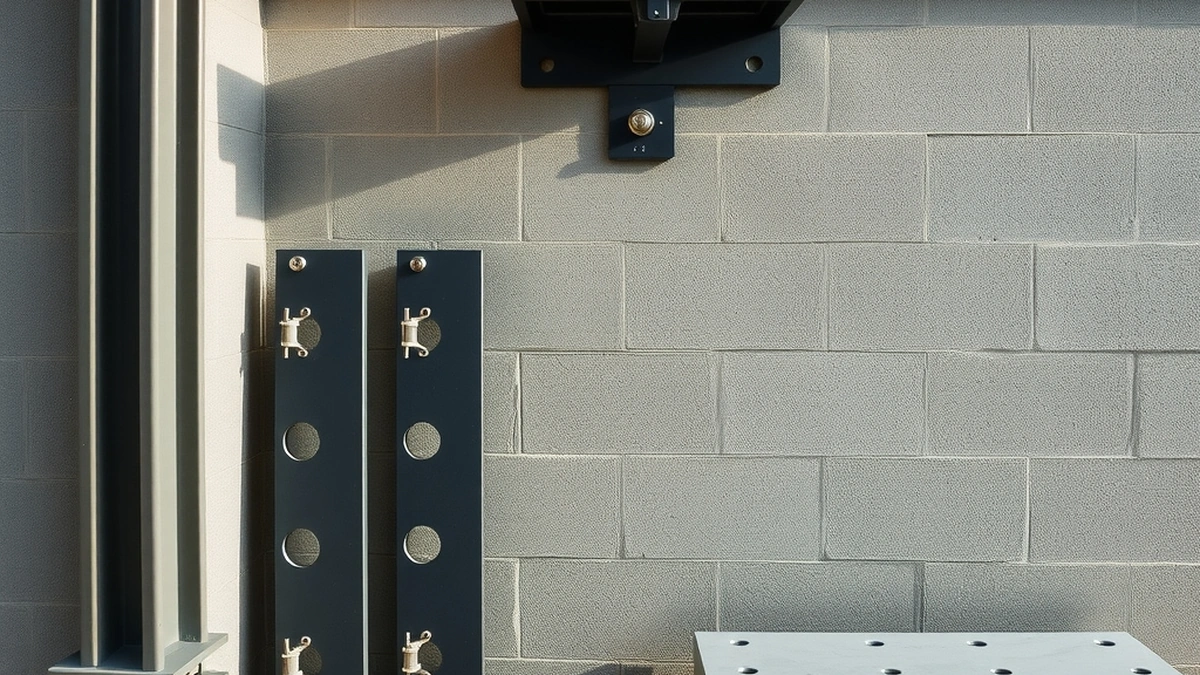
Pier foundation repair uses steel or concrete piers to carry a settled foundation down to stable soil. Piers cost $700 to $3,000 each depending on type, and a full pier job typically runs $6,000 to $30,000 after engineering review.
- Push pier per unit
- $1,000 - $3,000
- Helical pier per unit
- $700 - $2,500
- Full pier job
- $6,000 - $30,000
- Engineering review
- $400 - $1,500
- Pier warranty
- Lifetime (transferable)
Some links on this page are affiliate links.If you buy through them we may earn a commission at no extra cost to you. We do not accept payment for rankings. Read the full disclosure.
Pier foundation repair is the installation of deep piers beneath a foundation to move building load past weak soil onto a stratum that can carry it. Most piers cost between $700 and $3,000 each, and a full job usually lands between $6,000 and $30,000. The number of piers, not the brand of pier, is what drives the invoice.
Two different things get called pier repair
The phrase covers two distinct jobs, and mixing them up leads to the wrong quote.
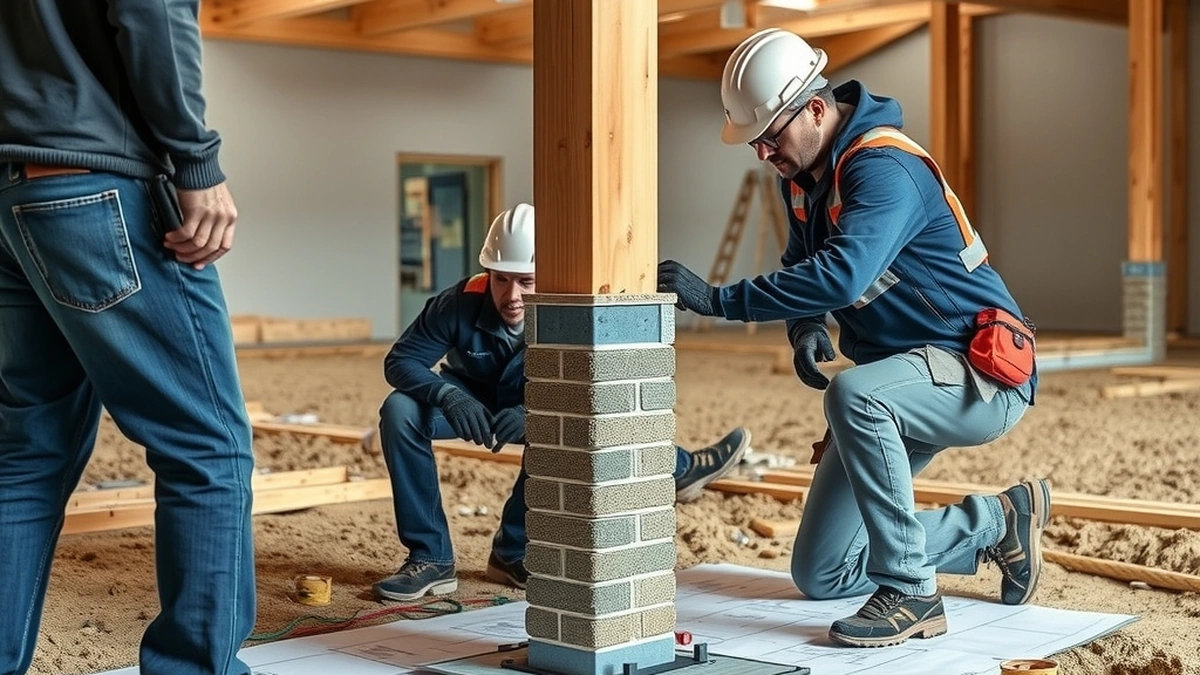
Underpinning piers are installed under an existing footing to arrest settlement. The pier is driven or drilled down from a bracket attached to the footing, and the building is lifted or simply stabilized.
Pier-and-beam leveling is work on a raised floor system. The house sits on a grid of beams supported by short piers or blocks, and leveling means re-shimming the beams, replacing rotten blocking, and correcting the joist line. It is carpentry and shimming under the floor, not deep underpinning.
A house can need both, but they are priced separately and performed by different crews. If a contractor quotes pier installation for a house that has a raised floor with accessible crawl space, ask which of the two jobs the price covers.
The pier types
| Pier type | How it is installed | Typical unit price | Best fit |
|---|---|---|---|
| Push pier | Hydraulically driven to refusal | $1,000 - $3,000 | Heavier structures, deep bearing |
| Helical pier | Rotated in with torque motor | $700 - $2,500 | Lighter loads, tight access |
| Drilled concrete pier | Shaft drilled and poured | Quoted by design | Deep bearing, high loads |
| Helical tieback | Rotated into wall, anchors outside | Quoted by design | Bowing retaining walls |
Push and helical piers dominate residential work. Drilled concrete piers are more common on larger commercial projects where the shaft diameter and reinforcement are designed by an engineer. Helical tiebacks are a lateral fix rather than a vertical one, and they belong in a conversation about bowing walls, not settlement.
Reading the failure before choosing a pier
The method follows the measurement. Three numbers decide most of it.
Crack width. Cracks at 1/16 inch or narrower are typically cosmetic. Cracks at 1/8 inch get a gauge, a date, and a seasonal re-check. Cracks that widen quickly, or that step diagonally across a brick wall, point to differential settlement at a corner.
Floor slope. A floor that drops more than about an inch across a room is worth mapping with a laser level. The direction of the slope tells you which wall is settling.
Wall movement. Inward movement beyond 2 inches changes the method entirely, because the load is lateral and piers under the footing do not restrain it. That is wall anchor territory at $500 to $1,500 per anchor.
Engineering review is not optional for tall work. A two-story brick wall transfers far more load per linear foot than a single-story frame wall, and pier spacing has to be designed rather than copied from the last job. A structural engineer inspection typically costs $400 to $1,500.
Cost by pier type
The arithmetic is simple once the count and unit price are known.
A job with ten push piers at $1,500 each is 10 x $1,500 = $15,000. Add $800 for the engineering report and the total is $15,800 before permits.
A job with twelve helical piers at $1,000 each is 12 x $1,000 = $12,000, plus the same engineering line, for $12,800.
A smaller job with four push piers at $2,200 each is 4 x $2,200 = $8,800, which sits inside the $6,000 to $30,000 full-job range even though the unit price is high, because the count is low.
For context, the average foundation repair runs $4,000 to $15,000, and major structural work runs $20,000 to $40,000. A pier job crosses into the major band when the count climbs or when interior finishes have to be repaired after lifting.
From inspection to closeout
- Inspect and measure. Record crack widths, floor elevations, and drainage conditions on a sketch of the foundation.
- Get the design. The engineer specifies pier type, spacing, design load, and target depth.
- Pull the permit. Permits vary by city and county and typically take one to three weeks.
- Install the piers. Crews excavate at each location, set brackets, and drive or rotate piers to the specified resistance.
- Lift and verify. The structure is lifted in small increments while doors and windows are checked, then elevations are re-read.
- Close out. Pits are backfilled, concrete is patched, and the pier log and warranty are handed over.
Inspection lead time is usually one to two weeks, so the calendar from first call to finished work often runs four to six weeks even when the installation takes two days.
What the warranty should say
Pier warranties are commonly lifetime and transferable, with a transfer fee of $100 to $500 at closing. The document should state whether it covers future movement or materials only, whether an annual inspection is required, and whether it transfers automatically or on request.
A warranty that names the contractor rather than the property is weaker than one that runs with the home. Ask for the sample document before signing, not after.
For pricing detail by method, see push pier cost and helical pier cost. If the floor is a raised system rather than a slab, read pier and beam leveling cost. The full method comparison sits in foundation repair cost.
Bottom line
Pier foundation repair means carrying load to stable soil, and the pier type follows the soil and the structure. Expect $700 to $3,000 per pier and $6,000 to $30,000 for a typical job. Measure the movement, get a design with a pier count, and compare unit prices rather than totals.
Frequently asked questions
What is pier foundation repair?
It is the installation of deep piers under a footing to transfer building load to stable soil, used when shallow soil has allowed settlement.
Which pier type is best?
Push piers suit heavier structures and deep bearing, helical piers suit lighter loads and tight access, and the soil report decides between them.
How much does one pier cost?
Push piers run $1,000 to $3,000 each and helical piers run $700 to $2,500 each, before engineering, permits, and mobilization.
Is pier-and-beam leveling the same thing?
No. Pier-and-beam leveling re-shims an existing raised floor system, while underpinning piers support a footing that has settled.
How many piers does a house need?
The count comes from foundation length, load per linear foot, and the settlement pattern, and is specified by a structural engineer.
Does pier repair come with a warranty?
Pier warranties are commonly lifetime and transferable, with a transfer fee that typically runs $100 to $500 when the property sells.
Sources
Some links are affiliate links.If you buy through them we may earn a commission at no extra cost to you. We do not accept payment for rankings. Read the full disclosure.