How Helical Piers Work: Torque and Capacity
Helical piers rotate into soil until torque confirms capacity. See the plates, the torque log, and why installations vary by soil.
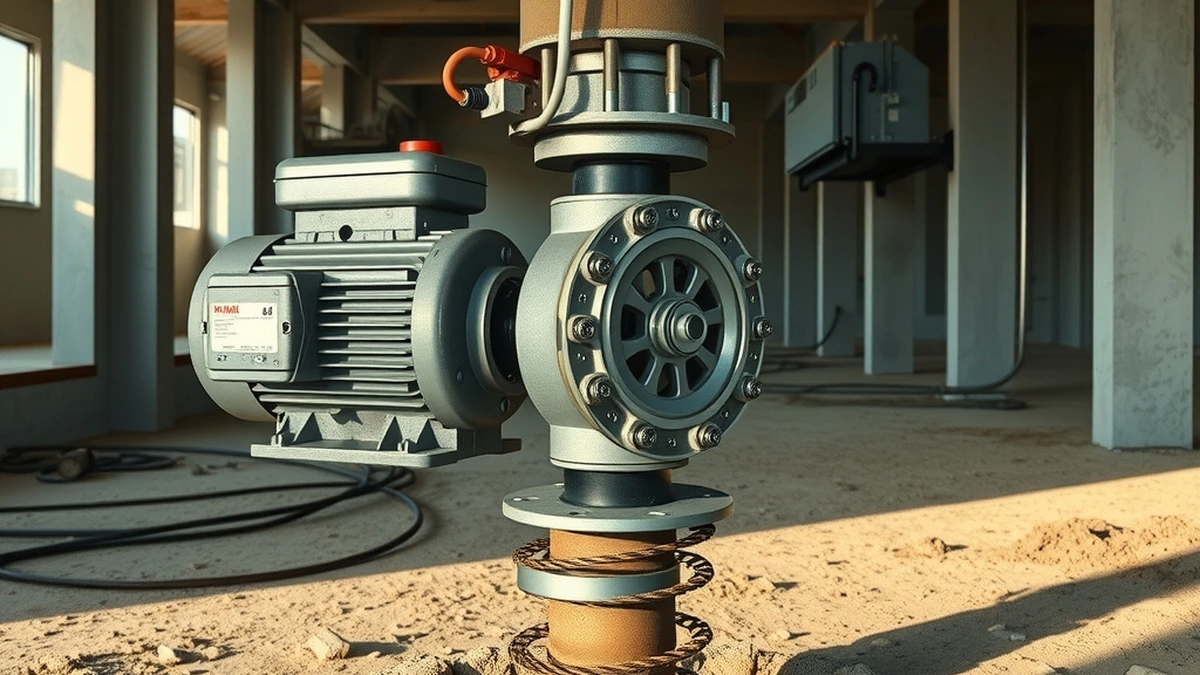
Helical piers work by rotating a steel shaft with helical plates into the ground until the torque reaches a specified value. That torque is the proof of capacity, and installation continues until the design depth and torque are both met.
- Cost per pier
- $700 - $2,500
- Capacity proof
- Torque reading
- Installation
- Rotated, not driven
- Typical depth
- 10 - 30 feet
- Typical job
- $6,000 - $30,000
Some links on this page are affiliate links.If you buy through them we may earn a commission at no extra cost to you. We do not accept payment for rankings. Read the full disclosure.
Helical piers work by converting rotation into load capacity. A steel shaft with helical plates is turned into the ground, the plates engage the soil, and the torque needed to keep turning it is recorded as a measure of how much load the soil can carry. Installation stops when both the design depth and the design torque are reached.
The Parts of a Helical Pier
A helical pier has three components: the shaft, the helical plates, and the connection. The shaft is a steel tube or square section that carries the load. The plates are welded near the lead end and vary in diameter and number. The connection couples sections together and attaches the pier to a bracket under the footing.
Plate size and number are selected for the soil and the load. A larger plate engages more soil and provides more capacity in soft ground; multiple plates in sequence can add capacity without increasing the shaft diameter.
Rotation and Torque
The installation equipment is a torque motor that turns the pier while applying downforce. As the plates enter the ground, the soil resists, and the motor has to work harder. That resistance is measured as torque, and torque is the installation’s quality control.
The engineer specifies a torque value that corresponds to the design load in the expected soil. The installer records torque at intervals as the pier advances, then continues until the target is met at or below the design depth.
| Soil condition | Typical plate strategy | Note |
|---|---|---|
| Soft clay | Larger single plate | More area for capacity |
| Loose sand | Multiple plates | Each plate adds resistance |
| Dense or gravelly | Smaller plate, deeper | Avoid refusal above target |
| Fill with debris | Probe and reposition | Obstructions deflect the pier |
Plate selection is a design decision made from the geotechnical report. A contractor who arrives with one plate size for every job is not designing, and the torque log will show it: the pier will either refuse too shallow or spin without reaching the target.
Why Torque Is the Proof
A driven pile proves capacity by refusal. A helical pier proves it by torque, because a pier that can be turned at a given torque in a given soil is engaging a calculable area of soil. The correlation between torque and capacity is soil-dependent, and it comes from the engineer’s geotechnical information.
That is why a torque log matters. It shows what the pier actually did, not what the proposal assumed. A log with a steady torque increase to the target is a good sign; a log with erratic readings suggests obstructions or variable soil.
The Installation Sequence
- Expose the footing and inspect its condition.
- Attach the bracket and position the torque motor.
- Advance the first section and record torque.
- Add extension sections as the pier goes deeper.
- Reach the specified torque at the specified depth.
- Cut the pier to length and load the bracket.
- Lift to tolerance if lifting is specified, then backfill.
A Costed Example
A 1,200 sq ft cottage needs five helical piers at $1,400 each:
5 × $1,400 = $7,000
Add engineering at $800 and a permit at $250:
$7,000 + $800 + $250 = $8,050
That sits in the lower half of the $6,000 to $30,000 band, which is typical for a light house with one affected wall.
Where Helical Piers Fit
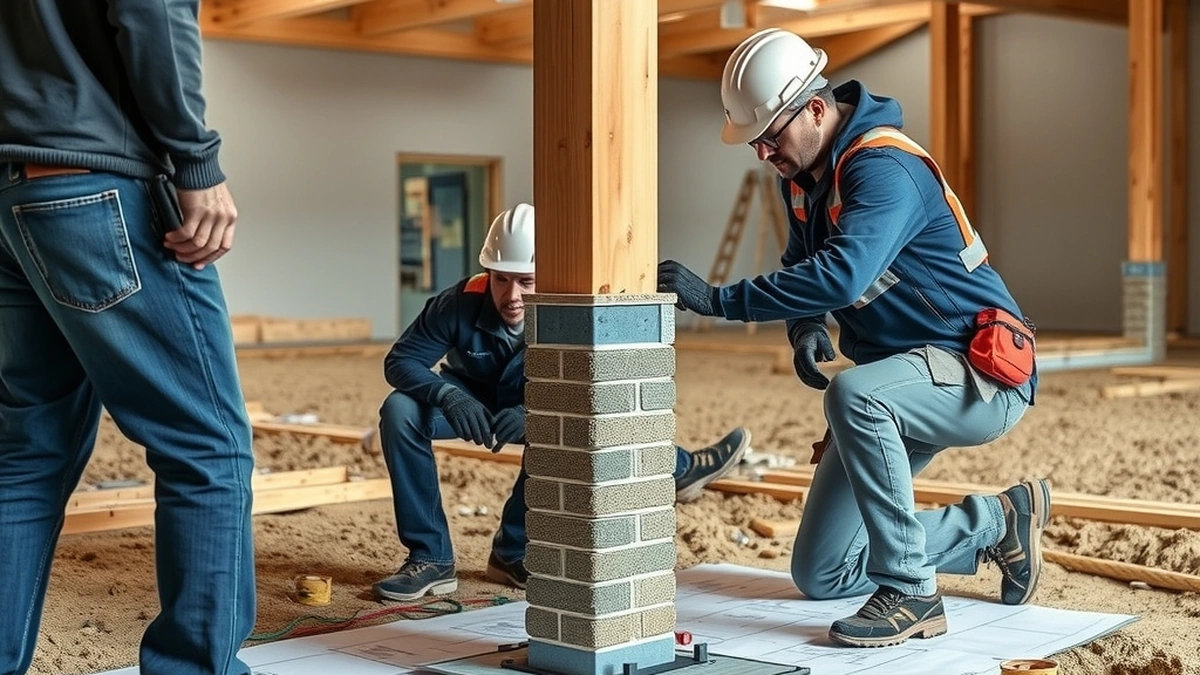
They are the practical choice when access is tight, because the equipment is much smaller than a push pier rig. That includes backyards with no machine path, interior installations through a basement or crawl space, and walls close to a property line.
They are also common on lighter structures such as decks, porches, and additions, where the loads are lower and the pier count is small. On a heavy masonry house with good access, push piers are often the better value.
Obstructions and Soil
A helical pier can deflect if it strikes a boulder, a buried stump, or a utility. That is why the utility locate is mandatory, and why the installer watches the torque curve for a sudden spike that suggests an obstruction rather than soil.
In very dense soil the pier may refuse before reaching the design depth, and a smaller plate or a different location may be needed. In soft soil the pier may need to go deeper to reach the target torque. Both outcomes are normal, and both should be recorded.
A sudden drop in torque after a rise is a warning sign. It can mean the pier has broken through a hard layer into a void or a soft pocket, and the capacity at that point is not what the earlier reading suggested. The installer should keep advancing until the target is met again, and the log should show the whole curve, not just the final number.
What to Ask for at Completion
Ask for the torque log, the design specification, and the lift record if lifting was performed. Ask for the engineer’s correlation between torque and capacity, and confirm the pier was installed to the specified depth.
For the comparison, read helical piers foundation repair and helical pier cost. If the structure is heavy and access is good, how push piers work explains the alternative.
Frequently asked questions
How does a helical pier work?
A steel shaft with helical plates is rotated into the soil. The plates pull the pier down and the torque required to turn it indicates the soil's resistance, which correlates with load capacity.
What torque should a helical pier reach?
The engineer specifies the torque for the design load and soil. Typical residential values are in the range of 2,000 to 5,000 foot-pounds, depending on the pier and the soil.
How deep do helical piers go?
Most residential helical piers reach 10 to 30 feet. The depth is whatever is needed to achieve the specified torque in the bearing stratum.
Can helical piers be installed by hand?
Small diameters can be installed with portable equipment, which is why helical piers are used in tight access. Larger residential piers use a compact torque motor.
Do helical piers need concrete?
The pier itself does not. The bracket connection to the footing may involve concrete or bolted hardware, and the excavation is backfilled after installation.
How long do helical piers last?
Galvanized helical piers are designed for decades of service in most soils. Aggressive soils may require coating or a different material.
Sources
Some links are affiliate links.If you buy through them we may earn a commission at no extra cost to you. We do not accept payment for rankings. Read the full disclosure.