Is a French Drain Worth It? Cost and Real Payback
A french drain costs $2,000 to $6,000 and moves groundwater away from the foundation. See when it is worth it and when grading is enough.
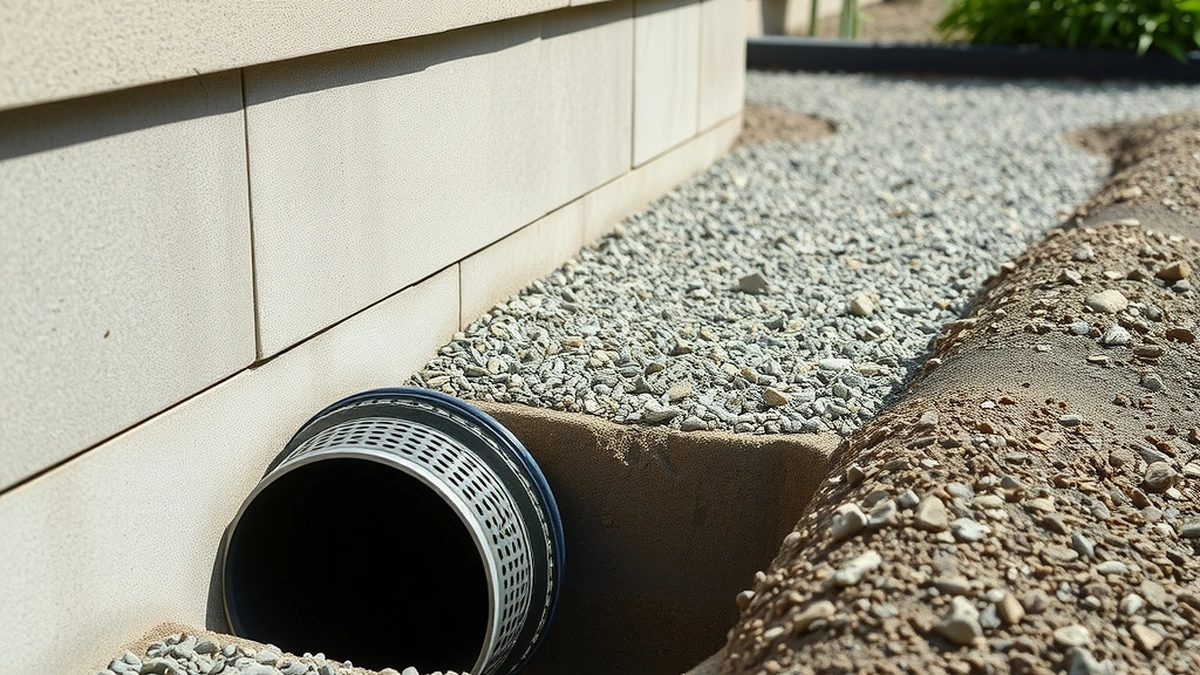
A french drain is worth it when groundwater is reaching the foundation and grading alone has not solved it, at $2,000 to $6,000. It is not worth it before gutters and grading are corrected, or where there is no gravity discharge.
- Typical cost
- $2,000 - $6,000
- Trench depth
- 18 - 30 inches
- Minimum slope
- 1%
- Sump pump
- $600 - $3,000
- Grading
- $1,500 - $4,000
Some links on this page are affiliate links.If you buy through them we may earn a commission at no extra cost to you. We do not accept payment for rankings. Read the full disclosure.
A french drain is worth it when groundwater is reaching the foundation and the cheap surface fixes have not solved the problem. At $2,000 to $6,000, it is more expensive than grading and less expensive than exterior waterproofing, and it is the right tool for water that arrives at the footing rather than over the top of the soil.
What the Drain Does
A french drain collects groundwater in a gravel trench and carries it away through a perforated pipe. Around a foundation, it intercepts water before it builds pressure against the wall.
That pressure is the driver behind most basement leaks and a contributor to wall movement, and reducing it is cheaper than repairing either. Relieving it protects the wall as well as the floor.
The Cost Comparison
| Approach | Cost | Best for |
|---|---|---|
| Downspout extensions | $150 - $600 | Roof water at the wall |
| Regrading | $1,500 - $4,000 | Surface water |
| French drain | $2,000 - $6,000 | Groundwater at the footing |
| Exterior waterproofing | $4,000 - $12,000 | Water through the wall |
The drain sits in the middle of the price range and in the middle of the capability range, which is why it is often the second step rather than the first. It is the appropriate step when water is coming from below but the wall does not need a full membrane, and it is the cheapest way to relieve pressure at the footing.
When It Is Worth It
It is worth it when the basement is damp along one wall after every rain, when the damp band is at the floor-wall joint, and when grading and downspouts have already been corrected.
It is also worth it when the yard has no natural slope away from the house, because the drain creates a path where gravity does not. Flat lots are the most common candidates, and they are also the ones where the discharge needs the most thought, because gravity is doing very little of the work.
When It Is Not
It is not worth it before the gutters, downspouts, and grading are fixed. Those are cheaper and address the majority of basement water, and a homeowner who skips them is paying for a drain to handle water that should never have reached it.
It is not worth it where there is no place for the water to go. A drain that must feed a sump is a drain plus a pump, and the pump becomes the point of failure. That is acceptable if the sump is maintained, and it is a risk if it is not.
The Discharge Question
The discharge is where most drains fail. Water has to leave the pipe and go somewhere it will not return. A gravity outlet to a lower grade is ideal, and a dry well works if the soil drains.
A drain that discharges 2 feet from the wall is recycling water, and the fix is a length of pipe and a shovel. Extend the outlet, and check it every spring.
A Costed Example
A 50-foot foundation drain:
Excavation: 50 × $30 = $1,500 Washed stone: 12 cu yd × $55 = $660 Pipe and fabric: 50 × $10 = $500 Discharge: $400
Total: $3,060
That sits in the middle of the $2,000 to $6,000 band and is less than half the cost of exterior waterproofing on the same wall.
The Sequence
- Locate utilities before digging.
- Fix gutters, downspouts, and grading first.
- Mark the trench line and the discharge.
- Excavate to the footing depth with a continuous slope.
- Line with fabric, add washed stone, and lay the pipe.
- Cover, wrap, and backfill.
- Test with a hose before restoring the surface.
A french drain needs a cleanout and an annual flush. Without them, silt accumulates and the drain slowly stops working, usually without any obvious sign until a wet season.
The outlet needs checking too. A buried or blocked discharge turns the drain into a reservoir, and the water it holds keeps the soil beside the foundation saturated.
Budget an hour a year for both, and note the date so the next owner knows when it was last done. That is the difference between a drain that lasts 25 years and one that is replaced in ten.
What to Check Before You Commit
Ask what stone will be used and whether it is washed. Ask what slope will be maintained and how it will be checked. Ask where the discharge goes and whether it is legal.
Ask for a cleanout at the upstream end, because a drain without one cannot be maintained. Ask, too, whether the price includes restoring the lawn and any walks that have to be lifted, because that restoration can add several hundred dollars.
A french drain is worth it when the water is coming from below and the surface fixes are done. It is a targeted, durable repair that protects the foundation for decades, provided it is built with the right stone and a working outlet. Used as a first step before grading, or without a discharge, it is money spent on a trench that will not work.
For the method detail, read how french drain works and french drain problems. If gravity discharge is not available, is sump pump worth it covers the alternative.
Frequently asked questions
Is a french drain worth the cost?
Yes when groundwater is reaching the foundation and surface fixes have not worked. It costs $2,000 to $6,000 and protects the wall from hydrostatic pressure.
How much does a french drain cost?
Around a foundation it runs $2,000 to $6,000 depending on length, depth, discharge, and access. A simple yard drain costs less, and a drain that can daylight to a slope costs less than one that must feed a sump.
Do I need a french drain or just grading?
Try grading and downspouts first. If the wall is still damp in the same place after a wet season, the water is coming from below and a drain is justified.
Does a french drain need a sump pump?
Only if gravity cannot carry the water away. A drain that can daylight to a slope does not need a pump.
How long does a french drain last?
Twenty to 30 years with washed stone, fabric, and a proper slope. A drain built with dirty stone can clog in a few years.
Will a french drain stop a wet basement?
It reduces hydrostatic pressure, which is the driver behind many leaks. It does not seal cracks, so injection is often done at the same time.
Sources
Some links are affiliate links.If you buy through them we may earn a commission at no extra cost to you. We do not accept payment for rankings. Read the full disclosure.