Is a Sump Pump Worth It? Cost, Risk, and Backup
A sump pump costs $600 to $3,000 installed and protects a finished basement from flooding. See when it pays back and when it is optional.
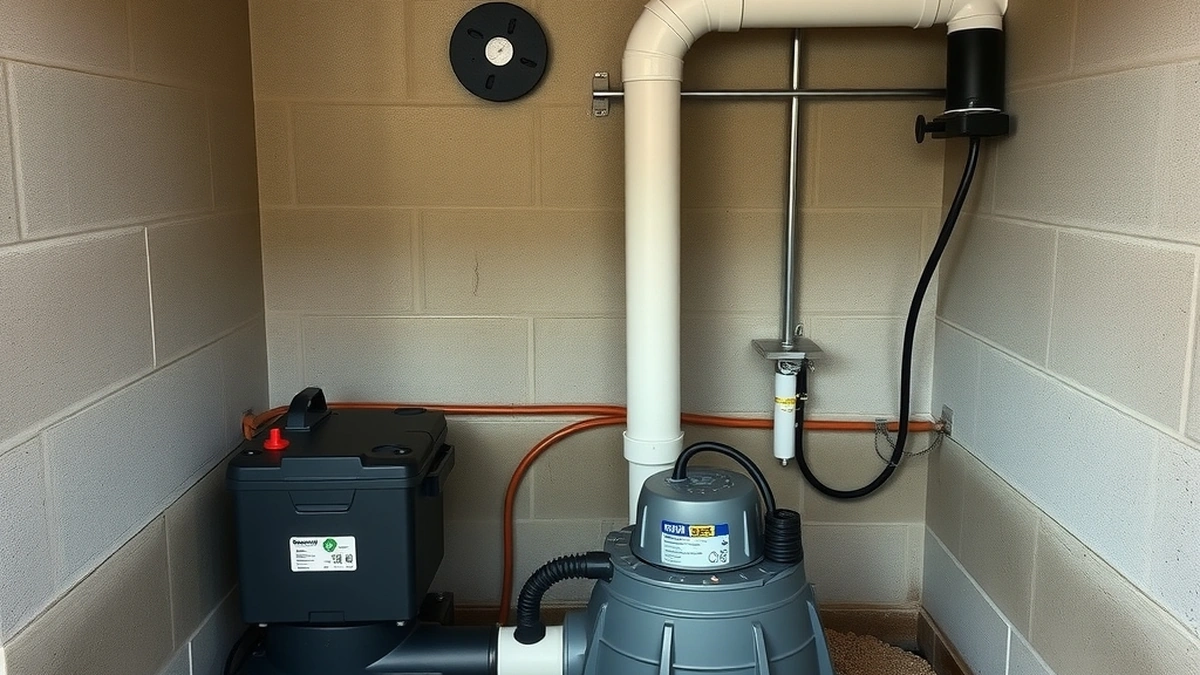
A sump pump is worth it when water collects under the floor or the basement is finished, at $600 to $3,000 installed. It is optional in a dry basement with no water path, and it needs a backup to be reliable in a storm.
- Replacement
- $300 - $800
- Full install
- $600 - $3,000
- Battery backup
- $400 - $1,200
- Pump life
- 7 - 10 years
- Discharge distance
- 4 - 6 feet from wall
Some links on this page are affiliate links.If you buy through them we may earn a commission at no extra cost to you. We do not accept payment for rankings. Read the full disclosure.
A sump pump is worth it when water collects under the floor or the basement is finished, and it costs $600 to $3,000 installed. The pump is the cheapest part of the system; the pit, discharge, and electrical work are the rest. In a dry basement with no water path, it is optional, and in a finished basement it is close to essential.
What It Protects
A sump pump protects the lowest part of the house from water that arrives under the slab. That water can come from a rising water table, from a footing drain, or from surface water that finds its way through the soil.
The damage it prevents is expensive. An inch of water across 800 sq ft of finished basement destroys flooring, baseboards, and anything stored at floor level, and the repair runs into thousands of dollars.
The Cost by Scope
| Scope | Cost | Notes |
|---|---|---|
| Pump only | $150 - $500 | Existing pit |
| Replacement installed | $300 - $800 | Same pit, new pump |
| New pit and pump | $1,200 - $2,200 | Cutting and lining |
| Full install with electrical | $2,000 - $3,000 | Dedicated circuit |
The middle of the full range is about $2,200, which is roughly the cost of replacing a floor once. That comparison is the whole argument for the pump, and it is why the system is usually installed before the floor is finished rather than after.
When It Is Worth It
It is worth it when the basement has a history of water, when the floor drain backs up in storms, or when a footing drain discharges into the space. It is also worth it when the basement is finished, because the cost of a flood is much higher there.
It is worth it as prevention when the grade cannot be fixed, such as a house at the bottom of a slope with neighbours uphill. In that case the water will keep arriving, and a pump is the practical answer.
When It Is Not
It is not worth it in a dry basement with no water path and no history of water. A pump that never runs is a maintenance item with no benefit, and an unnecessary pit in a finished floor is a permanent patch.
It is not worth it as a substitute for fixing a wall leak. A pump handles water under the floor; it does not stop water coming through a crack or a window well.
The Backup Question
A pump without a backup is a pump that stops when the power fails, and the power usually fails during the storm that fills the pit. A battery backup at $400 to $1,200 covers six to eight hours, which is enough for most outages.
A second pump on a separate float is another option. It covers a mechanical failure rather than a power failure, and the two together cover both.
A Costed Example
A 1,000 sq ft basement with no pit:
Pit and liner: $700 Pump: $350 Discharge and check valve: $300 Electrical: $450 Labor: $600
Total: $2,400
Add a battery backup at $800:
$2,400 + $800 = $3,200
That is the top of the range, and it is still less than one insurance deductible and one flooring replacement.
The Maintenance Side
Test the pump twice a year by pouring a bucket of water into the pit. Listen for the check valve and confirm the pump shuts off. Clean the pit annually and check the discharge before winter.
A pump that has not been tested is a pump you are trusting without evidence, and evidence is the only thing that separates a system from a hope. Ten minutes twice a year is the whole maintenance schedule, and it is the difference between a working system and a wet floor.
The Insurance Question
A sump pump failure is usually not covered. Most policies exclude damage from a failed pump or from water that enters through a foundation, and the exclusions page is explicit about it.
That is why the backup matters. The homeowner is self-insuring the contents of the basement, and a $400 to $1,200 backup is the cheapest premium available. It does not cover everything, but it covers the outage that causes most losses.
Document the installation and keep the receipt. Some insurers offer a small credit for a professionally installed pump and backup, and the credit is worth asking about even if it is modest.
- Confirm the low point and check for post-tension cables.
- Ask whether the pit, liner, and discharge are included.
- Confirm the electrical circuit is dedicated and GFCI protected.
- Ask where the discharge terminates and whether it is legal.
- Test the pump with water before paying.
- Ask for the pump manual and the breaker label.
Ask, too, what the warranty covers. A one-year workmanship warranty is standard, and the pump itself carries the manufacturer’s warranty.
A sump pump is worth it when there is water to remove and something worth protecting. It is a small, reliable system with a clear job, and the backup is what makes it dependable in the conditions that matter most.
For the cost detail, read what sump pump costs and how sump pump works. If the basement is wet across the floor, is basement waterproofing worth it covers the wider system.
Frequently asked questions
Is a sump pump worth the money?
Yes when water collects under the floor or the basement is finished. It costs $600 to $3,000 installed and protects flooring, drywall, and stored items from a flood.
How much does a sump pump cost installed?
A complete installation runs $600 to $3,000 depending on whether a pit exists, whether a discharge line is needed, and whether an electrical circuit must be added.
Do I need a battery backup?
On a finished basement or a pit that runs often, yes. Power failures usually arrive with the storms that fill the pit, and a backup costs $400 to $1,200.
How long does a sump pump last?
Seven to ten years in normal service. A pump that runs constantly wears out faster and should be checked annually.
Can a sump pump be installed in a crawl space?
Yes, with a pit and a discharge. It is often paired with a liner and a dehumidifier, because a liner alone does not remove standing water.
Does a sump pump prevent all basement flooding?
No. It removes water that reaches the pit. Water entering through a wall or a window is a different problem, and a power outage stops the pump without a backup.
Sources
Some links are affiliate links.If you buy through them we may earn a commission at no extra cost to you. We do not accept payment for rankings. Read the full disclosure.