Expansive Clay Repair: Managing a Swelling Soil
Expansive clay swells when wet and shrinks when dry, moving foundations. See the repair options and what each one costs.
Expansive clay repair costs $500 to $3,000 for moisture control, $6,000 to $30,000 for deep piers, and $8,000 to $25,000 for soil replacement. The soil has to be isolated or stabilized; surface patching does not hold.
- Moisture control
- $500 - $3,000
- Deep piers
- $6,000 - $30,000
- Soil replacement
- $8,000 - $25,000
- Engineering report
- $400 - $1,500
- Monitor at
- 1/8 inch
Some links on this page are affiliate links.If you buy through them we may earn a commission at no extra cost to you. We do not accept payment for rankings. Read the full disclosure.
Expansive clay repair costs $500 to $3,000 for moisture management and $6,000 to $30,000 when piers are required to isolate the structure from the active soil. The clay swells when it absorbs water and shrinks when it dries, and that cycle moves the foundation in both directions. Repair has to address the cycle, not just the crack it produced.
What Expansive Clay Does
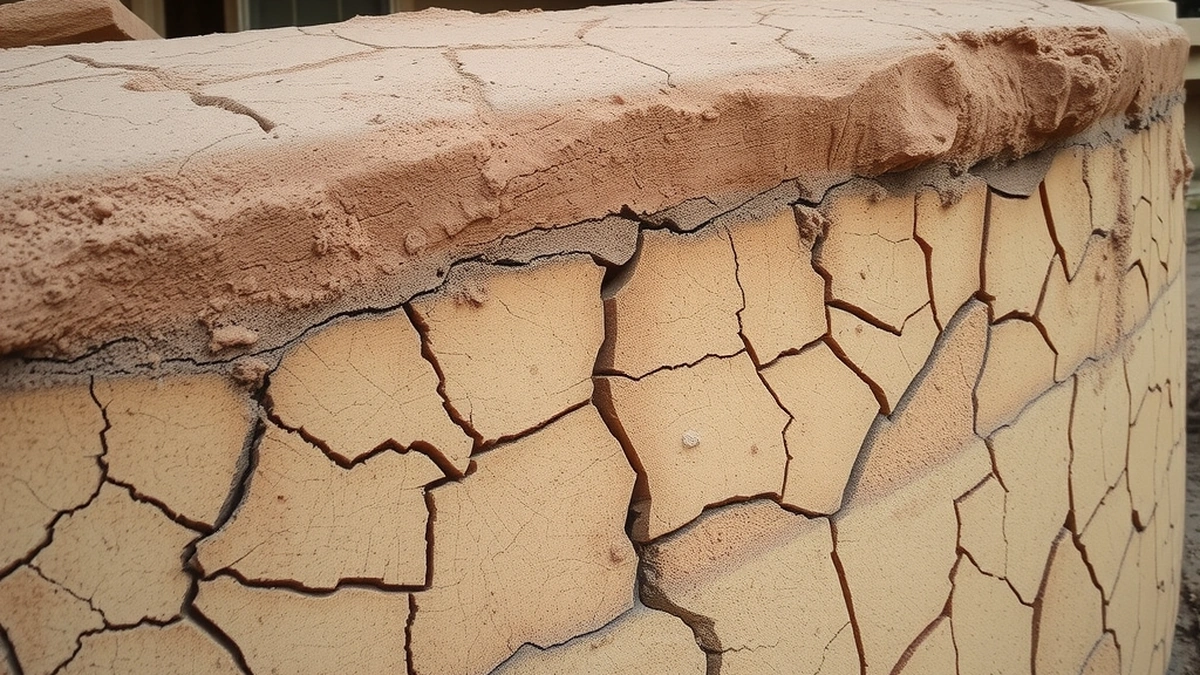
Expansive clay is soil with a high content of montmorillonite and similar minerals that absorb water into their structure. When wet, the clay increases in volume; when dry, it shrinks and cracks. The change can be several percent of the soil volume, which is enough to lift or drop a footing by inches.
The active zone is the depth over which moisture changes seasonally, often 4 to 10 feet. Below it, the soil moisture is stable and the soil does not move. That boundary is what a deep pier is designed to reach.
The Seasonal Signature
| Season | Soil | House |
|---|---|---|
| Wet spring | Swells, pushes up | Doors bind, cracks close |
| Dry summer | Shrinks, pulls away | Cracks open, doors free up |
| First heavy rain | Rapid swell | Cracks may close suddenly |
| Drought | Deep shrinkage | Settlement at corners |
The tell is reversibility. A crack that closes after rain and reopens in drought is a soil movement crack, not a structural failure that is progressing in one direction. That distinction changes both the urgency and the repair.
Moisture Control
The cheapest intervention is even moisture. Grading to a 6-inch fall over 10 feet, extending downspouts 4 to 6 feet, and watering during drought all reduce the swing between wet and dry.
A soaker hose around the perimeter, run during dry spells, keeps the clay from shrinking. The cost is $100 to $400 for the hose and fittings, plus the water. It is not a repair, but it reduces the movement that drives the damage, and it costs a fraction of a pier system.
Deep Piers
When the movement has already damaged the structure, deep piers isolate it from the active zone. The pier passes through the expansive layer and bears on stable soil below, so the footing no longer rises and falls with the clay.
Push piers run $1,000 to $3,000 each and helical piers run $700 to $2,500 each. A full job commonly lands at $6,000 to $30,000. The design depth is the critical number: a pier that stops inside the active zone moves with the soil and does nothing.
Soil Replacement
Removing the expansive clay and replacing it with compacted granular fill is the most direct repair, and the most disruptive. It typically runs $8,000 to $25,000 depending on the depth and length of the affected wall.
The work involves excavation along the foundation, removal of the clay to the design depth, placement of select fill in compacted lifts, and restoration of grading and landscaping. It is usually reserved for new construction or for severe cases where piers alone will not solve the problem. On an existing house it also disturbs the very soil the footing is sitting on, so the work has to be sequenced and shored carefully.
A Costed Example
A 2,000 sq ft house on expansive clay has settled at two corners. The engineer specifies twelve push piers at $2,200 each to reach below the active zone:
12 × $2,200 = $26,400
Add engineering with a geotechnical report at $1,800, drainage at $2,500, and restoration at 10%:
$26,400 × 0.10 = $2,640
Total: $33,340. That is a major repair and sits at the top of the $20,000 to $40,000 band, which is typical for a large house on deep active clay.
The Repair Sequence
- Get a geotechnical report to confirm the soil and the active zone depth.
- Correct grading and drainage.
- Set up consistent irrigation during drought.
- Install deep piers below the active zone if the structure has moved.
- Repair cracks after the movement is arrested.
- Monitor through two full seasonal cycles.
What Not to Do
Do not patch the cracks and stop there. The clay will move again, and the patch will fail in the same place. Do not overwater to compensate for drought either, because saturating the clay can cause heave in the opposite direction.
Do not accept a shallow pier design on expansive soil. Ask for the design depth and compare it with the active zone from the geotechnical report. If the pier does not extend below that depth, it is not isolating anything. A pier that stops in the active zone is a very expensive way to hold a footing still while the ground moves around it.
A house on expansive clay needs maintenance, not a one-time fix. The piers or the soil replacement address the damage that has occurred; the moisture management prevents the next round. Budget for gutters, grading, and irrigation as ongoing costs, and check the perimeter after every unusually wet or dry season. Keep a simple log of the readings and the rainfall; two years of data will tell the next engineer more than any single inspection can.
For the soil background, read expansive clay soil and foundation heave. If the movement is downward, foundation settlement repair covers the pier methods, and soil stabilization covers injection and mixing techniques.
Frequently asked questions
How much does expansive clay repair cost?
Moisture control runs $500 to $3,000, deep piers run $6,000 to $30,000, and removing and replacing expansive soil runs $8,000 to $25,000 depending on depth and length.
How do I know if I have expansive clay?
Cracks that open in dry weather and close after rain, doors that bind seasonally, and a geotechnical report are the usual indicators. A soil test confirms it.
Does watering the foundation help?
Consistent moisture helps. A soaker hose during drought reduces shrinkage, but overwatering can cause heave. The goal is even moisture, not more water.
Can piers fix expansive clay movement?
Deep piers can isolate the structure from the active soil zone if they reach stable material below it. Shallow piers do not help and may concentrate stress.
Is expansive clay covered by insurance?
Usually not. Most policies exclude earth movement and soil expansion. Sudden events such as a burst pipe may be covered separately.
How deep is the active zone?
It varies with climate and soil, often 4 to 10 feet. A geotechnical report determines the depth for your site, and the pier design must extend below it.
Sources
Some links are affiliate links.If you buy through them we may earn a commission at no extra cost to you. We do not accept payment for rankings. Read the full disclosure.