Crawl Space Encapsulation Problems and Limits
Encapsulation problems include trapped water, unsealed penetrations, undersized dehumidifiers, and mold left in place. See the limits.
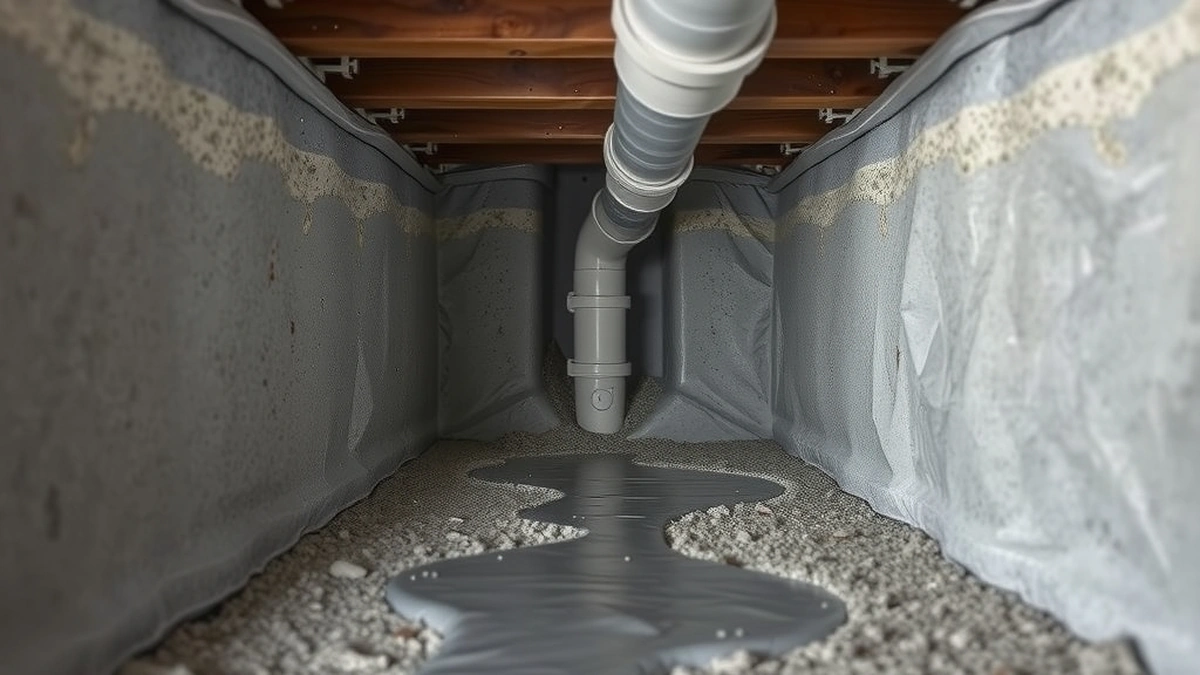
Crawl space encapsulation problems include water trapped under the liner, unsealed penetrations, an undersized dehumidifier, and mold that was never remediated. Encapsulation costs $3 to $8 per sq ft, or $4,000 to $15,000.
- Cost per sq ft
- $3 - $8
- Typical job
- $4,000 - $15,000
- Dehumidifier
- $1,200 - $3,000
- Humidity target
- Under 60%
- Liner life
- 20 years or more
Some links on this page are affiliate links.If you buy through them we may earn a commission at no extra cost to you. We do not accept payment for rankings. Read the full disclosure.
Crawl space encapsulation problems are mostly installation problems. The liner is durable and the concept is sound, but water trapped underneath, penetrations left open, and a dehumidifier that is too small will leave the space as damp as it was before. Encapsulation is a system, and the details are the system. A quote that lists only a liner and a dehumidifier is missing the sealing, the drainage, and the remediation that make both work.
Water Under the Liner
The most serious problem is water trapped under the liner. It happens when the contractor installs the liner without first draining or pumping standing water, or when groundwater rises after installation.
A liner over a puddle hides the problem and keeps the soil saturated. The wood above stays damp, mold continues, and the homeowner has paid for a cover rather than a solution. Drainage has to come first.
Penetrations
| Penetration | Risk | Fix |
|---|---|---|
| Pipes through the floor | Air and moisture leak | Sealed boot or collar |
| Piers | Gap at the liner | Wrap and seal |
| Vents | Outside air entry | Seal or remove |
| Rim joist gaps | Air infiltration | Insulate and seal |
A liner that is sealed at the seams but open at a pipe is a liner that leaks. The details take an hour and are the difference between a dry space and a damp one.
Vents are the other common gap. A crawl space that is encapsulated but still vented to the outside is fighting the dehumidifier with every change in weather. The vents should be sealed or removed as part of the job, and the contractor should say so in the proposal.
Undersized Dehumidifier
A dehumidifier that is too small runs continuously and never reaches the target. The space stays humid, the owner concludes that encapsulation does not work, and the contractor blames the climate.
Sizing follows volume and temperature, and the unit should be rated for the lowest temperature the space will see, not the summer average. A 1,000 sq ft crawl space with a 3-foot ceiling is 3,000 cubic feet, and a 70-pint unit is typically adequate. A larger space or a colder climate needs more capacity, and a unit with a built-in humidistat is easier to control than one that runs on a fixed setting.
Mold and Rot Left in Place
Encapsulation removes the moisture that mold needs, but it does not remove existing mold. If the joists are covered in mold or the sill plate is rotted, the liner goes over a problem that continues to affect the house.
The sequence is water, remediation, structural repair, then encapsulation, and the contractor should be able to explain why each step comes before the next. A contractor who skips the remediation is sealing the mold in. If the mold is visible, get a remediation quote before the liner quote, and do not let one contractor price both if they are not qualified for both. The two trades have different insurance and different methods, and the cheaper bundle is often the one that skips the containment.
A Costed Failure
A 1,000 sq ft encapsulation at $5 per sq ft that fails because the dehumidifier was undersized and a pipe penetration was left open.
Liner: 1,000 × $5 = $5,000 Replacement dehumidifier: $1,800 Sealing and rework: $900
Total: $7,700, against $5,000 plus the right dehumidifier and sealing done once.
The Limits
Encapsulation controls moisture in the crawl space air, and that is all it does. It does not fix structural problems, does not remove standing water, and does not repair rot. It also does not cool or heat the space, although it makes the floor above more comfortable. Insulating the rim joist is a separate job, and it is often worth doing while the liner is being installed because the access is already open.
Pests are another limit. A sealed crawl space removes the moisture that termites and rodents need, but it does not stop them from entering through the same gaps the liner does not cover. Seal the foundation vents and screen the openings before the liner goes down.
It is also not a substitute for fixing the exterior drainage. If water is running toward the foundation, it will find its way under the liner regardless of how well the liner is installed.
The Sequence to Avoid Problems
- Remove debris and old insulation.
- Drain or pump any standing water.
- Correct grading and downspouts.
- Remediate mold and repair rot.
- Install and seal the liner.
- Size and install the dehumidifier.
- Verify humidity after 24 hours.
What to Ask a Contractor
Ask how standing water will be handled, how penetrations will be sealed, and how the dehumidifier is sized. Ask whether mold remediation is included and, if not, who will do it. Ask for the liner thickness and the warranty, and ask what happens if the liner tears during a later repair. A repair kit left with the homeowner is a small courtesy that saves a service call. A plumber who cuts the liner to reach a pipe has to be able to seal it again, and the homeowner should know how.
For the method detail, read how crawl space encapsulation works and crawl space encapsulation cost. If the space is wet rather than humid, water in the crawl space covers the drainage first.
Frequently asked questions
What are the common problems with encapsulation?
Water trapped under the liner, unsealed penetrations, an undersized dehumidifier, and mold or rot that was covered rather than remediated.
Can encapsulation be installed over standing water?
No. Standing water has to be drained or pumped first. A liner over water traps the moisture and hides the problem.
Why is my crawl space still humid after encapsulation?
The dehumidifier may be undersized, the liner may be unsealed at a penetration, or outside air may be entering through a vent or a gap at the rim.
Does encapsulation stop wood rot?
It removes the moisture condition that supports rot. Existing rot has to be repaired, and the structural framing should be inspected before the liner goes down.
How long does a liner last?
A quality liner lasts 20 years or more. The dehumidifier has a shorter life, typically 5 to 10 years.
Is encapsulation worth it in a dry climate?
It depends. In a dry climate, venting may be adequate and cheaper. In a humid climate, sealed encapsulation is the more reliable approach.
Sources
Some links are affiliate links.If you buy through them we may earn a commission at no extra cost to you. We do not accept payment for rankings. Read the full disclosure.