How Crawl Space Encapsulation Works
Encapsulation seals the crawl space floor and walls with a liner and controls humidity. See the layers, the sealing, and the cost.
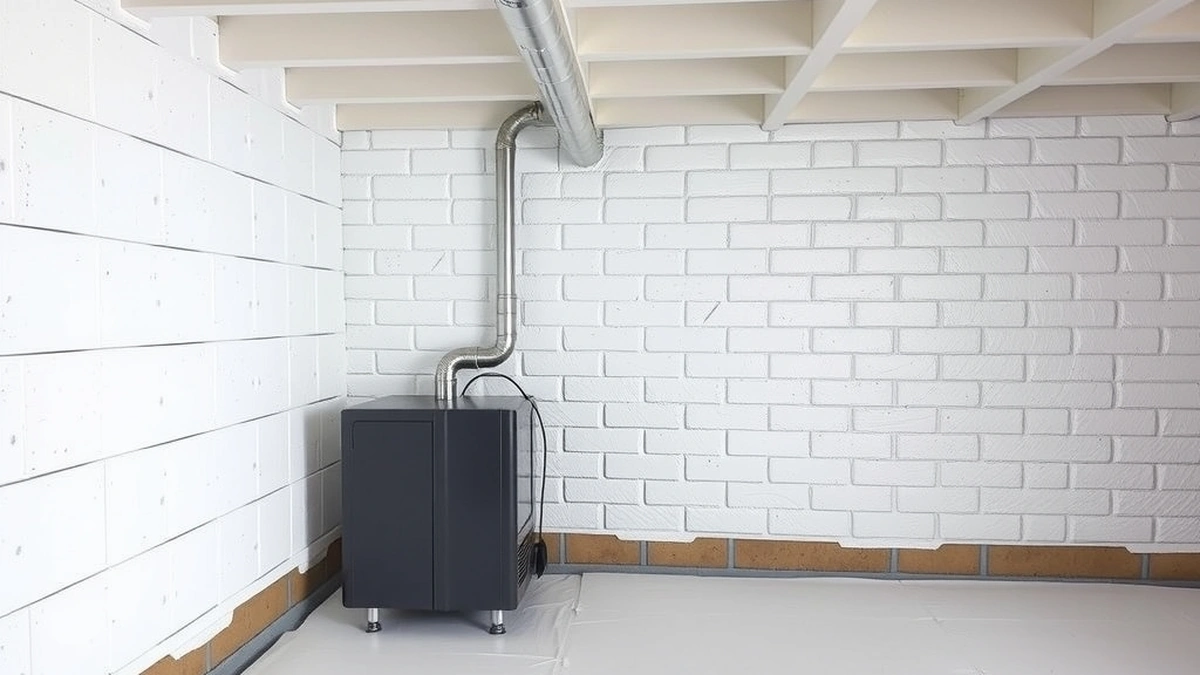
Crawl space encapsulation works by sealing the soil and walls with a heavy liner, sealing the seams and penetrations, and controlling humidity with a dehumidifier. It costs $3 to $8 per sq ft, or $4,000 to $15,000 for a typical house.
- Cost per sq ft
- $3 - $8
- Typical job
- $4,000 - $15,000
- Liner thickness
- 10 - 20 mil
- Humidity target
- Under 60%
- Dehumidifier
- $1,200 - $3,000
Some links on this page are affiliate links.If you buy through them we may earn a commission at no extra cost to you. We do not accept payment for rankings. Read the full disclosure.
Crawl space encapsulation works by separating the house from the soil beneath it. A heavy liner covers the ground and runs up the walls, seams and penetrations are sealed, and a dehumidifier holds the humidity below 60%. The result is a dry, conditioned volume instead of a damp, vented one. It also changes how the house behaves: floors feel warmer, the musty smell goes away, and the heating and cooling system stops fighting humid air.
The Liner
The liner is the core of the system. It is a reinforced polyethylene sheet, usually 10 to 20 mil thick, laid over the soil and carried up the walls to the rim joist. A thicker liner resists punctures from gravel and debris and lasts longer.
A cheap liner is the most common failure. A 6 mil sheet from a hardware store will tear during installation and degrade in a few years, and the encapsulation is only as good as the membrane. Ask for the thickness in mils, not a description.
Sealing Is the Other Half
A liner with unsealed seams is a tent, not a barrier. The installers overlap the sheets, tape the seams with a compatible sealant, and seal around piers, pipes, and the perimeter with termination bars or adhesive.
Penetrations are the details that get missed. A pipe that passes through the liner without a sealed boot becomes a path for soil gas and moisture. The same is true of a pier that interrupts the floor sheet. Ask how each penetration will be sealed before the crew starts. The details are unglamorous and they are where most failures begin.
Drainage Before the Liner
Water has to be dealt with before the liner goes down. If the crawl space has standing water, a sump pit and pump are installed at the low point and the discharge is routed outside. Grading and downspouts are corrected so the water stops arriving.
A liner laid over wet soil traps the moisture underneath and creates a worse problem than the one it was meant to solve. Any contractor who proposes encapsulation without addressing standing water is selling a cover, not a solution.
Water removal is often the larger part of the budget. A sump pit, pump, and discharge can add $1,500 to $3,000, and exterior drainage can add more. Ask for those lines separately so you can see what the moisture control actually costs.
Humidity Control
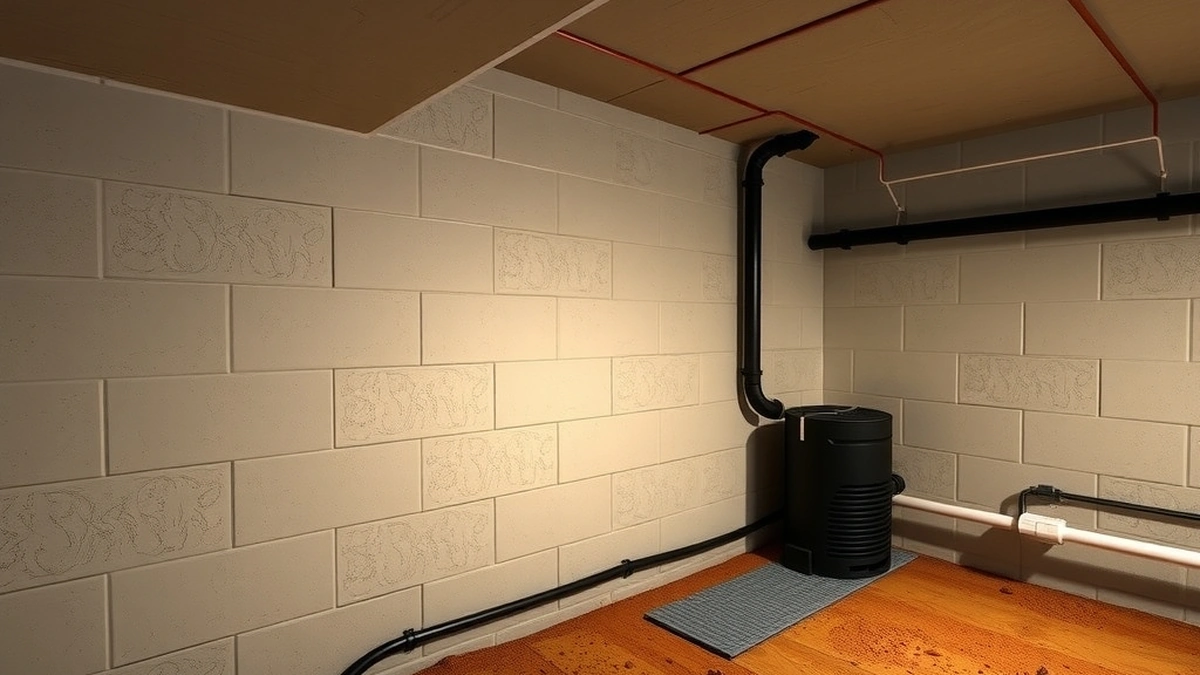
Sealing the soil stops evaporation, but it does not remove the moisture already in the air or the humidity that enters through the floor above. A dehumidifier sized to the volume holds the space below 60% relative humidity.
For a 1,000 sq ft crawl space with a 3-foot ceiling, the volume is 3,000 cubic feet, and a 70-pint unit is typically adequate. Oversizing wastes energy; undersizing runs continuously and never catches up.
A Costed Example
A 1,200 sq ft crawl space with a liner at $6 per sq ft and a dehumidifier:
Liner: 1,200 × $6 = $7,200 Dehumidifier installed: $1,800 Sump pit and pump: $1,200
Total: $10,200
That sits in the middle of the $4,000 to $15,000 band. A smaller crawl space with no water problem would land nearer $5,000.
Encapsulation Versus Venting
| Approach | Cost | Performance |
|---|---|---|
| Passive vents | Low | Works in dry climates only |
| Powered vent | $300 - $900 | Helps in shoulder seasons |
| Encapsulation | $4,000 - $15,000 | Reliable in humid climates |
| Encapsulation plus dehumidifier | $5,000 - $18,000 | Best control |
Venting was standard for decades and still works in the arid Southwest. In the Southeast, the Pacific Northwest, and most of the Midwest, vents pull humid air into a cool space and the moisture condenses on the joists. That is why sealing has become the default in humid regions.
The Installation Sequence
- Remove debris, old insulation, and organic material.
- Correct drainage and install a sump if water is present.
- Lay the liner over the soil and up the walls.
- Seal the seams with compatible tape or adhesive.
- Seal penetrations and terminate the liner at the rim.
- Install and set the dehumidifier.
- Verify humidity after 24 hours.
What to Ask a Contractor
Ask for the liner thickness, the sealing method, and how penetrations will be handled. Ask whether the dehumidifier is included and how it is sized. Ask whether mold remediation or water removal is part of the scope, because those are separate trades and separate costs.
Ask, too, what the warranty covers. A liner warranty of 10 to 20 years is common, but it usually excludes tears from later work in the crawl space. Keep the installation record so a future plumber knows what is under the floor.
Finally, ask what the crawl space will look like when the crew leaves. A sealed liner should be clean, tight, and free of standing water, with the dehumidifier running and the humidity reading logged. If the crew leaves debris or a loose sheet, the details were not the priority, and the details are the system.
For the cost detail, read crawl space encapsulation cost and crawl space vapor barrier. If the space is wet rather than humid, water in the crawl space covers the drainage side first. In a cold climate, ask about insulating the rim joist as part of the job, because the liner alone does not stop cold air from entering at the perimeter.
Frequently asked questions
How does crawl space encapsulation work?
A heavy liner is laid over the soil and up the walls, seams are sealed, penetrations are closed, and a dehumidifier holds humidity below 60%. It separates the crawl space from ground moisture.
How much does encapsulation cost?
It runs $3 to $8 per sq ft, or $4,000 to $15,000 for a typical house including the liner, sealing, and often a dehumidifier.
Does encapsulation stop mold?
It removes the moisture condition mold needs. Existing mold should be remediated first, and any water leak should be fixed before the liner goes down.
Can I encapsulate a crawl space with standing water?
No. Standing water has to be drained or pumped first. A liner over a puddle traps the water and hides the problem.
Is encapsulation better than venting?
In humid climates, yes. Vents pull moist outside air into a cool space, where it condenses. Sealed encapsulation is the more reliable approach in most of the country.
How long does encapsulation last?
A quality liner lasts 20 years or more with care. The dehumidifier has a shorter life, typically 5 to 10 years, and should be maintained.
Sources
Some links are affiliate links.If you buy through them we may earn a commission at no extra cost to you. We do not accept payment for rankings. Read the full disclosure.