Is Crack Injection Worth It? Cost and Limits
Crack injection costs $400 to $1,200 and seals a stable leaking crack. See when it is worth it and when the wall needs restraint first.
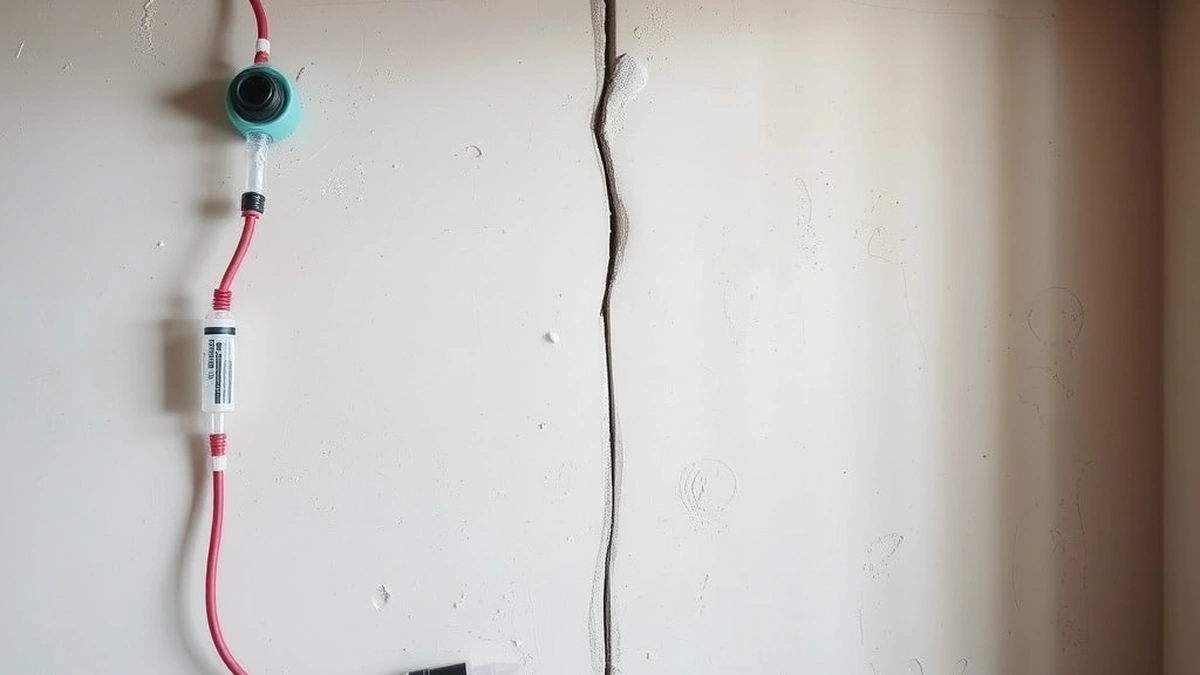
Crack injection is worth it for a stable, leaking crack in a sound wall, at $400 to $1,200 per crack. It is not worth it on a bowing wall, where the crack will reopen until the wall is restrained.
- Cost per crack
- $400 - $1,200
- Per linear ft
- $15 - $40
- Epoxy
- Dry structural cracks
- Polyurethane
- Wet cracks
- Warranty
- Typically 1 year
Some links on this page are affiliate links.If you buy through them we may earn a commission at no extra cost to you. We do not accept payment for rankings. Read the full disclosure.
Crack injection is worth it when a crack is stable, leaking, and the wall around it is sound. At $400 to $1,200 per crack, it is the cheapest structural repair available, and it stops a leak without excavation. It is not worth it on a wall that is still moving, because the crack will reopen and the money is spent twice.
What You Are Buying
Injection fills the crack with epoxy or polyurethane under pressure. Epoxy bonds the faces and restores some continuity; polyurethane foams, stays flexible, and seals a wet crack.
What you are buying is a watertight, filled crack and a few hours of a technician’s time. There is no excavation, no landscaping to restore, and no concrete to remove.
The Cost Comparison
| Repair | Cost | Scope |
|---|---|---|
| Surface sealant | $50 - $200 | Cosmetic, short-lived |
| Crack injection | $400 - $1,200 | Seals the full depth |
| Interior drain | $2,000 - $8,000 | Water at the joint |
| Exterior waterproofing | $4,000 - $12,000 | Water at the wall |
Injection is the least expensive repair that actually addresses the crack rather than the surface, which is why it is the default for a single leak. That is why it is the default for a single leak.
When It Is Worth It
It is worth it when one crack is leaking, the wall is plumb, and the crack width is stable. It is also worth it after a structural repair, to seal the crack that the anchors or piers have stabilized, and that sequencing is what makes the injection last.
It is worth it when the alternative is a full waterproofing system for a single leak, because the system costs several times as much and addresses water that may not exist elsewhere.
When It Is Not
It is not worth it on a horizontal crack in a bowing wall. The wall is bending, the crack is the hinge, and the injection will fail as the wall continues to move.
It is not worth it on a crack with vertical displacement, because the two sides are no longer aligned and the resin cannot restore the alignment. It is also not worth it on a crumbled wall, where there is no sound concrete to bond to.
The Resin Choice
Epoxy is stronger and suits a dry crack that needs to transfer load. Polyurethane is flexible and suits a wet crack or one that may move slightly.
A contractor who uses one product for every job is not making a technical choice. Ask which resin and why, and expect the answer to reference moisture and movement.
A Costed Example
A 10-foot crack injected with polyurethane at $25 per linear foot:
10 × $25 = $250
Add the minimum mobilization of $450 and patching at $100:
$250 + $450 + $100 = $800
That sits in the middle of the $400 to $1,200 per-crack band. A four-crack job at 35 linear feet would be roughly $1,500 to $1,800, which is still less than a quarter of a full waterproofing system.
The Do-It-Yourself Question
Injection kits are sold for slabs and garage floors, and a careful homeowner can use one on a non-structural crack in flatwork. The kits cost $50 to $150 and the result is usually acceptable for a cosmetic crack.
A basement wall is different. The crack may be a symptom of movement, the wall may need restraint, and the injection pressure has to be controlled. A failed DIY injection can leave a leaking crack and a mess that a contractor has to remove before starting over.
The savings on a wall crack are small compared with the risk. A professional job runs $400 to $1,200, and the diagnosis that comes with it is worth part of that price.
- Measure the crack and record the width.
- Check the wall plumb and any movement.
- Find and fix the water source.
- Choose the resin based on moisture and movement.
- Confirm the port spacing and the injection method.
- Ask what the warranty covers and for how long.
Ask for the footage and the resin in writing. A quote that says “crack repair” without either is not comparable with anything.
Matching the Repair to the Leak
A crack that leaks only during the heaviest rain is a candidate for injection plus a drainage fix. The injection seals the path, and the drainage reduces the volume, and the combination is usually enough without a full waterproofing system.
A crack that weeps continuously is a different case. The water is under pressure, and the injection may hold for a season and fail. That is when the diagnosis has to move from the crack to the water, and the repair budget moves with it.
Crack injection is worth it when the crack is the problem. It is the cheapest effective repair for a stable leak, and it is a waste of money on a wall that needs restraint. The diagnosis is the whole decision, and it costs nothing to measure a crack and check a wall with a level. The diagnosis is the whole decision, and it costs nothing to measure a crack.
For the cost detail, read what crack injection costs and crack injection problems. If the crack is horizontal, horizontal foundation crack repair explains the restraint that has to come first.
Frequently asked questions
Is crack injection worth the money?
Yes for a stable, leaking crack in a sound wall. It costs $400 to $1,200 and stops the leak without excavation or major disruption.
How much does crack injection cost?
It runs $400 to $1,200 per crack, or $15 to $40 per linear foot, with a minimum mobilization charge of $300 to $600.
Will the crack come back after injection?
A stable crack stays sealed. A crack in a wall that is still moving can reopen within a season, because the cause was not addressed.
Is injection cheaper than waterproofing?
Yes, for a single leaking crack. A full waterproofing system addresses water across a wall and costs $2,000 to $12,000.
Can I inject a crack myself?
DIY kits exist for slabs and garages. A basement wall crack that is leaking or moving should be assessed by a contractor first.
How long does injection last?
A properly injected stable crack can last the life of the wall. The warranty is usually one year, which reflects the uncertainty about movement.
Sources
Some links are affiliate links.If you buy through them we may earn a commission at no extra cost to you. We do not accept payment for rankings. Read the full disclosure.