Wall Anchor Problems: Plates, Soil, and Limits
Wall anchors fail when the outside plate sits in bad soil, the wall is too far gone, or the rod is not tensioned. See the limits.
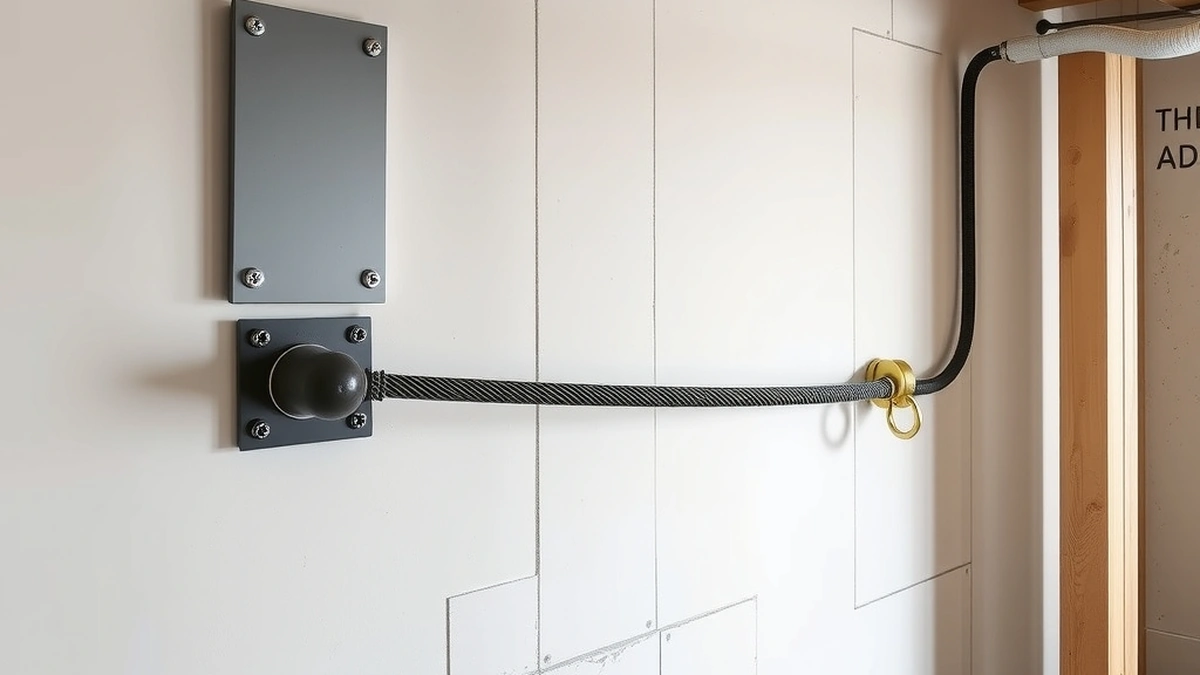
Wall anchor problems include plates set in unstable fill, anchors that are never tensioned, wall crushing at the plate, and use on walls that have moved past 2 inches. Anchors cost $500 to $1,500 each.
- Cost per anchor
- $500 - $1,500
- Spacing
- 6 - 8 feet
- Anchor depth
- 8 - 12 feet
- Movement limit
- 2 inches
- Engineering report
- $400 - $1,500
Some links on this page are affiliate links.If you buy through them we may earn a commission at no extra cost to you. We do not accept payment for rankings. Read the full disclosure.
Wall anchor problems come from the reaction, not the rod. An anchor is only as strong as the soil it pulls against, and a plate buried in loose backfill is a plate that will move. The second group of problems is installation: anchors that are never tensioned, plates that are too small, and walls that have moved beyond what restraint can fix. The third is water, which keeps loading a wall that has already been repaired.
The Anchor Plate
The outside plate bears against undisturbed soil. If it sits in the same fill that was placed when the house was built, it is bearing on the material that may have caused the problem in the first place.
| Soil at plate | Capacity | Action |
|---|---|---|
| Undisturbed clay | Good | Standard installation |
| Compacted fill | Moderate | Verify depth and compaction |
| Loose fill | Poor | Extend to stable soil |
| Organic or peat | Very poor | Different system |
The plate depth is not a fixed number; it is whatever depth reaches soil that will not move. Ask how that depth was determined, and ask whether the contractor probed the soil or simply used a standard distance.
A standard distance is a reasonable default on a typical lot, but it is a guess on a lot with deep fill. The cost of a deeper pit is small compared with the cost of a plate that moves.
Tensioning
An anchor is installed and then tensioned. The tension pulls the wall toward the plate and resists further movement. Without tensioning, the rod is a loose connection that does nothing until the wall moves far enough to engage it.
Some systems are tensioned once and left. Others are tightened over several visits as the wall responds. Ask which approach is specified and who is responsible for the follow-up. A crew that installs and leaves without a tension record has left the job half done. The record is also the evidence that the anchors were loaded at all.
Wall Crushing
The inside plate spreads the load across the wall. If the plate is too small for the wall material, the load concentrates and crushes the concrete or cracks the block.
| Wall type | Plate concern | Mitigation |
|---|---|---|
| Poured concrete | Moderate | Standard plate |
| Block | High | Larger plate or strap |
| Stone | High | Custom bearing |
| Thin wall | High | Engineer review |
A wall that is already cracked at the plate location is a wall that cannot take the load, and the crack will open further as the rod is tightened. The engineer should check the bearing before the anchor is installed.
The Movement Limit
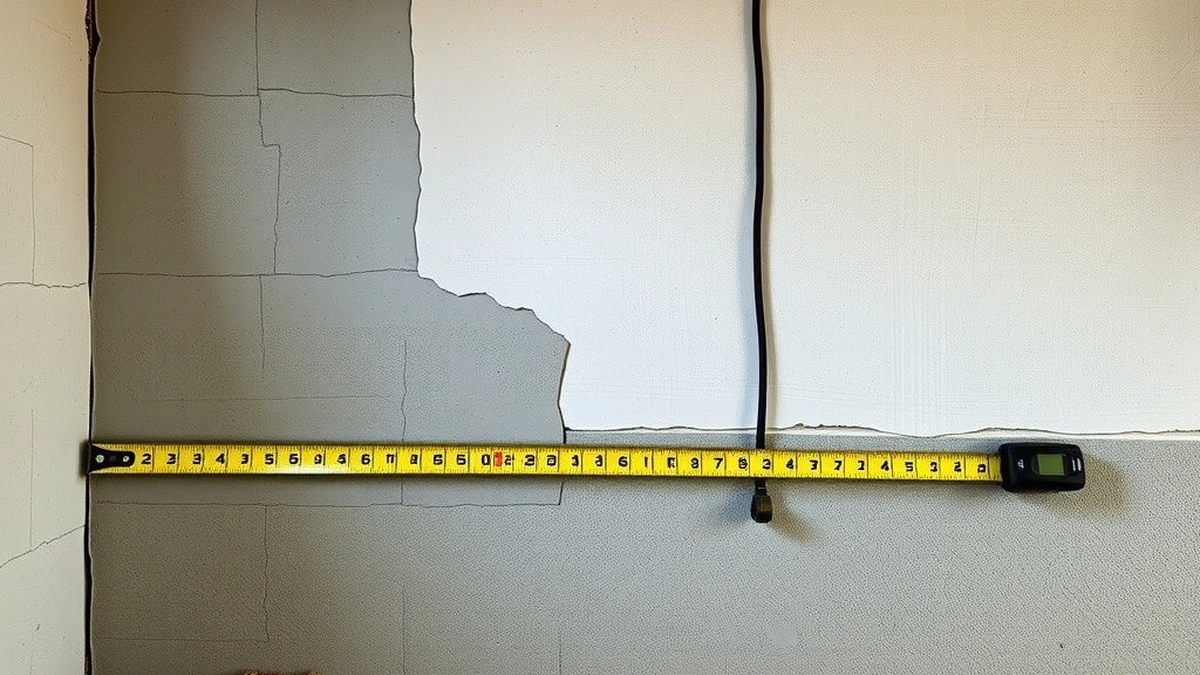
Anchors can pull a wall back toward plumb, but they are not a straightening system for a wall that has moved several inches. Beyond about 2 inches, the floor and the frame have taken a set, and the anchor holds the wall in a position the rest of the house has adapted to.
At that point, straightening or replacement is the conversation, and the cost moves from the $4,000 to $15,000 band into the $8,000 to $20,000 range for straightening or higher for replacement. An anchor installed on a 3-inch bow will hold, but the basement remains bowed, and the homeowner should know that before the invoice.
A Costed Failure
A five-anchor job at $1,100 where two plates were set in loose fill and moved. Re-installing those two deeper and re-tensioning:
2 × $1,400 = $2,800
Add engineering at $900 and a drainage correction at $1,800:
$2,800 + $900 + $1,800 = $5,500
The original job cost $5,500 and is now partly wasted. The lesson is the plate depth, not the unit price.
The Limits
Anchors work on walls that are bowing but sound, with stable soil at the plate depth, a wall that can take the bearing load, and movement under about 2 inches. They do not fix settlement, and they do not fix a crumbled wall.
They also do not stop water, and they do not remove the pressure that is bowing the wall. The anchor resists the load; the drainage reduces it, and both belong in a repair that is meant to last. A wall that is anchored but still saturated is being loaded by the same pressure that caused the bow.
The Sequence to Avoid Problems
- Measure the bow and check wall plumb.
- Correct drainage and surface water.
- Get an engineer’s spacing and plate depth.
- Excavate to stable soil at each location.
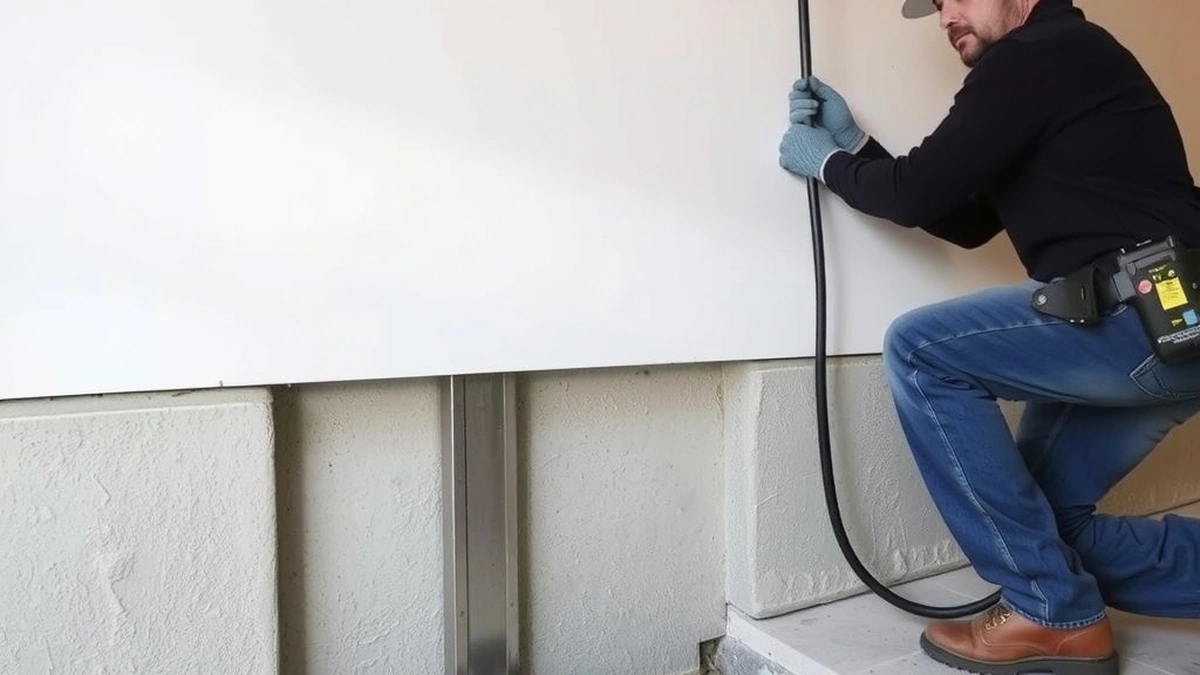
- Core the wall and install the rod and plates.
- Tension to the specified load and record it.
- Recheck and re-tension if specified.
What to Ask a Contractor
Ask what the plate bears on and how that was verified. Ask how the anchors will be tensioned and whether there is a follow-up visit, because the second visit is where most of the correction happens. Ask for the engineer’s plate size and spacing, and ask what happens if the wall is spalled at a location.
For the method context, read how wall anchors work and wall anchors explained. If the wall is block and the bow is moderate, how carbon fibre straps work is the closer comparison.
Frequently asked questions
What are the common problems with wall anchors?
Plates bearing on unstable fill, rods that are never tensioned after installation, wall crushing at the inside plate, and use on a wall that has moved beyond the restraint limit.
Why do wall anchors fail?
The anchor needs stable soil to pull against. If the plate sits in loose backfill or organic soil, it moves and the wall follows.
How far should wall anchors be from the wall?
Most systems set the anchor plate 8 to 12 feet from the wall so it bears on undisturbed soil beyond the backfill zone.
Do wall anchors need to be tightened over time?
Yes. The rod is threaded so the tension can be increased gradually as the wall responds. An anchor that is installed and never touched again is only half the system.
Can anchors crush a block wall?
A concentrated load can crush block or crack mortar if the inside plate is too small. The engineer specifies the plate size for the wall type.
What voids an anchor warranty?
Changed grading, added fill, plumbing leaks, and work that disturbs the anchor are common exclusions. Read the terms before signing.
Sources
Some links are affiliate links.If you buy through them we may earn a commission at no extra cost to you. We do not accept payment for rankings. Read the full disclosure.