How Wall Anchors Work: Pulling a Wall Back
Wall anchors tie a basement wall to buried plates and can be tightened over time. See the rod, the anchor, and the installation.
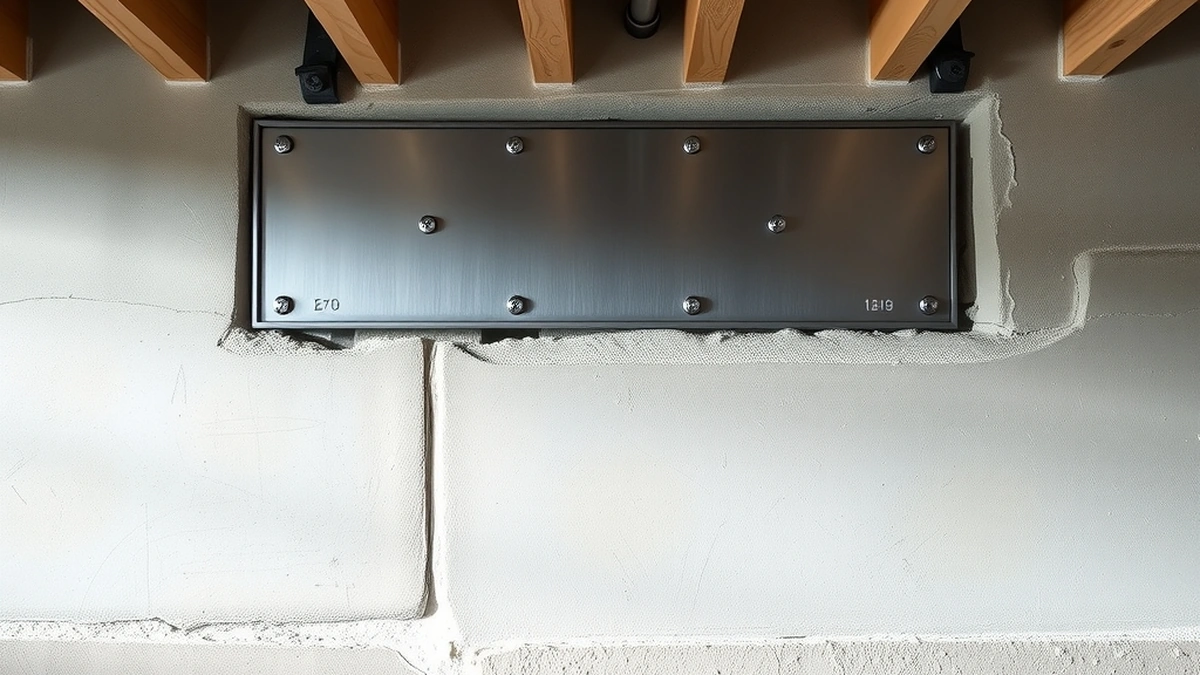
Wall anchors work by connecting a steel plate on the inside of the wall to an anchor plate buried in stable soil outside, through a steel rod. Tightening the rod pulls the wall back toward plumb. Anchors cost $500 to $1,500 each.
- Cost per anchor
- $500 - $1,500
- Spacing
- 6 - 8 feet on center
- Anchor depth
- 8 - 12 feet from wall
- Typical job
- $4,000 - $15,000
- Best for
- Poured walls under pressure
Some links on this page are affiliate links.If you buy through them we may earn a commission at no extra cost to you. We do not accept payment for rankings. Read the full disclosure.
Wall anchors work by tying a failing wall back to soil that is not moving. A steel rod passes through the wall from a plate on the inside to an anchor plate buried several feet away in stable ground. Tightening the rod pulls the wall outward and resists the soil pressure that is bowing it inward.
The Three Parts
Every wall anchor system has the same three components. The inside plate distributes the pull across a section of wall so the concrete is not crushed at a single point. The rod transfers the load through the wall and the soil. The outside anchor plate bears against undisturbed soil and provides the reaction.
The distance between the wall and the anchor matters. An anchor set 8 to 12 feet from the wall reaches soil that is not affected by the excavation backfill and the seasonal moisture cycle at the wall face. An anchor set too close sits in the same moving soil and provides little resistance.
Installation, Step by Step
A small excavation is made outside the wall at each anchor location, deep enough to reach stable soil. A hole is cored through the wall, the rod is inserted, and the outside plate is set in the excavation. The inside plate is installed and the rod is tensioned.
The excavation is then backfilled and compacted, and the inside plate is covered with a trim cover or left exposed depending on the finish. The whole process for one anchor takes a few hours, and a typical wall takes one to three days. Dust and noise are part of it: coring a wall produces a slurry of concrete dust, and the crew should use a water-fed bit and plastic sheeting to keep the basement clean.
Why Anchors Can Be Tightened
The advantage of an anchor over a strap is adjustability. The rod is threaded, so the tension can be increased over time as the wall responds. That allows a gradual correction rather than a single forced lift.
The correction is slow by design. Tightening too fast can crack the wall or damage the floor connection. A common approach is to bring the wall back a fraction of an inch at each visit, with the homeowner or contractor checking the crack widths between adjustments.
Spacing and Count
| Wall length | Spacing | Anchors |
|---|---|---|
| 16 feet | 8 feet | 2 |
| 24 feet | 8 feet | 3 |
| 32 feet | 8 feet | 4 |
| 40 feet | 6.5 feet | 6 |
The count comes from the engineer’s design and reflects the wall height, the soil pressure, and the extent of the bow. A taller wall with a deeper backfill needs more anchors, not just wider plates.
Ask what the anchor is bearing on. A plate in undisturbed clay develops capacity; a plate in loose backfill does not. The excavation depth and the soil at the plate are as important as the rod diameter, and neither is visible after backfill.
A Costed Example
A 32-foot poured wall has bowed 1.5 inches. The engineer specifies four anchors at $1,100 each:
4 × $1,100 = $4,400
Add engineering at $900, crack injection at $700, and interior restoration at $900:
$4,400 + $900 + $700 + $900 = $6,900
That sits in the $4,000 to $15,000 band and is typical for a single wall with moderate movement.
Where Anchors Work Best
Anchors suit poured concrete walls under active lateral pressure, especially where the wall is still structurally sound and the bow is moderate. They are also useful where exterior excavation is limited, because the outside pit is small.
They are less suitable for block walls with widespread mortar cracking, where straps are often the better choice. They are also unsuitable where the soil behind the wall is so unstable that no anchor plate can develop resistance, such as deep fill or organic ground.
A third limitation is access. Each anchor needs a pit outside the wall, and a wall that abuts a neighbor’s property, a driveway, or a mature planting bed may not have room. In that case straps are the practical substitute, even on a poured wall.
The Sequence
- Measure the bow and the wall plumb.
- Correct drainage and surface water.
- Get an engineer’s design with spacing and anchor depth.
- Excavate the anchor pits and core the wall.
- Install the plates and rod, then tension.
- Backfill and compact.
- Recheck plumb after each adjustment.
What to Watch
Watch the crack widths during tensioning. A crack that closes is a good sign; a new crack that appears at a corner is a sign the load is being transferred somewhere unintended. The contractor should stop and reassess if that happens.
Ask for the tension record and the as-built anchor locations. Those records matter if the wall is monitored later or if a future excavation is planned near the anchors.
A landscaper who digs a planting bed where an anchor plate sits can cut the rod or undermine the plate. Mark the locations on a site plan and keep the plan with the house documents. It takes five minutes and prevents a repair that nobody can diagnose later.
For the cost detail, read wall anchor cost and wall anchors explained. If the wall is block rather than poured, how carbon fibre straps work is the closer method.
Frequently asked questions
How do wall anchors work?
A steel rod runs from an inside wall plate through the wall to an anchor plate buried in stable soil. Tightening the rod pulls the wall toward the anchor and resists further bowing.
How much do wall anchors cost?
They run $500 to $1,500 each installed. A typical bowing wall needs several, so most jobs land between $4,000 and $15,000 including engineering and crack repair.
Can wall anchors straighten a wall?
They can pull a wall back toward plumb over time, especially if it is tightened gradually. They are not a substitute for jacking when the wall has moved more than about 2 inches.
How far apart are wall anchors spaced?
Most engineers specify 6 to 8 feet on center, with anchors concentrated where the bow is greatest and at the ends of the affected wall.
Do wall anchors work on block walls?
They can, but carbon fibre straps are often preferred for block because the mortar joints have little tensile strength. The engineer decides based on the wall type and the load.
How long do wall anchors last?
A galvanized rod and plate system in stable soil is designed to last the life of the structure, and the tension can be checked and adjusted over time.
Sources
Some links are affiliate links.If you buy through them we may earn a commission at no extra cost to you. We do not accept payment for rankings. Read the full disclosure.