Filling Voids Under a Slab: Methods and Costs
Voids under a slab are filled with slurry, grout, or expanding foam at $3 to $15 per sq ft. See how each method finds and fills the gap.
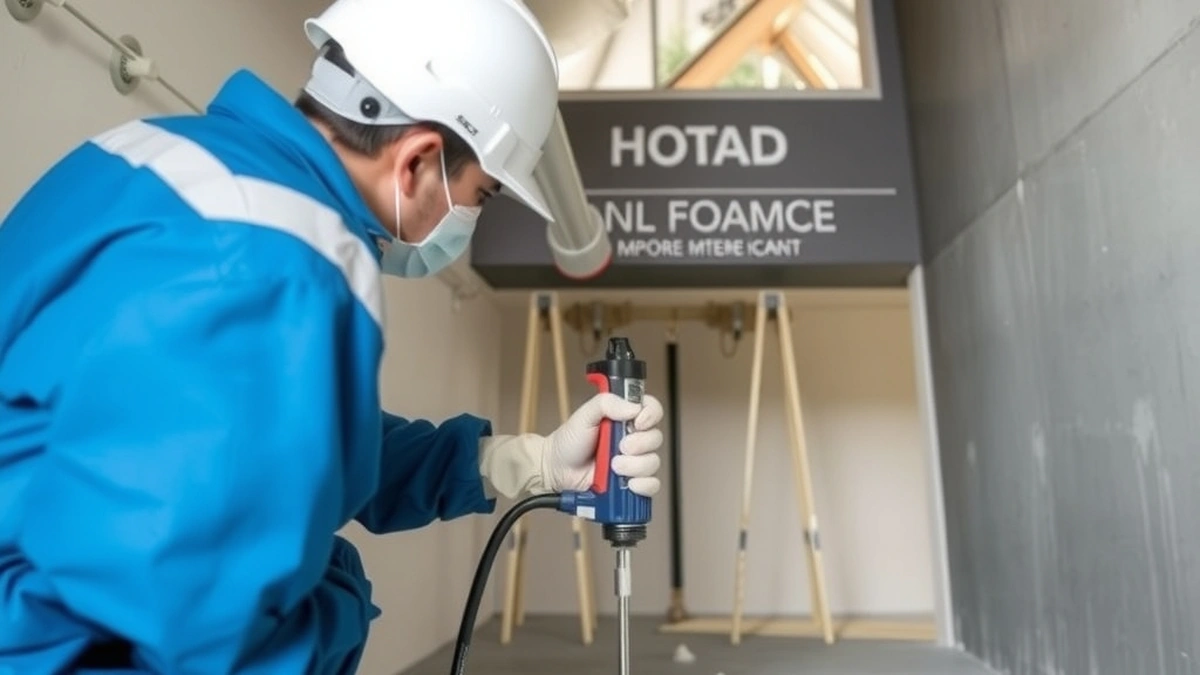
Voids under a slab are filled by injecting a sand-cement slurry at $3 to $8 per sq ft, a cementitious grout, or expanding polyurethane foam at $5 to $15 per sq ft. The fill supports the slab and stops further settlement.
- Slurry fill
- $3 - $8 per sq ft
- Polyurethane foam
- $5 - $15 per sq ft
- Slab lifting range
- $3 - $12 per sq ft
- Typical hollow spot
- 1 - 4 inches deep
- Inspection before fill
- $400 - $1,500
Some links on this page are affiliate links.If you buy through them we may earn a commission at no extra cost to you. We do not accept payment for rankings. Read the full disclosure.
Voids under a slab are filled by pumping material through small holes drilled in the concrete. Sand-cement slurry costs $3 to $8 per sq ft, and expanding polyurethane foam costs $5 to $15 per sq ft. The fill does two jobs at once: it supports the slab and it closes the space where water and pests have been moving.
What a Void Under a Slab Is
A void under a slab is a gap between the underside of the concrete and the soil that is supposed to support it. It forms when soil washes away, compacts, or settles, leaving the slab spanning air. The concrete is strong in compression but weak in bending, so an unsupported span cracks.
Voids are common under driveways, garage floors, patios, and interior slabs on grade. They are less common under a properly drained slab on compacted fill, which is why drainage history is the first question a good contractor asks.
How Voids Form
Water is behind most of them. A downspout that discharges at the slab edge, a gutter that overflows, or a lot that drains toward the house will carry fine soil particles into the void space and away. Over several seasons, a gap that started as a quarter inch becomes several inches.
Tree roots do the same work more slowly. Roots that run under a slab can lift it in one season and leave a void when they die or are cut. Utility trenches that were backfilled without compaction are another common source, especially where a sewer or water line crosses under a driveway.
The Three Fill Materials
| Material | Cost | Density | Cure | Best use |
|---|---|---|---|---|
| Sand-cement slurry | $3 - $8 per sq ft | About 100 lb per cu ft | 24 hours | Stable subgrade, driveways |
| Cementitious grout | $6 - $12 per sq ft | About 120 lb per cu ft | 24 to 48 hours | Deeper voids, higher strength |
| Polyurethane foam | $5 - $15 per sq ft | About 3 to 6 lb per cu ft | 15 minutes | Weak soil, quick return |
Slurry is the traditional mudjacking mix. Grout is a stronger, more flowable version used where the void is deep or the load is heavier. Foam is a two-part polymer that expands many times its injected volume, which means far less material weight is added to the failing soil.
Finding the Void Before You Fill It
Drilling blind is how slabs get over-lifted and cracked. A contractor should map the void first, either by tapping the slab with a hammer and listening for the hollow response, by drilling small probe holes, or by lifting a core at the worst spot to look underneath.
The depth of the void matters. A 1-inch gap under a driveway is a straightforward fill. A 4-inch gap with soil washed out to the footing is a drainage problem that will return unless the water is redirected. In that case the fill is paired with a drainage correction so the void does not reopen.
What the Job Costs
A 400 sq ft garage floor with a void along one wall, filled with slurry at $6 per sq ft:
400 × $6 = $2,400
The same floor with foam at $11 per sq ft:
400 × $11 = $4,400
Add a mobilization minimum of $300 to $600 for small areas. A single 60 sq ft stoop at $7 per sq ft is $420 in material and labor, but the invoice will usually land closer to $600 once the minimum applies.
Fill, Lift, or Replace
| Condition | Right response | Typical cost |
|---|---|---|
| Void, slab still level | Fill only | $3 - $8 per sq ft |
| Void with 1 to 2 inch settlement | Fill and lift | $3 - $12 per sq ft |
| Slab cracked into moving pieces | Replace | $8 - $18 per sq ft |
| Void caused by active water | Fix drainage, then fill | Varies |
Filling a void under a slab that has broken into several independent pieces does not restore the slab. The pieces will move separately no matter how well the void is filled, and replacement is the honest answer. Lifting works when the slab is intact and has settled as a unit.
The Sequence a Contractor Follows
- Walk the slab with a level and tap-test to map hollow areas and low spots.
- Confirm drainage paths and identify any active water source before drilling.
- Drill 1 to 2 inch holes on a 4 to 6 foot grid, or 5/8 inch holes for foam.
- Pump material in stages, checking elevation against a laser or level as the slab rises.
- Stop when the target elevation is reached, not when the pump runs out of material.
- Patch the holes, clean the joints, and confirm the slab drains away from the building.
Limits and Warranty
Void filling does not add structural capacity to a slab that was undersized or under-reinforced. It restores support, not strength. It also does not fix a slab that is heaving rather than settling; heaving is a soil expansion problem, and injecting fill under a rising slab makes it worse.
Ask what warranty covers the work. One year on workmanship is standard. A longer term is only credible if the contractor also corrected the water that created the void, because fill alone will not survive another decade of the same drainage pattern. Read how mudjacking works for the mechanics, and polyurethane foam lifting cost for the foam side of the comparison.
Frequently asked questions
How do you fill a void under a concrete slab?
Drill small holes through the slab and pump in a sand-cement slurry, cementitious grout, or expanding polyurethane foam. The material flows into the void and hardens to support the concrete.
How much does void filling cost?
Slurry filling runs $3 to $8 per sq ft, and polyurethane foam runs $5 to $15 per sq ft. Small jobs usually carry a minimum mobilization charge of $300 to $600.
How do I know there is a void under my slab?
A hollow sound when the slab is tapped, a floor that flexes underfoot, cracks that radiate from a corner, and doors or thresholds that have dropped are the common signs.
Can a void under a slab cause foundation problems?
Yes. A void lets the slab move independently, which cracks the concrete and can redirect water toward the foundation. Filling it restores support and keeps water out of the gap.
Is foam or slurry better for void filling?
Foam is lighter and cures faster, so it suits weak soil and quick return to service. Slurry costs less and is adequate for stable subgrade under driveways and walks.
Will filling a void lift the slab?
It can, and often does. The same injection that fills the void pressurizes the space and raises the slab, which is why void filling and slab lifting are usually one operation.
Sources
Some links are affiliate links.If you buy through them we may earn a commission at no extra cost to you. We do not accept payment for rankings. Read the full disclosure.