Foundation Repair Scams and How They Work
Common foundation repair scams, warning signs, and how to verify estimates before paying.
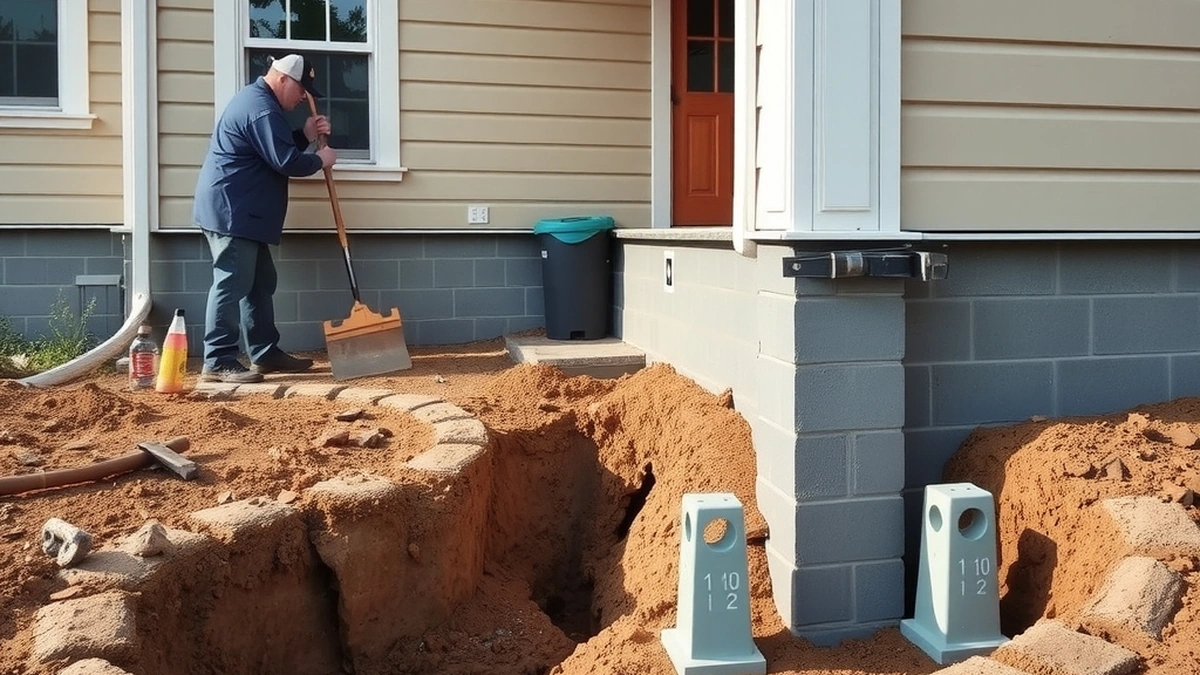
Foundation repair scams typically involve unnecessary pier installations, inflated square-foot pricing, and lifetime warranties that are not transferable or backed by an insurer.
- Typical pier job range
- $6,000–$30,000
- Push pier per unit
- $1,000–$3,000
- Helical pier per unit
- $700–$2,500
- Engineer inspection
- $400–$1,500
- Average repair
- $4,000–$15,000
Some links on this page are affiliate links.If you buy through them we may earn a commission at no extra cost to you. We do not accept payment for rankings. Read the full disclosure.
Foundation repair scams work by selling homeowners more work than the structure needs, often at prices that do not match the actual repair method. The usual pattern starts with a free inspection, moves quickly to a high-pressure estimate, and ends with a scope that cannot be verified by an independent engineer. Homeowners who measure crack width, count piers, and check bearing depth before signing are far less likely to overpay.
1. The Free Inspection Trap
Many foundation repair companies offer free inspections. The inspection itself is not the scam; the scope that follows often is. A salesperson may arrive with a checklist that assumes every crack requires piers, every sloped floor requires underpinning, and every basement wall requires anchors. None of those assumptions follow from a visual walkthrough alone.
A legitimate inspection measures crack width in inches, records elevation changes, reviews drainage, and may recommend a structural engineer. An engineer inspection typically costs $400–$1,500. That is a small fee compared with a pier job that commonly runs $6,000–$30,000. If a contractor quotes piers without soil data or load calculations, the estimate is an opinion, not a measurement.
2. Unnecessary Pier Counts
Pier count is the easiest number to inflate. A salesperson might propose ten push piers at $1,000–$3,000 each, producing a $10,000–$30,000 job, when the structure only needs four. The math looks simple: ten piers times $2,000 equals $20,000. But if four piers would carry the load, the homeowner pays $12,000 more for steel that does nothing.
Helical piers run $700–$2,500 each. A contractor who swaps push piers for helical piers without explaining soil conditions may be choosing the higher-margin product, not the correct one. Before approving any pier count, ask for the load calculation, the depth to bearing soil, and a drawing showing pier locations. Compare that against the repair cost page at /foundation-repair-cost/ to see whether the total falls inside the $4,000–$15,000 average range or the $20,000–$40,000 major repair range.
3. Slab Lifting and Mudjacking Markups
Slab lifting is priced by square foot, which creates room for over-measurement. Mudjacking costs $3–$8 per square foot. Polyurethane foam costs $5–$15 per square foot. General slab lifting falls around $3–$12 per square foot. A 20-foot by 20-foot garage slab is 400 square feet. At $8 per square foot, mudjacking should cost about $3,200. At $15 per square foot, foam should cost about $6,000. If a quote comes in at $12,000 for the same slab, the contractor is either including extensive crack repair or padding the square footage.
Measure the slab yourself. Multiply length by width. Multiply that result by the unit price range. If the contractor’s number is far above the top of the range without a written explanation, get a second estimate. More detail on slab work is available at /mudjacking-cost/.
4. Wall Anchor and Carbon Fiber Overselling
Basement wall cracks and bowing are often addressed with wall anchors or carbon fiber straps. Wall anchors cost $500–$1,500 each. Carbon fiber straps cost $400–$1,200 each. A wall that moves less than 2 inches usually does not need full structural replacement, but a salesperson may recommend anchors on every wall in the basement.
Count the affected walls. Measure the crack width. Cracks at 1/16 inch are often cosmetic. Cracks wider than 1/8 inch enter a watch category. Only significant inward movement, combined with engineering review, justifies anchors or straps across multiple walls. If every wall gets an anchor despite only one showing movement, the scope is suspect. See /wall-anchor-cost/ and /carbon-fiber-foundation-repair-cost/ for typical pricing context.
5. Warranty and Transfer Traps
A lifetime pier warranty sounds strong, but it is only as good as the company behind it. Pier warranties are commonly described as lifetime and transferable. However, transfer fees run $100–$500, and if the contractor goes out of business, the warranty may be worthless. Ask who backs the warranty, whether it is insured, and what happens if the company dissolves.
Also check whether the warranty covers future movement in areas not repaired. A warranty that covers only the installed piers does not protect the rest of the foundation. Get the warranty terms in writing before work starts.
6. Replacement Scare Tactics
Full foundation replacement costs $40,000–$150,000. Some contractors tell homeowners the foundation is beyond repair when targeted piering or slab lifting would cost far less. Replacement is generally considered only when more than one-third of the structure has failed. Restoration work typically amounts to 10–25 percent of structural replacement cost.
If a contractor recommends replacement, request a written engineering report that documents the failure percentage. Compare that against repair options at /pier-and-beam-foundation-repair-cost/ or /push-pier-cost/ before agreeing to demolition.
7. How to Protect Yourself
Start with measurement, not method. Record crack width in inches, floor elevation differences, and door or window sticking patterns. Hire an independent structural engineer for $400–$1,500 rather than accepting a free contractor inspection. Use the engineer’s report to request scoped bids from at least two contractors.
Verify permit requirements. Permits vary by city and county and typically take 1–3 weeks. A contractor who says no permit is needed may be avoiding inspection that would catch undersized work. Inspection lead time is usually 1–2 weeks once scheduled.
Check pricing against known ranges. Push piers cost $1,000–$3,000 each. Helical piers cost $700–$2,500 each. Crawl space encapsulation runs $3–$8 per square foot, or $4,000–$15,000 per job. Average repairs fall in the $4,000–$15,000 range. If a quote sits far outside those numbers without a clear reason, ask for line-item justification.
Never sign a contract the same day as the inspection. Scams depend on urgency. A legitimate repair will still be legitimate a week later. Use that time to confirm the engineer’s findings, check local permit rules, and compare estimates by unit price rather than total lump sum.
Next, compare foundation repair cost, pier and beam foundation repair cost, foundation crack repair cost before you commit.
Frequently asked questions
What is the most common foundation repair scam?
Selling more piers than the structure needs based on crack width alone, without soil borings or load calculations.
How much should a foundation inspection cost?
An independent structural engineer inspection typically runs $400–$1,500; free contractor inspections often lead to unnecessary work.
Are lifetime pier warranties reliable?
They can be, but only if the company is financially stable and the warranty is transferable; transfer fees usually run $100–$500.
Should I pay for full foundation replacement?
Replacement costs $40,000–$150,000 and is generally only considered when more than one-third of the structure has failed.
How long does it take to get a permit?
Permits vary by city and county and typically take 1–3 weeks.
What crack width should I monitor?
Cracks wider than 1/8 inch warrant monitoring; cracks at 1/16 inch are often cosmetic.
Sources
Some links are affiliate links.If you buy through them we may earn a commission at no extra cost to you. We do not accept payment for rankings. Read the full disclosure.