Is Push Piers Worth It? Cost, Life, and Alternatives
Push piers cost $1,000 to $3,000 each but carry a lifetime warranty. See when they are worth it and when another repair is cheaper.
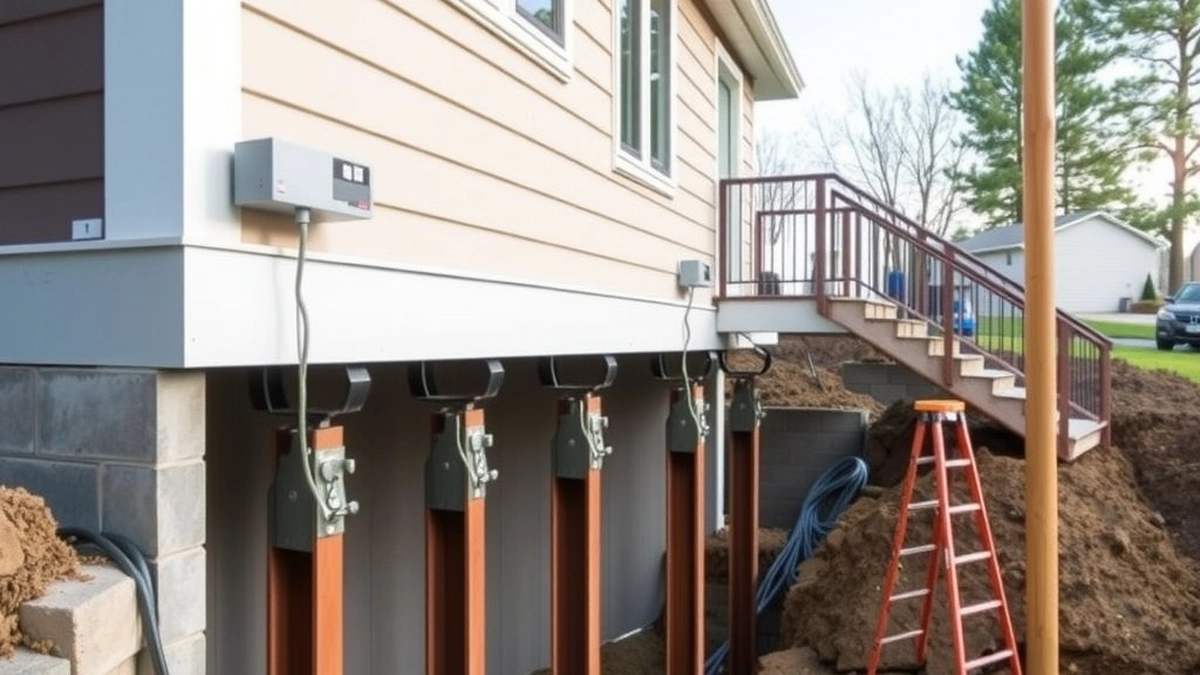
Push piers are worth it when a footing has settled and the structure is heavy enough to need driven steel: $1,000 to $3,000 per pier, a lifetime transferable warranty, and a repair that typically lasts the life of the house.
- Cost per pier
- $1,000 - $3,000
- Typical job
- $6,000 - $30,000
- Warranty
- Lifetime, transferable
- Transfer fee
- $100 - $500
- Design life
- Life of structure
Some links on this page are affiliate links.If you buy through them we may earn a commission at no extra cost to you. We do not accept payment for rankings. Read the full disclosure.
Push piers are worth it when a footing has settled and the house is heavy enough to need driven steel. At $1,000 to $3,000 per pier, a typical job runs $6,000 to $30,000, which is less than half the cost of replacement and comes with a warranty measured in decades rather than years. They are not worth it for a bowing wall, a heaving slab, or a foundation that has already failed past the point of repair.
What You Are Buying
A push pier is a steel tube driven to refusal and bolted to the existing footing. The house load moves off the weak soil and onto the pier, and the settlement stops. If lifting is specified, the structure is raised back toward level as part of the same operation.
What you are buying is not steel, although the steel is what you see in the photos. It is a load path to a stratum that will not move, a documented refusal depth, and a warranty that transfers to the next owner. Those three things are what make the price defensible.
The Cost Against the Alternative
| Option | Cost | What it achieves |
|---|---|---|
| Push piers | $6,000 - $30,000 | Stops settlement, can lift |
| Helical piers | $6,000 - $30,000 | Same, lighter equipment |
| Crack injection | $400 - $1,200 | Seals a stable crack only |
| Replacement | $40,000 - $150,000 | New foundation |
A repair that stops the movement preserves the house, the finishes, and the resale value, and it does so without the disruption of a rebuild. Replacement rebuilds the foundation under a lifted house, at four to five times the cost for the same outcome on a repairable structure.
The Lifetime Warranty
Most push pier systems carry a lifetime warranty on the piers and the lift, and it is usually transferable to a new owner for a fee of $100 to $500. That transferability is worth more than it sounds at resale, because a buyer’s inspector will find the repair and the warranty answers the question.
Read the exclusions, though, and ask the contractor to point to the clause that covers a re-settlement at the same wall. Changed grading, plumbing leaks, and work by other contractors are common ways a warranty is voided. The document should be read before signing, not after a problem appears.
When Push Piers Are Worth It
The clear case is differential settlement: one corner or one wall has dropped, the crack is widening, and the soil under the footing is the cause. A second case is a house on fill that was never compacted, where the pier has to pass through the fill to reach something competent. The fill depth is the design driver there, and a shallow pier is worse than no pier because it creates a false record.
A third case is a structure that needs lifting back toward level, not just stabilization, and the lift is where the interior damage risk lives. Push piers can do both in one operation, which is why they are common on older houses with visible floor slope and sticking doors.
When They Are Not
Push piers do not fix lateral movement, and a wall that is bowing will keep bowing after the piers are installed. A bowing wall needs anchors or straps, and a pier system installed on a bowing wall is money spent on the wrong load path. They also do not fix heave, because a pier holds a footing down while expanding soil pushes it up.
They are also a poor choice when the foundation has failed past roughly 33% of its length or area, or when the footing is so deteriorated that a bracket cannot be attached. At that point the question is replacement, not repair, and a pier quote for that house is a quote for a repair that will not last.
A Costed Example
A 1,800 sq ft house with a settled rear corner. The engineer specifies eight push piers at $2,000:
8 × $2,000 = $16,000
Add engineering at $1,000, drainage at $2,000, and restoration at 10%:
$16,000 × 0.10 = $1,600
Total: $20,600, against a replacement estimate of $55,000. The repair is 37% of the replacement cost and addresses the cause, which is the comparison that matters rather than the invoice in isolation. Replacement also requires the house to be lifted and temporarily vacated, and that cost is rarely in the first quote.
The Sequence to Decide
- Measure the cracks, floor elevations, and wall plumb.
- Get an engineer’s report with a method recommendation.
- Price piers and the alternative method on the same scope.
- Compare ten-year cost, including the risk of a second repair.
- Check the warranty terms and the transfer fee.
- Confirm drainage is included or priced separately.
The Verdict
Push piers are worth it when the failure is vertical settlement, the structure is heavy, and the site allows a rig. They are the standard repair for a reason: they reach competent soil, they can lift, and they are warranted for the life of the house. On a bowing wall or a heaving slab, they are the wrong tool at any price.
For the cost detail, read what push piers cost and how push piers work. If access is tight or the structure is light, is helical piers worth it covers the alternative.
Frequently asked questions
Are push piers worth the money?
Yes when the footing has settled and the load requires driven steel. The repair addresses the cause, carries a lifetime warranty, and is typically cheaper than replacement.
How long do push piers last?
A galvanized pier driven to competent soil is designed for the life of the structure, and the warranty is usually transferable for a $100 to $500 fee.
What is the alternative to push piers?
Helical piers for lighter loads and tight access, mudjacking for slabs, and replacement when the foundation cannot be stabilized. The failure type decides.
Do push piers add value to a house?
They remove a defect rather than adding an amenity. The value effect is recovering the discount a buyer would demand, not a premium above the neighborhood.
When are push piers not worth it?
On a bowing wall, a heaving slab, a foundation that has failed past 33%, or a footing so deteriorated that a bracket cannot be attached.
How many piers will I need?
Spacing is usually 6 to 10 feet along the affected wall, with piers at corners and heavy load points. A 40-foot wall at 8-foot spacing needs five or six.
Sources
Some links are affiliate links.If you buy through them we may earn a commission at no extra cost to you. We do not accept payment for rankings. Read the full disclosure.