What Push Piers Cost: Unit Price and Job Totals
Push piers run $1,000 to $3,000 each, with full jobs at $6,000 to $30,000. See what drives the per-pier price and how the count is set.
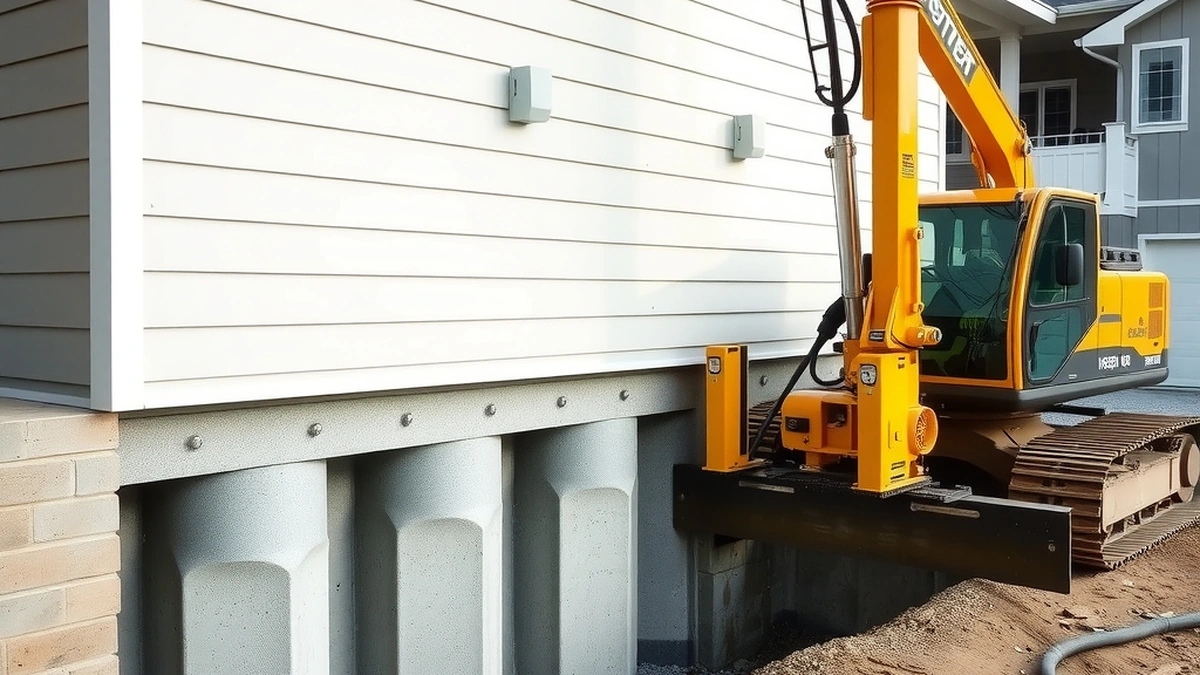
Push piers cost $1,000 to $3,000 each installed, and a full job runs $6,000 to $30,000. The per-pier price rises with depth, access difficulty, and the bracket type required for the footing.
- Cost per pier
- $1,000 - $3,000
- Full pier job
- $6,000 - $30,000
- Helical pier each
- $700 - $2,500
- Engineering report
- $400 - $1,500
- Warranty transfer
- $100 - $500
Some links on this page are affiliate links.If you buy through them we may earn a commission at no extra cost to you. We do not accept payment for rankings. Read the full disclosure.
Push piers cost $1,000 to $3,000 each installed, and a full job runs $6,000 to $30,000 because a house needs several. The per-pier price is the number homeowners focus on and the least useful one, because the count and the design depth decide the total. A $1,200 pier that reaches bearing at 30 feet is a better deal than a $1,000 pier that stops at 15.
What a Push Pier Is
A push pier is a steel tube driven hydraulically through a bracket attached to the existing footing until it reaches a stratum that can carry the load. The bracket transfers the house load to the pier, and the pier transfers it to the soil. It is the standard repair for vertical settlement on a house with access.
The system works in compression, which suits a heavy structure. It also produces a clear end point: refusal, the depth at which the pier stops advancing under load. That reading is recorded and compared with the design.
What the Per-Pier Price Covers
| Component | Share of price | Notes |
|---|---|---|
| Steel pier sections | Moderate | More sections with depth |
| Bracket and hardware | Moderate | Footing type affects design |
| Hydraulic rig and crew | Large | Fixed cost spread over the job |
| Excavation and backfill | Moderate | Access dependent |
| Engineering allocation | Small | Often a separate line |
The crew and rig are the largest share, which is why the per-pier price falls as the count rises. A three-pier job carries the same mobilization as a ten-pier job, and the contractor prices accordingly.
What Drives the Price Up
Depth is first. A pier driven to 30 feet uses roughly twice the steel of one that reaches refusal at 15, and the rig works twice as long. If a quote assumes 20 feet and the soil refuses at 10, you may be entitled to a credit; if it refuses at 30, expect an overrun charge.
Access is second. A wall with a clear approach is fast. A wall behind a deck, a fence, or mature landscaping adds removal and restoration. An interior pier through a basement floor adds concrete cutting and patching.
Footing condition is third. A sound concrete footing takes a standard bracket. A crumbling or stone footing may need a different bracket or a concrete collar, which adds cost.
Job Arithmetic
A single-wall repair with six piers at $1,800:
6 × $1,800 = $10,800
Add engineering at $900 and restoration at 10%:
$10,800 × 0.10 = $1,080
Total: $12,780. That is a mid-range job.
A larger repair with twelve piers at $2,000:
12 × $2,000 = $24,000
Add engineering at $1,200 and restoration at 15%:
$24,000 × 0.15 = $3,600
Total: $28,800. That sits near the top of the $6,000 to $30,000 band and reflects a house with multiple settled walls.
Push Piers Versus Helical Piers
| Factor | Push piers | Helical piers |
|---|---|---|
| Price each | $1,000 - $3,000 | $700 - $2,500 |
| Installation | Driven to refusal | Rotated to torque |
| Equipment | Heavy rig | Smaller drive head |
| Best for | Heavy structures | Lighter loads, tight access |
| Capacity proof | Refusal pressure | Torque reading |
Push piers are usually the better value on a heavy house with access. Helical piers win when the rig cannot reach the wall or the structure is light. The engineer’s report should name which one and why.
Failure usually shows up as a pier that moved after installation. If the pier stopped above competent soil, the footing will settle again and the bracket will drop with it. That is why the refusal log matters: it is the record that proves each pier reached the depth the design required, and it is the first document to ask for if a repair does not hold.
What the Quote Should State
A usable push pier quote names the pier count, the spacing, the design depth, the bracket type, and the overrun rate per foot. It states who provides the engineering and who pulls the permit. It lists what restoration is included and what is excluded.
A quote that says “push piers, $14,000” cannot be compared with anything, and it cannot be enforced if the count turns out to be different from what was discussed.
Questions Before Signing
- How many piers, at what spacing?
- What design depth is included, and what is the overrun rate?
- What bracket is specified for my footing type?
- Is engineering included, and is the report mine?
- Who pulls the permit, and when is the inspection?
- What is the warranty, and what voids it?
When Push Piers Are Not the Answer
Push piers address vertical settlement. They do not fix a bowing wall, which needs lateral restraint, and they do not fix heave, which needs the soil corrected. If a contractor proposes push piers for a horizontal crack or a rising slab, the diagnosis is wrong regardless of the price. Ask what the piers are resisting, and if the answer describes upward or sideways movement, get a second opinion before signing.
For the method comparison, read push piers versus helical piers and how push piers work. For the full cost context, foundation repair cost and underpinning cost show where the pier price sits in the total.
Frequently asked questions
How much do push piers cost?
Push piers run $1,000 to $3,000 each installed. A full job commonly lands between $6,000 and $30,000 because most houses need several piers along one or more walls.
What makes a push pier more expensive?
Depth is the main driver, followed by access. A pier driven 30 feet costs more than one that reaches refusal at 15, and a wall behind a deck costs more to reach than an open lawn.
How many push piers does a house need?
Spacing is usually 6 to 10 feet along the affected wall, with piers at corners and heavy load points. A 40-foot wall at 8-foot spacing needs five or six.
Are push piers better than helical piers?
Push piers suit heavier structures and sites with machine access. Helical piers suit lighter loads and tight access. Both reach competent soil; the structure and site decide.
What is refusal?
Refusal is the point where the pier stops advancing under the hydraulic load, which indicates it has reached a stratum that can carry the design load.
Does the price include engineering?
Not always. Engineering runs $400 to $1,500 and is sometimes bundled and sometimes separate. Ask for the report and confirm whether it is in the total.
Sources
Some links are affiliate links.If you buy through them we may earn a commission at no extra cost to you. We do not accept payment for rankings. Read the full disclosure.