How Push Piers Work for Foundation Repair
Push piers transfer foundation weight to stable soil using steel sections driven through a bracket. Learn the process, costs, and when they apply.
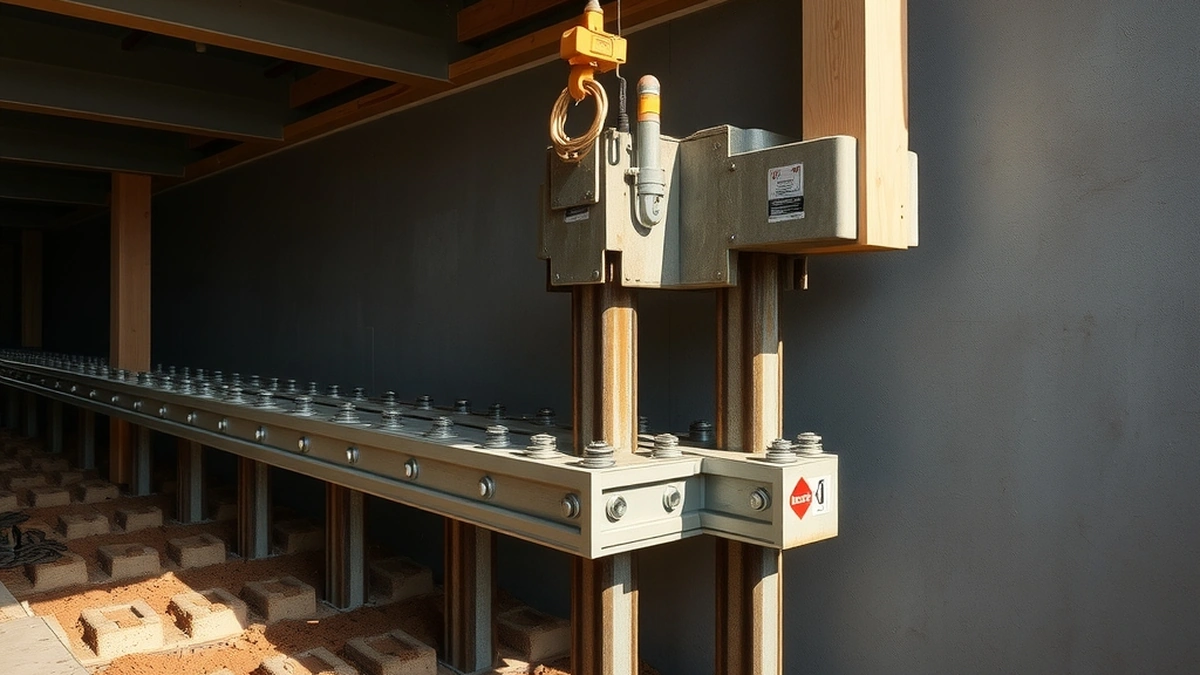
Push piers are steel pipe sections driven through a foundation bracket to load-bearing soil, then used to lift and support a settled foundation.
- Typical cost per pier
- $1,000–$3,000
- Typical full job cost
- $6,000–$30,000
- Warranty
- Lifetime, transferable
- Inspection lead time
- 1–2 weeks
Some links on this page are affiliate links.If you buy through them we may earn a commission at no extra cost to you. We do not accept payment for rankings. Read the full disclosure.
Push piers are steel pipe sections driven through a foundation bracket until they reach soil or bedrock capable of supporting the structure. Once bearing is established, the foundation load is transferred from the failing soil to the piers, and the slab or footing can be lifted back toward its original elevation. This article explains how push piers work, what they cost, and how they compare with other repair methods.
What a Push Pier Is
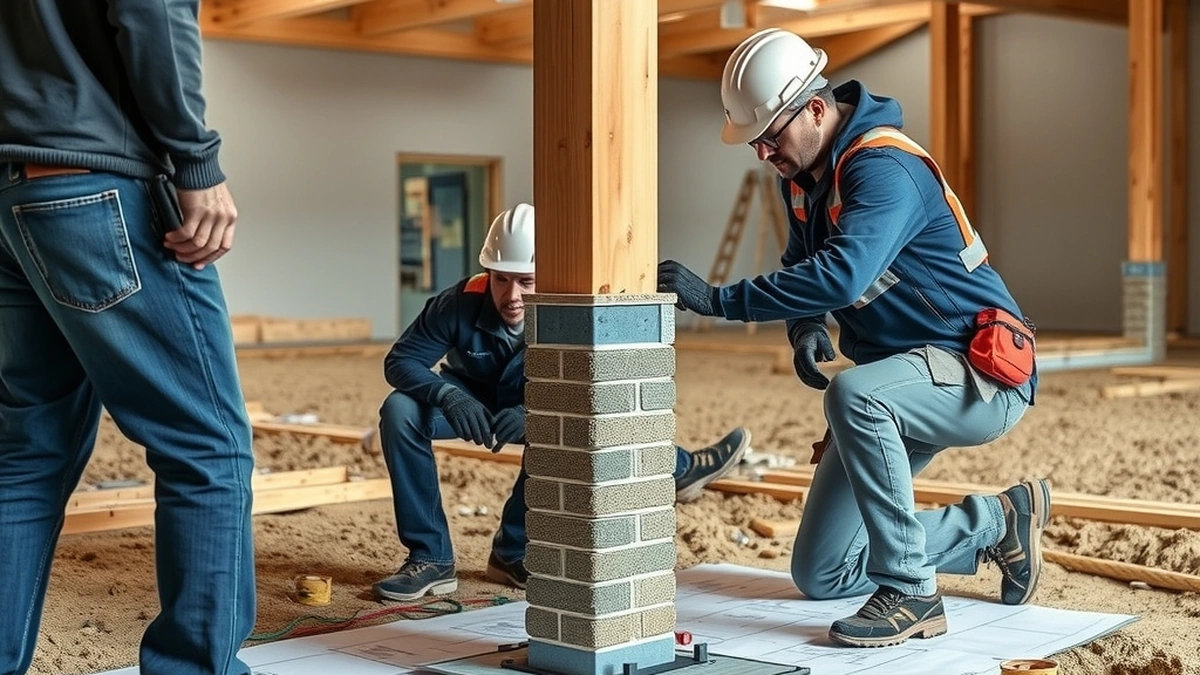
A push pier is a segment of steel pipe, commonly galvanized, that is connected end-to-end and pushed hydraulically through a heavy-duty steel bracket attached to the foundation footing. The pier advances one section at a time until it encounters refusal—soil or rock dense enough to resist further driving. At that point, the pier is load-tested, and the weight of the building is shifted onto it through the bracket.
Unlike helical piers, which are screwed into the ground, push piers rely on the weight of the structure itself as the reaction force for installation. That means the building must be heavy enough to drive the piers to bearing depth. For lighter structures, helical piers may be more appropriate; you can compare pricing at our helical pier cost page.
How Installation Works
Installation follows a measured sequence:
- Exposure. Crews excavate small sections of soil at the footing, usually at intervals determined by an engineer’s layout.
- Bracket placement. A steel bracket is fastened to the footing or foundation wall, providing the reaction point for the hydraulic ram.
- Pier driving. Steel pier sections are connected and driven through the bracket using a hydraulic pump and ram. Each section adds depth until refusal is reached.
- Load testing. The pier is tested to confirm it can carry the design load without further movement.
- Lift and transfer. Hydraulic jacks placed on the piers lift the foundation toward level. Once positioned, the brackets are secured and the jacks are removed.
- Backfill. Excavated soil is replaced and compacted.
Pier depth varies by site. In some regions, bearing soil may be reached at 10 to 15 feet; in others, piers may extend 30 feet or more. Depth directly affects labor and material cost, which is why an engineer’s inspection, typically $400–$1,500, precedes most jobs.
Loads and Arithmetic
Push piers are sized by the load they must carry and the bearing capacity of the soil at refusal depth. Suppose an engineer determines that a settled corner of a home carries 12,000 pounds of concentrated load, and soil testing indicates a safe bearing capacity of 2,000 pounds per square foot at the pier tip. A single pier with a bearing plate of 1 square foot can theoretically support that point, but engineers typically apply a safety factor and specify multiple piers for redundancy.
If four piers are specified at $2,000 each, the material and installation subtotal is:
4 piers × $2,000 = $8,000
Adding excavation, brackets, engineering, and mobilization can bring a four-pier job into the typical range of $6,000–$30,000 for a full residential underpinning project. Per-pier pricing generally falls between $1,000 and $3,000. For project-level budgeting, see our push pier cost guide.
When Push Piers Are the Right Method
Push piers are best suited for foundations that have settled due to poor soil compaction, erosion, or moisture changes, where the structure is heavy enough to drive the piers to refusal. They are commonly used under perimeter footings, interior columns, and porch or chimney foundations that have dropped.
They are not the right tool for every problem. Bowing basement walls, for example, are typically addressed with carbon fiber straps ($400–$1,200 per strap) or wall anchors ($500–$1,500 each), not piers. Slab settlement over a large area may be less expensive to treat with mudjacking ($3–$8 per square foot) or poly foam lifting ($5–$15 per square foot), though those methods do not reach deep bearing soil. More details on slab lifting are available at our mudjacking cost page.
Push Piers vs. Other Repair Methods
| Method | Typical Unit Cost | Best For |
|---|---|---|
| Push pier | $1,000–$3,000 each | Deep foundation settlement under heavy structures |
| Helical pier | $700–$2,500 each | Lighter structures or where installation torque is limited |
| Mudjacking | $3–$8 per sq. ft. | Shallow slab leveling |
| Poly foam lifting | $5–$15 per sq. ft. | Slab leveling with lighter equipment |
| Carbon fiber straps | $400–$1,200 each | Foundation wall crack stabilization |
| Wall anchors | $500–$1,500 each | Bowing basement walls |
Push piers cost more per unit than slab-jacking methods, but they address the underlying support problem rather than lifting the slab temporarily. A full push pier job typically ranges from $6,000 to $30,000, while average foundation repair overall runs $4,000–$15,000. Major structural work can reach $20,000–$40,000, and full foundation replacement may cost $40,000–$150,000.
Cost Context and Warranty
Push pier warranties are commonly lifetime and transferable, though a transfer fee of $100–$500 may apply when ownership changes. Permits vary by city and county and typically take 1–3 weeks to process. Inspection lead time is usually 1–2 weeks.
Because push piers are a structural modification, most jurisdictions require a permit and often an engineer’s design. The upfront cost of engineering and permitting is small relative to the risk of under-specifying pier count or depth. Restoration of finishes after lifting—drywall, flooring, or exterior cladding—typically adds 10–25 percent to the structural repair cost and is usually scoped separately.
What to Measure First
Before choosing push piers, measure crack width and movement. Cracks under 1/16 inch are generally cosmetic. Cracks near 1/8 inch warrant monitoring. Wall movement beyond 2 inches often approaches the threshold where replacement may be considered; replacement is generally evaluated when more than 33 percent of the foundation has failed or cannot be stabilized economically.
Start with an engineer’s inspection to confirm bearing depth, pier count, and load path. Then compare the pier-based quote against alternatives such as helical piers or slab lifting. For homes with pier-and-beam construction, see our pier and beam foundation repair cost page for method-specific pricing. For crack-related concerns, our foundation crack repair cost page outlines repair thresholds and methods.
Frequently asked questions
What is a push pier?
A push pier is a steel pipe section driven hydraulically through a foundation bracket until it reaches competent bearing soil or bedrock.
How are push piers installed?
Contractors expose the footing, attach a bracket, drive pier sections with a hydraulic ram, load-test the pier, then transfer the foundation load.
How much do push piers cost?
Push piers typically cost $1,000–$3,000 each, and a full residential job often runs $6,000–$30,000 depending on pier count and depth.
Are push piers permanent?
Push pier warranties are typically lifetime and transferable, though a transfer fee of $100–$500 may apply when the home sells.
Can push piers lift a foundation?
Yes. Once piers are bearing on stable soil, hydraulic jacks can lift the foundation back toward level before the brackets are locked in place.
Do I need an engineer for push piers?
A structural engineer inspection usually costs $400–$1,500 and is commonly required to determine pier count, depth, and placement.
Sources
Some links are affiliate links.If you buy through them we may earn a commission at no extra cost to you. We do not accept payment for rankings. Read the full disclosure.