Push pier foundation repair
How push pier foundation repair works, when it is the right method, what installation involves, and what the job costs per pier and in total.
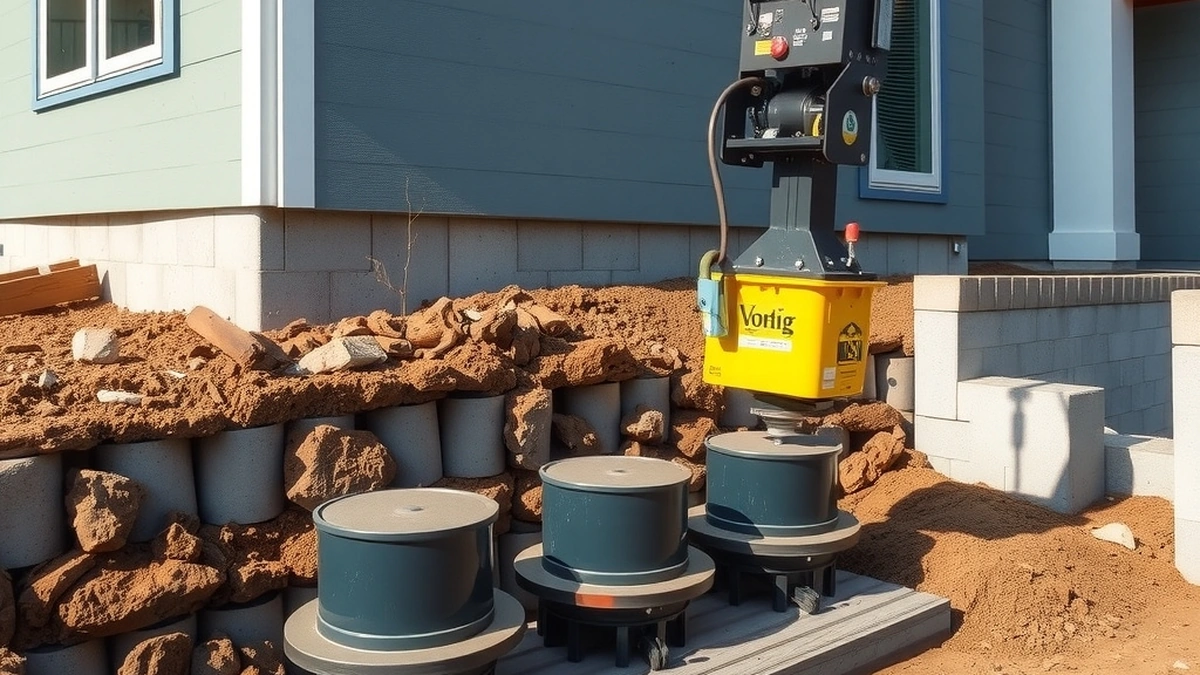
Push pier foundation repair drives steel piers through foundation brackets to bearing soil and lifts the structure back toward level. Piers cost $1,000 to $3,000 each, and a full job typically runs $6,000 to $30,000 after engineering review.
- Cost per pier
- $1,000 - $3,000
- Typical full job
- $6,000 - $30,000
- Engineer inspection
- $400 - $1,500
- Best suited to
- Settled perimeter walls
- Warranty
- Lifetime (transferable)
Some links on this page are affiliate links.If you buy through them we may earn a commission at no extra cost to you. We do not accept payment for rankings. Read the full disclosure.
Push pier foundation repair is a method of stabilizing a settled foundation by driving steel piers through brackets on the footing until they reach soil or rock that can carry the load. Piers cost $1,000 to $3,000 each, and a full residential job usually runs $6,000 to $30,000. The method suits perimeter settlement on heavier structures, and the pier count comes from measurement, not from a price list.
What a push pier system actually is
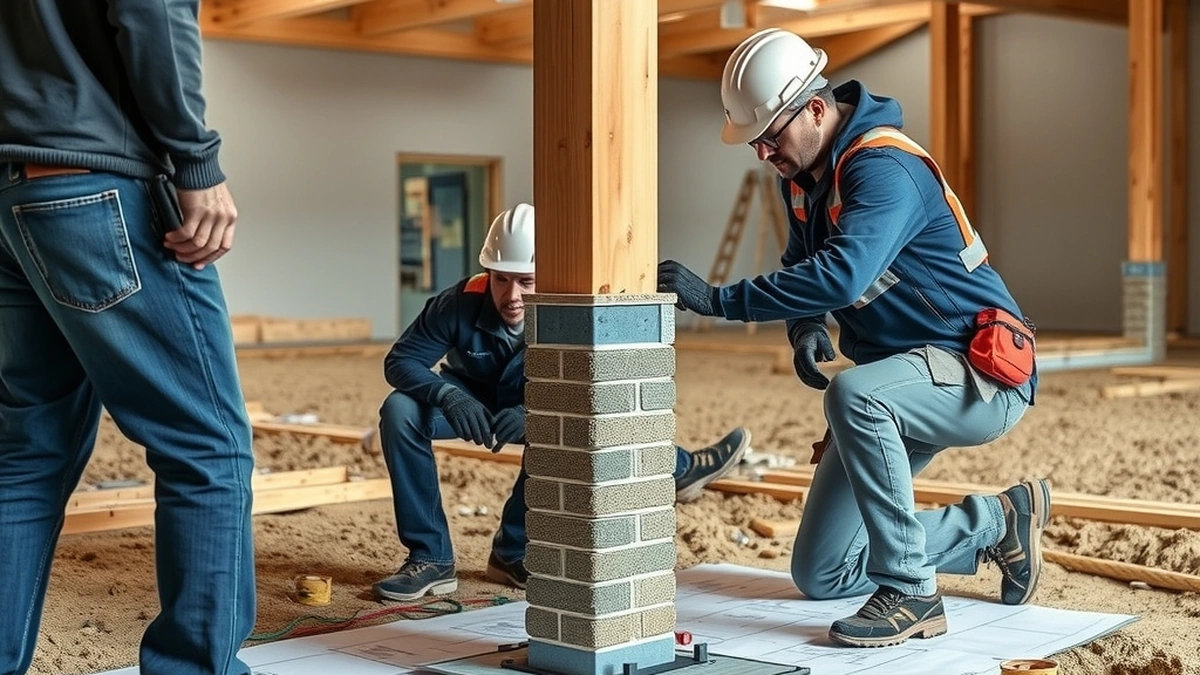
A push pier is a steel tube, usually 3 to 4 inches in diameter, installed in 3-foot sections. A bracket is bolted or pinned to the existing footing, and a hydraulic ram pushes each section down through the bracket until the pier refuses to advance. At that point the pier is bearing on a competent stratum, and the same ram is used to lift the structure against the pier.
The key detail is that the pier carries load in compression through the steel, not through friction on the sides. That is why depth to bearing matters so much: a pier that stops in active clay has not reached anything stable, and a pier that reaches sandstone or dense gravel has.
Push piers are sometimes called resistance piers because the installation is controlled by resistance. The crew watches pressure and penetration rate, and the pier is considered set when it stops advancing at the specified pressure.
When push piers are the right repair
Push piers are the right repair when a perimeter wall has settled and the structure above it is sound enough to be lifted. Typical signs are a front door that sticks only in summer, a brick veneer with stair-step cracks at one corner, and a floor that slopes toward an outside wall.
They are the wrong repair for a bowing basement wall, where the problem is lateral soil pressure rather than vertical settlement. They are also a poor fit for a slab that has settled in the middle of a room with no perimeter movement, where slab lifting at $3 to $12 per square foot is usually more appropriate.
Tall walls and heavy veneers change the calculation. Engineering review is not optional for tall work: a two-story brick wall carries far more load per linear foot than a single-story frame wall, and the pier spacing has to reflect it.
The installation sequence
The work follows a fixed order, and each step produces a number you should be able to see in the quote.
- Measure the movement. Record crack widths, floor elevations, and the direction of slope before any work starts. A crack at 1/8 inch or wider is documented and dated.
- Excavate at each pier location. Crews dig a access pit roughly 18 to 24 inches wide next to the footing, deep enough to expose the footing face.
- Attach the bracket. The bracket is bolted through the footing, and the fit is checked before the first pier section goes in.
- Drive to refusal. Sections are added as the pier advances. The crew records depth and pressure for each pier.
- Lift and lock. The structure is lifted in small increments, with doors and windows checked as it moves, then the pier is locked off and the pit is backfilled.
- Patch and document. Concrete is patched, and the crew provides a pier log with locations, depths, and lift amounts.
A lift that moves too fast cracks drywall and tile. Most crews lift in fractions of an inch per pass and check the interior as they go.
What the job costs
Pricing is per pier, with mobilization and engineering on top. The table shows the bands used across this site.
| Item | Unit | Typical range |
|---|---|---|
| Push pier | each | $1,000 - $3,000 |
| Helical pier | each | $700 - $2,500 |
| Engineer inspection | per visit | $400 - $1,500 |
| Full pier job | per project | $6,000 - $30,000 |
| Average foundation repair | per project | $4,000 - $15,000 |
| Major structural repair | per project | $20,000 - $40,000 |
A job with eight piers at $2,000 each is 8 x $2,000 = $16,000. Add a $900 engineering report and the total is $16,900 before permits. A job with six piers at $1,200 each is 6 x $1,200 = $7,200, which sits near the bottom of the full-job range because the pier count and the unit price are both low.
Depth drives unit price more than anything else. A pier that reaches bearing at 12 feet uses four sections; a pier that needs 25 feet uses nine or more, plus more machine time. That is how two neighbours with similar houses can receive quotes that differ by $6,000.
Push piers compared with other repairs
| Method | Unit price | Addresses | Does not address |
|---|---|---|---|
| Push pier | $1,000 - $3,000 each | Vertical settlement at perimeter | Inward wall bowing |
| Helical pier | $700 - $2,500 each | Settlement, lighter loads | Lateral soil pressure |
| Slab lifting | $3 - $12 per sq ft | Settled slab interior | Deep foundation settlement |
| Wall anchor | $500 - $1,500 each | Bowing basement wall | Vertical settlement |
| Carbon fibre strap | $400 - $1,200 each | Minor wall movement | Significant bowing |
Push piers and helical piers are often compared directly. Push piers develop their capacity through the weight of the structure resisting the drive, which suits heavier buildings. Helical piers are rotated in and can be used where the structure is too light to provide reaction, or where access is tight. Neither is universally better; the soil report decides.
Inspection, permits, and warranty
Inspection lead time is usually one to two weeks, and permits vary by city and county, typically taking one to three weeks. Those two timelines, not the construction itself, usually set the start date.
Pier warranties are commonly lifetime and transferable, with a transfer fee of $100 to $500 at closing. Read the document for three things: whether future movement is covered, whether annual inspection is required, and whether the warranty transfers automatically or only on request.
The engineering report should state the design load per pier, the target depth, and the maximum lift. Without those three numbers, the installation cannot be verified afterward.
For method comparisons, see push pier cost and push piers versus helical piers. If the movement is lateral rather than vertical, read wall anchor cost instead. For the full pricing picture, foundation repair cost breaks down every method.
Bottom line
Push pier foundation repair is a measured, load-tested method for perimeter settlement. It costs $1,000 to $3,000 per pier, and the total is set by the pier count and the depth to bearing. Get the engineering report first, confirm the pier log after, and keep the warranty document with the closing papers.
Frequently asked questions
How does push pier foundation repair work?
A steel bracket is bolted to the footing, and hydraulic rams drive pier sections down until they reach refusal on bearing soil, then the structure is lifted.
How much does push pier repair cost?
Expect $1,000 to $3,000 per pier, with most residential jobs between $6,000 and $30,000 depending on the number of piers and depth.
How many piers will my foundation need?
Pier count follows foundation length, load, and the settlement pattern; a structural engineer specifies spacing after measuring the movement.
Can push piers lift a foundation back to level?
They can recover a measured amount of settlement, but the goal is typically stabilization with partial lift rather than a perfectly level floor.
Do push piers work in clay soil?
They work by reaching past the active clay zone to a stable stratum, which is why depth to bearing matters more than the surface soil type.
How long does the work take?
Most residential pier jobs take one to three days on site after permits and inspection are complete, which usually adds one to three weeks.
Sources
Some links are affiliate links.If you buy through them we may earn a commission at no extra cost to you. We do not accept payment for rankings. Read the full disclosure.