Is Pier and Beam Leveling Worth It?
Pier and beam leveling costs $1,500 to $30,000 depending on the repair. See when it is worth it and when the framing needs work first.
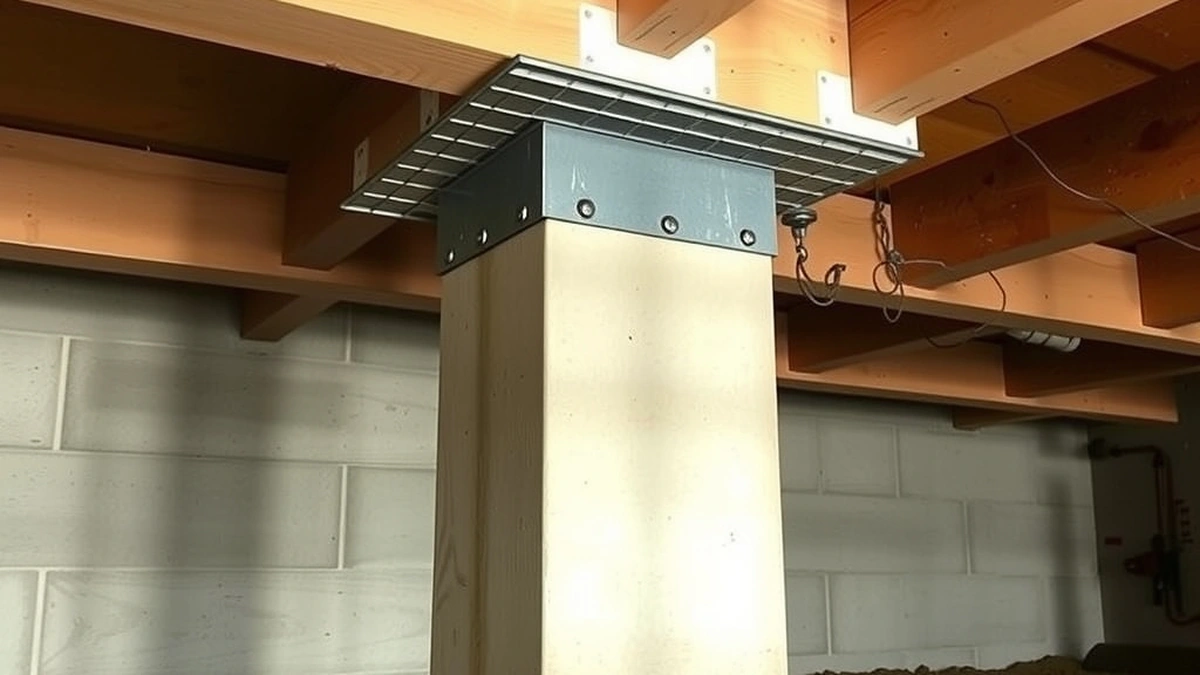
Pier and beam leveling is worth it when the floor slopes because shims or piers have settled, at $1,500 to $5,000 for re-shimming and $6,000 to $30,000 for new piers. It is not worth it until rot and undersized framing are fixed.
- Re-shimming
- $1,500 - $5,000
- New piers
- $6,000 - $30,000
- Joist repair
- $2,000 - $8,000
- Slope threshold
- 1 inch across a room
- Engineering report
- $400 - $1,500
Some links on this page are affiliate links.If you buy through them we may earn a commission at no extra cost to you. We do not accept payment for rankings. Read the full disclosure.
Pier and beam leveling is worth it when the floor slopes because the shims or the piers have settled, and the framing above is still sound. Re-shimming runs $1,500 to $5,000, and new piers run $6,000 to $30,000, which is far less than rebuilding the foundation. It is not worth it until rot and undersized joists have been addressed.
What Leveling Fixes
Leveling restores the elevation of the floor by adjusting the support underneath. On a pier and beam house, that means replacing crushed shims, resetting a pier, or adding a new pier where the span is too long.
It does not fix the beam or the joists. A beam that has sagged permanently has lost stiffness, and a joist that is undersized for its span will still bounce after the floor is level.
The Cost Bands
| Scope | Cost | What it covers |
|---|---|---|
| Re-shimming | $1,500 - $5,000 | Replace shims on existing piers |
| New piers | $6,000 - $30,000 | Add support where it is missing |
| Joist repair | $2,000 - $8,000 | Sister or replace joists |
| Beam repair | $3,000 - $10,000 | Sister or replace a girder |
The price depends on how many piers and how much framing work is needed, not on the square footage alone. A small house with a rotted girder can cost more than a larger one with six loose shims, because the framing work is the expensive part.
When It Is Worth It
It is worth it when the floor slopes toward one side, the doors stick in the same place year round, and the crawl space shows crushed shims or a pier that is not touching the beam. Those are the signs that the support has moved.
It is also worth it when the slope is under about 1 inch and the framing is sound, because the correction is small and the cost is at the bottom of the range. A floor that has dropped a quarter inch over 10 feet is uncomfortable but not urgent, and monitoring it for a season is a reasonable choice.
When It Is Not
It is not worth it when the beam is rotted. Shimming a rotted beam lifts the rot and leaves the structure weak, and the repair is carpentry rather than leveling.
It is not worth it when the joists are undersized and the floor bounces. Leveling removes the slack and can make the bounce feel sharper, which is the opposite of what the homeowner wanted.
The Shims Question
Wood shims compress and rot. Steel shims and adjustable pier heads do not, and the difference in cost is small compared with the cost of reopening the crawl space in ten years.
Ask what material will be used and why. A contractor who uses wood because it is what is on the truck is repeating the original failure, and the crawl space will be back to the same state in a decade. The savings on the shim is trivial compared with the second visit, and the second visit is the one the homeowner remembers.
A Costed Example
A 1,400 sq ft house with a sagging center girder. Six piers re-shimmed at $350 and one rotted pier replaced at $1,800:
6 × $350 = $2,100 $2,100 + $1,800 = $3,900
Add beam sistering at $2,400 and engineering at $800:
$3,900 + $2,400 + $800 = $7,100
That sits between the re-shimming and pier bands, which is typical when the job includes framing.
Living Through the Work
Leveling is quiet compared with pier driving. Most of the noise is a jack and hand tools in the crawl space, and the house stays occupied throughout.
The disruption is the access. A crew needs a hatch and a path, and furniture over the hatch has to move. In a low crawl space the work is slow, and a job that would take a day in a basement can take three.
Expect doors to move during the lift. Some will free up and others will bind, and the crew should adjust them as they go. A door that binds after the lift is not a failure; it is a frame that has changed position and needs a hinge adjustment.
The dust is limited but real, especially if the crawl space has debris. Ask the crew to remove the debris rather than leaving it under the house.
- Inspect the crawl space and photograph every pier and beam.
- Measure the slope in two directions.
- Identify rot, crushed shims, and soft soil.
- Repair framing before leveling.
- Level in increments and watch doors and walls.
- Recheck after one wet season.
Ask for the before and after slope readings. A contractor who cannot show them is asking you to take the result on faith.
The Verdict
Pier and beam leveling is worth it when the cause is the support and the framing is sound. It is one of the cheaper foundation repairs available, and it produces a result the homeowner can feel. When rot or undersized framing is the real problem, leveling is the wrong first step.
For the method detail, read pier and beam leveling and pier and beam leveling problems. If the issue is a settled footing rather than a shim, underpinning cost is the closer comparison.
Frequently asked questions
Is pier and beam leveling worth it?
Yes when the slope comes from settled shims or piers and the framing is sound. It restores a level floor for a fraction of the cost of rebuilding the foundation.
How much does pier and beam leveling cost?
Re-shimming runs $1,500 to $5,000, and new piers run $6,000 to $30,000. Joist repair, if needed, adds $2,000 to $8,000.
Can leveling fix a bouncy floor?
It can reduce bounce if the cause is a gap at the pier. Bounce from undersized joists needs sistering or added support.
How much slope is acceptable?
A quarter inch over 4 feet is common in older homes. More than an inch across a room is worth investigating.
Will leveling crack my walls?
It can if the lift is too fast or too large. Leveling is done in increments with doors and walls monitored.
Does leveling require a permit?
Structural work usually does. Cosmetic shimming may not, but the rule varies by jurisdiction.
Sources
Some links are affiliate links.If you buy through them we may earn a commission at no extra cost to you. We do not accept payment for rankings. Read the full disclosure.