Olshan foundation repair
How Olshan foundation repair work is scoped, what the methods cost, and what to verify before signing with a large regional contractor.
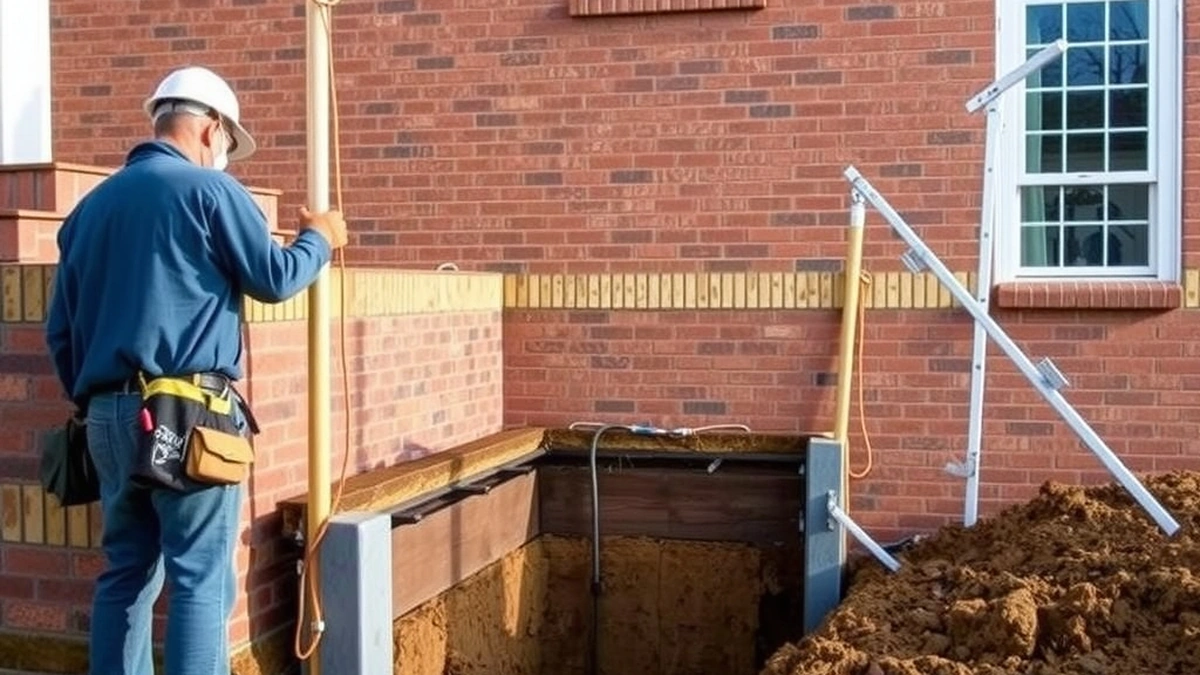
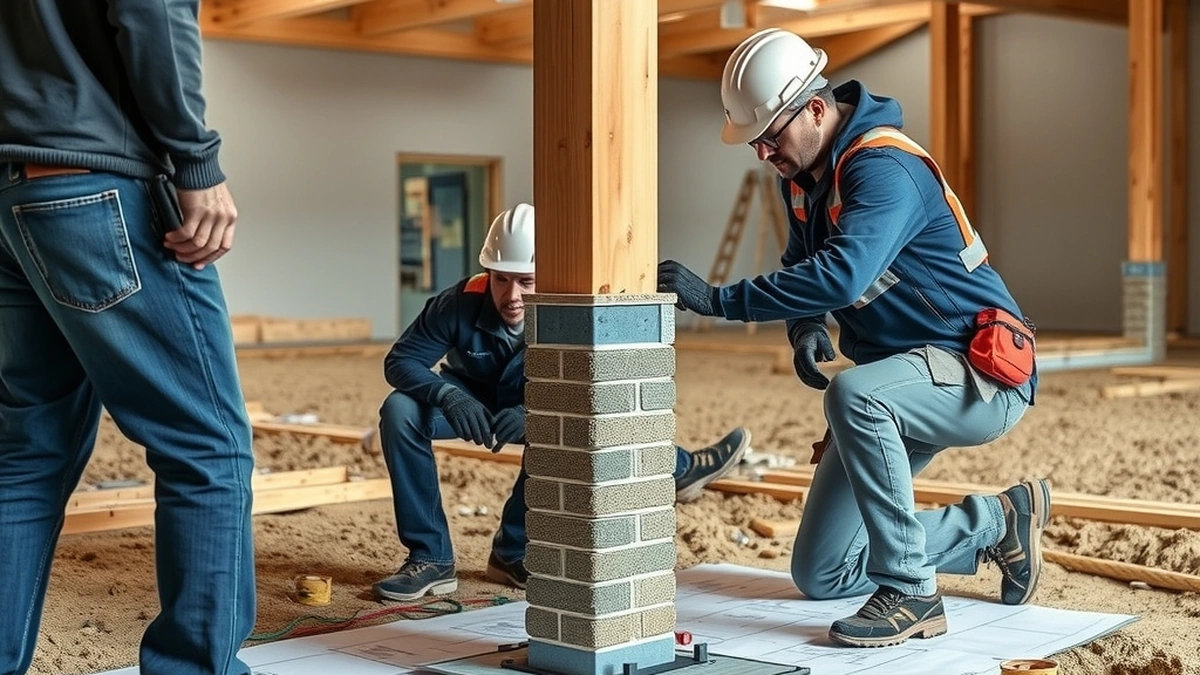
Olshan foundation repair is foundation work performed by Olshan Foundation Solutions, a Texas-based contractor. Pricing follows the method: push piers run $1,000 to $3,000 each, a full pier job runs $6,000 to $30,000, and engineering review adds $400 to $1,500.
- Push pier per unit
- $1,000 - $3,000
- Full pier job
- $6,000 - $30,000
- Engineer inspection
- $400 - $1,500
- Pier warranty
- Lifetime (transferable)
- Warranty transfer fee
- $100 - $500
Some links on this page are affiliate links.If you buy through them we may earn a commission at no extra cost to you. We do not accept payment for rankings. Read the full disclosure.
Olshan foundation repair is foundation work carried out by Olshan Foundation Solutions, a Texas-based contractor with crews that install push piers, helical piers, slab lifting, and drainage. The company name matters less than the diagnosis behind the quote, because the method and the pier count set the price. Expect $1,000 to $3,000 per push pier, $6,000 to $30,000 for a full pier job, and $400 to $1,500 for the engineering review that should come first.
What Olshan foundation repair covers
Olshan foundation repair is a service line, not a single technique. The crews work on slab-on-grade homes, pier-and-beam houses, and basement walls, and each of those systems fails in a different way. A slab that has settled at one corner needs support pushed to bearing soil. A bowing basement wall needs lateral restraint, not lifting. A pier-and-beam floor that squeaks and slopes needs shims and new supports under the joists.
That is why a large contractor sends an inspector before quoting. The inspector measures crack width, records floor elevation changes, and looks at drainage and soil. Without those measurements, a price is a guess dressed up as an estimate.
Foundation Repair Lab is independent and unaffiliated with Olshan; figures here are estimates from published US unit-price ranges.
Measure the crack before choosing a method
Crack width is the first hard number in any foundation conversation. A hairline crack at 1/16 inch or narrower is usually cosmetic and often shrinks and grows with the seasons. A crack at 1/8 inch is worth monitoring with a gauge and a date written next to it. Wall movement beyond 2 inches is a different category, and that is where engineering review stops being optional.
Measure in three places: the widest point, the ends, and the midpoint. Photograph the crack next to a ruler or a crack gauge, note the date, and repeat after a wet season and a dry season.
Vertical cracks in the middle of a long wall usually follow shrinkage or a settlement dip. Diagonal cracks that step along mortar joints point to differential movement at a corner. Horizontal cracks in a basement wall, especially with inward bowing, point to soil pressure and a lateral fix rather than a pier.
What the methods cost
Prices are per unit because foundation work is priced by the piece, not by the hour. The table below uses the same bands published across this site so you can compare a quote against a baseline.
| Method | Unit | Typical range |
|---|---|---|
| Push pier | each | $1,000 - $3,000 |
| Helical pier | each | $700 - $2,500 |
| Slab lifting | square foot | $3 - $12 |
| Mudjacking | square foot | $3 - $8 |
| Polyurethane foam | square foot | $5 - $15 |
| Wall anchor | each | $500 - $1,500 |
| Carbon fibre strap | each | $400 - $1,200 |
A six-pier push pier job at $2,000 per pier is 6 x $2,000 = $12,000 before engineering and permits. Ten helical piers at $1,500 each is 10 x $1,500 = $15,000. Those are subtotals; mobilization, permits, and interior patching sit on top.
Slab lifting is priced by area. A 400-square-foot garage apron lifted with poly foam at $12 per square foot is 400 x $12 = $4,800. The same slab with mudjacking at $6 per square foot is 400 x $6 = $2,400, with an expected service life of 5 to 15 years rather than the longer life of a pier.
Push piers versus helical piers
Push piers are driven hydraulically through a bracket until they reach refusal on competent soil or rock. Helical piers are rotated into the ground with a torque motor and can be loaded immediately after installation. Both transfer load to deeper strata, but they suit different sites.
| Factor | Push pier | Helical pier |
|---|---|---|
| Installation force | Hydraulic push | Torque rotation |
| Typical unit price | $1,000 - $3,000 | $700 - $2,500 |
| Best fit | Heavier structures, deep bearing | Lighter structures, tight access |
| Load test | Often loaded to verify | Torque correlation |
| Disturbance | Minimal excavation at bracket | Minimal excavation at bracket |
A two-story brick home with a settled rear wall usually points toward push piers because the load per pier is high. A detached garage or a porch with limited access often points toward helical piers. Price alone should not decide it; the soil report and the structural load should.
How a large contractor prices a job
A regional contractor with its own crews prices differently from a broker who subcontracts. Ask for the same five items from either one.
- A written scope that lists pier locations, pier count, and target depth to bearing.
- The unit price per pier or per square foot, separated from mobilization and permits.
- The engineering report, including who stamps it and whether the cost is included.
- A lift plan with a stated maximum lift per day, because lifting too fast cracks finishes.
- The warranty document itself, not a verbal promise, with the transfer terms in writing.
If any of those five is missing, the quote is not comparable to another quote. A $9,000 bid with no pier count cannot be measured against a $14,000 bid that specifies twelve piers at $1,150 each.
Warranty terms and transfer
Pier warranties are commonly lifetime and transferable. The transfer fee typically runs $100 to $500 at closing. Read three things in the document: whether the warranty covers future movement or materials only, whether it requires an annual inspection to stay valid, and whether it transfers to a buyer automatically or only on request.
Mudjacking and slab lifting carry shorter expectations, often 5 to 15 years, because the material behaves differently under load. A lifetime promise on a mudjacking job is a warning sign, not a selling point.
What to verify before signing
Check the contractor licence and insurance certificate, then confirm the permit. Permits vary by city and county and typically take one to three weeks to process, and inspection lead time is usually one to two weeks. A crew that offers to start tomorrow on structural work has skipped a step somewhere.
Ask for the engineer’s name and licence number. Ask whether the crew is employed or subcontracted. Ask what happens if the lift target is not reached on the first visit. Those answers separate a regional operation from a lead-generation call centre using the same brand name.
For a wider comparison of methods and quotes, see foundation repair cost and the state-by-state ranges in foundation repair cost by state. If the diagnosis is a settled perimeter rather than a cracked slab, read push pier cost before you compare numbers.
Bottom line
Olshan foundation repair is priced like any other pier work: per unit, after measurement. Measure the crack, get the engineering review, insist on a pier count, and compare unit prices rather than totals. A quote without a scope is a number, not a diagnosis.
Frequently asked questions
What is Olshan foundation repair?
It is foundation repair work performed by Olshan Foundation Solutions, a Texas-based contractor that installs piers, lifts slabs, and stabilizes walls.
How much does a push pier cost?
Push piers run $1,000 to $3,000 each installed, and a full pier job typically lands between $6,000 and $30,000 depending on the count.
Does Olshan repair slab foundations?
Yes. Slab work usually means pier installation at the perimeter or slab lifting at $3 to $12 per square foot, chosen after the movement is measured.
Is an engineer inspection required?
For tall or heavily loaded walls, an engineering review is not optional. A structural engineer inspection typically costs $400 to $1,500.
Are the warranties transferable?
Pier warranties are commonly lifetime and transferable, with a transfer fee that typically runs $100 to $500 when the home changes hands.
How long does a repair take to schedule?
Inspection lead time is usually one to two weeks, and permits vary by city and county, typically taking one to three weeks to process.
Sources
Some links are affiliate links.If you buy through them we may earn a commission at no extra cost to you. We do not accept payment for rankings. Read the full disclosure.