Is Mudjacking Worth It? Cost, Life, and Alternatives
Mudjacking costs $3 to $8 per sq ft and lasts 5 to 15 years. See when it is worth it, when foam wins, and when replacement is cheaper.
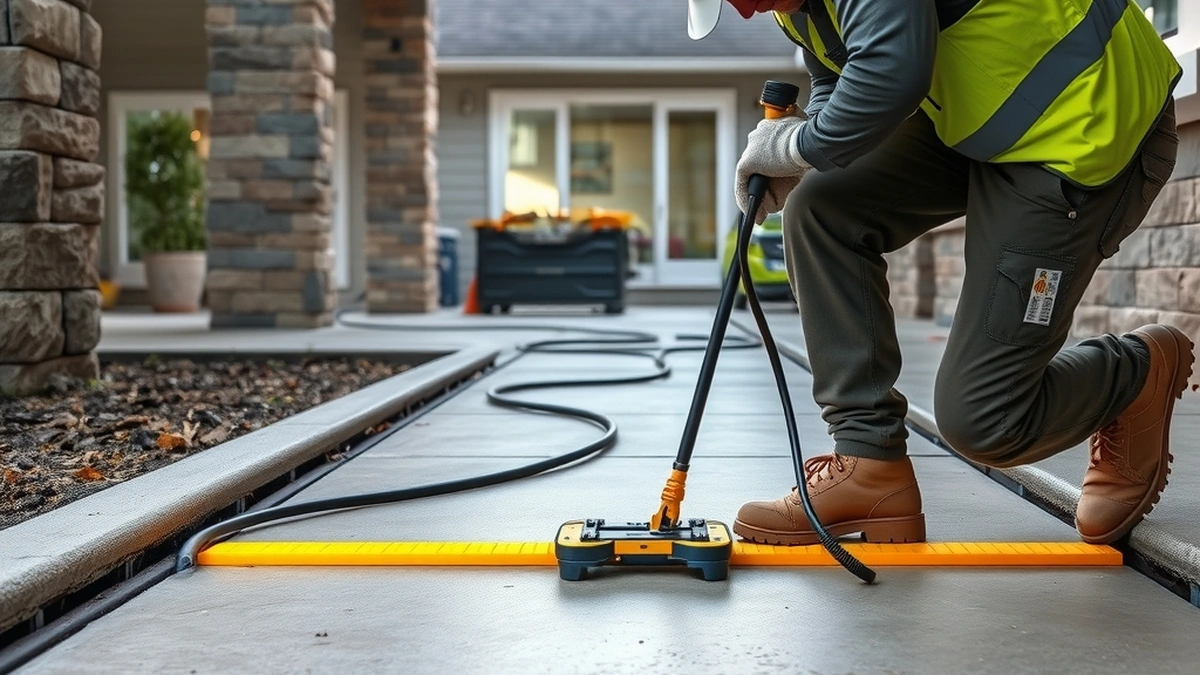
Mudjacking is worth it for a settled but intact slab over a shallow void when the water is controlled, at $3 to $8 per sq ft. It is not worth it for a broken slab, a heaving slab, or a house foundation.
- Cost per sq ft
- $3 - $8
- Service life
- 5 - 15 years
- Foam alternative
- $5 - $15 per sq ft
- Replacement
- $8 - $18 per sq ft
- Typical job
- $300 - $3,000
Some links on this page are affiliate links.If you buy through them we may earn a commission at no extra cost to you. We do not accept payment for rankings. Read the full disclosure.
Mudjacking is worth it when a slab has settled but is still intact, the void underneath is shallow, and the water that caused the problem has been controlled. At $3 to $8 per sq ft, it costs a fraction of replacement, and most jobs are finished in a day. It is not worth it for a slab that has broken into moving pieces or a foundation that has settled.
What You Get for the Money
Mudjacking fills the void under a slab and raises the concrete back toward grade. The material is a sand-cement slurry that hardens enough to support a driveway or a walk, and it is deliberately weaker than the slab so that future movement cracks the fill rather than the concrete.
The price covers drilling, the mix, the pump, the crew, and the patching. A 300 sq ft driveway at $5 per sq ft is $1,500, which is less than a third of what replacement would cost for the same area.
The Arithmetic
| Area | Mudjacking at $5 | Replacement at $12 |
|---|---|---|
| 200 sq ft | $1,000 | $2,400 |
| 400 sq ft | $2,000 | $4,800 |
| 600 sq ft | $3,000 | $7,200 |
The savings are real, and they are the reason mudjacking has survived as a method for decades despite its limited service life. The catch is that the savings only hold if the slab is a candidate and the cause is addressed, and those two conditions are where most jobs go wrong.
The Service Life Question
Five to 15 years is the honest range. The lower end is a slab with poor drainage and heavy traffic. The upper end is a slab that stays dry and carries light loads.
A contractor who promises decades is overselling a fill material. A contractor who says five to 15 years and explains what determines the number is giving you information you can use, and that is a better sign than a longer promise.
When It Is Worth It
It is worth it on a driveway that has settled at the garage apron, a sidewalk that has heaved at a tree, a patio that ponds water against the house, and a garage floor that has dropped at one corner. Those are intact slabs with local voids, which is exactly the case the method was designed for.
It is also worth it when the budget is limited and the alternative is living with a trip hazard or a drainage problem, both of which get worse with time. A $1,500 lift now is better than a $4,800 replacement later if the slab is sound.
When It Is Not
It is not worth it on a slab that is cracked into several panels that move independently. The pieces will not rise as one plane, and the joints will reopen, often within one season.
It is not worth it on a slab that is heaving. Heave is upward movement from expanding soil, and adding material underneath makes it worse. It is also not worth it on a house foundation, which needs piers that reach bearing soil.
Foam as the Alternative
Polyurethane foam costs $5 to $15 per sq ft, roughly double the slurry price. It weighs a fraction as much, cures in about 15 minutes, and resists water better.
It is worth the difference on weak soil where the slurry’s weight would cause more settlement, on a job that has to be back in service the same day, and on an interior floor where a 2-inch hole and patch would be visible. On a stable driveway with a shallow void, the slurry does the same job for less.
What Else the Quote Should Cover
A lift quote that covers only the injection is an incomplete quote. The holes have to be patched, the joints cleaned, and the drainage checked before the work is done. Those items are small individually and they are what separates a lift that lasts from one that does not.
Ask whether the price includes patching and whether the crew will confirm the target elevation with a level. Ask what happens if the slab does not reach the target in one pass, and who pays for a second visit.
Ask, too, for the mix specification. A slurry that is too wet will compact under load, and a mix that is too dry will not flow into the void. The specification is a sentence in the proposal, and its absence is a warning.
- Confirm the slab is intact with a crack map.
- Tap-test for hollow areas and measure the void depth.
- Fix the water source before the lift.
- Compare slurry and foam quotes per square foot.
- Confirm what warranty covers a re-settlement.
- Check the target elevation and how it will be measured.
The Verdict
Mudjacking is worth it when the slab is a candidate, the cause is addressed, and the price is compared against replacement rather than against doing nothing. It is a good value for the right slab and a waste of money for the wrong one, and the difference is diagnosis rather than price.
For the method detail, read how mudjacking works and mudjacking problems and limits. If the slab is weak or the schedule is tight, is polyurethane foam lifting worth it covers the alternative.
Frequently asked questions
Is mudjacking worth the money?
Yes for an intact slab over a shallow void with the water controlled. It restores support for a fraction of replacement cost and takes less than a day.
How long does mudjacking last?
Five to 15 years depending on drainage, soil, and traffic. The upper end requires keeping water away from the slab.
Is foam better than mudjacking?
Foam is lighter, cures faster, and resists water better, at $5 to $15 per sq ft against $3 to $8. It is worth the difference on weak soil or a fast turnaround.
When is mudjacking not worth it?
On a slab that is broken into moving pieces, a slab that is heaving, or a house foundation. Lifting cannot restore a slab that no longer acts as one.
Can mudjacking be done in winter?
Only above freezing, because the slurry needs to cure. Foam is more practical in cold weather.
Does mudjacking come with a warranty?
Most contractors offer a one-year workmanship warranty. A lifetime warranty on a fill material is not realistic, and you should be sceptical of one.
Sources
Some links are affiliate links.If you buy through them we may earn a commission at no extra cost to you. We do not accept payment for rankings. Read the full disclosure.