Mudjacking Problems: Limits and Failed Lifts
Mudjacking fails when the void returns, the slab is broken, or the mix is wrong. See the limits and what a failed lift costs.
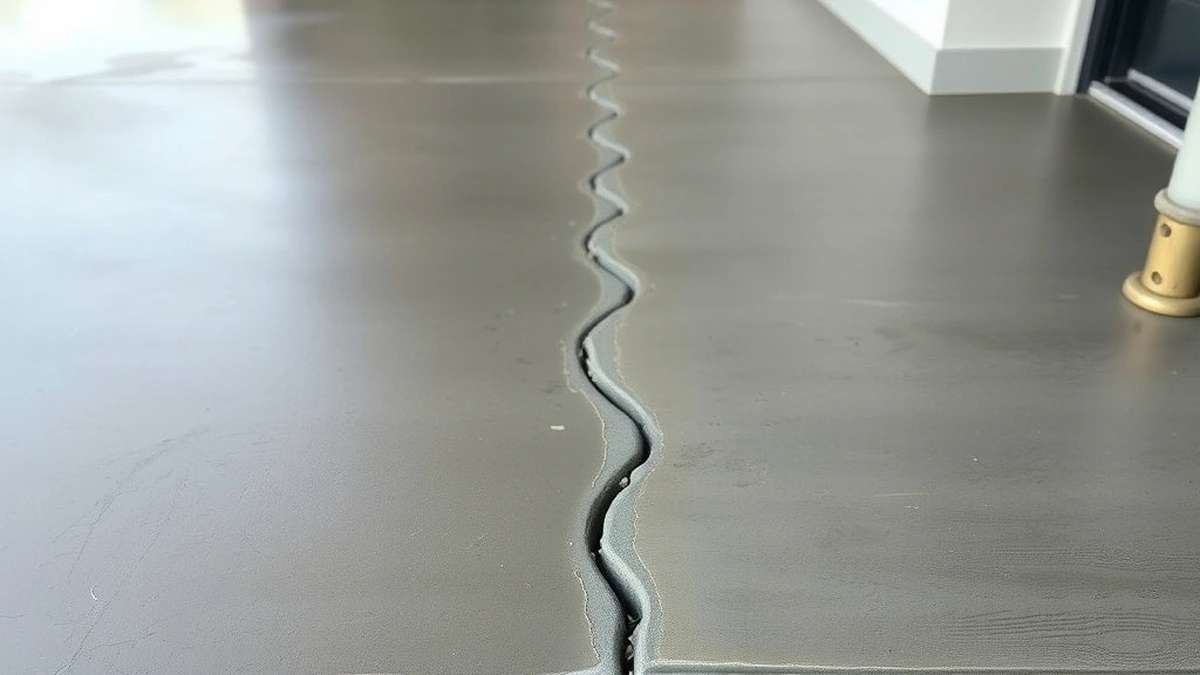
Mudjacking problems include recurring voids from uncontrolled water, cracked slabs that cannot rise as one plane, over-lifting, and slurry that is too wet or too weak. Cost is $3 to $8 per sq ft, and a failed lift often leads to replacement.
- Cost per sq ft
- $3 - $8
- Service life
- 5 - 15 years
- Common failure
- Void returns
- Replacement
- $8 - $18 per sq ft
- Foam alternative
- $5 - $15 per sq ft
Some links on this page are affiliate links.If you buy through them we may earn a commission at no extra cost to you. We do not accept payment for rankings. Read the full disclosure.
Mudjacking problems are mostly predictable. The void returns when the water that created it is still flowing. The slab cracks when it is lifted as separate pieces. The surface ponds when it is over-lifted. And the fill compacts when the mix is too wet. Each has a cause, and each is cheaper to prevent than to fix.
The Void Returns
The most common complaint is that the slab settles again a few years after the lift. The slurry filled the void, but it did not stop the water that made the void in the first place. Water saturates the fill, washes out fines, and the slab drops.
The fix is drainage, and it has to be part of the job. A downspout extension costs about $90 and a regrade runs $1,500 to $4,000, both a fraction of the second lift. A downspout extension, a regrade, or a french drain costs far less than a second lift, and without it the second lift is a certainty.
Broken Slabs
A slab that is cracked into several independent pieces cannot be lifted as one plane. Each piece responds to the material under it, and the cracks reopen or the surface becomes uneven.
| Condition | Mudjacking | Replacement |
|---|---|---|
| Intact slab, settled | Good candidate | Not needed |
| Single crack, stable | Good candidate | Not needed |
| Multiple cracks, moving | Poor candidate | Recommended |
| Crumbling surface | Poor candidate | Recommended |
| Heaving slab | Wrong repair | Soil correction |
A contractor who agrees to lift a broken slab is selling a service, not a solution. The honest alternative is replacement or a partial replacement, and the price per square foot is higher for a reason.
A related problem is a slab that is too thin. A 3-inch slab with no reinforcement will flex under load even with good support beneath it. Lifting restores the elevation but not the structural capacity, and the cracks return.
Over-Lifting
Over-lifting happens when the crew keeps pumping after the slab reaches the target. The slab rises above the adjacent surface, water ponds against the house, and the concrete may crack from the uneven support.
The target should be set before the work starts, usually the surrounding grade or a stated elevation. A crew that lifts until the material runs out is a crew that will create a drainage problem. The fix is a target, a level, and a stop rule written into the scope.
Mix Problems
Slurry that is too wet is weak and compacts under load. Slurry that is too dry will not flow into the void. The mix design matters, and it should be specified rather than mixed by eye.
A related problem is excess weight. The crew should know the depth of the void and the volume required, because pumping until the slab moves is not a measure of how much material went in.
A third mix problem is a void that is not where the crew thinks it is. If the slurry is injected into dense soil rather than a void, the pressure builds and the slab lifts unevenly or the material finds a path to the surface. Probe holes before injection prevent it. Slurry weighs about 100 lb per cubic foot, and on soft soil that weight can trigger more settlement. Foam at 3 to 6 lb per cubic foot avoids that, at a higher price.
A Costed Failure
A 400 sq ft driveway lifted for $2,400 at $6 per sq ft, which fails after three years. Re-lifting with foam at $11 per sq ft:
400 × $11 = $4,400
Total spent: $2,400 + $4,400 = $6,800
Replacement at $12 per sq ft would have been:
400 × $12 = $4,800
The failed lift cost more than the replacement would have, which is the arithmetic that makes diagnosis worth the trouble.
The Limits
Mudjacking works on intact slabs over shallow voids, on stable subgrade, with water controlled, and where the slab carries light loads such as a walk or a driveway. It does not work on broken slabs, on heaving slabs, on structural footings, or on deep voids where the material cannot reach.
It is also not permanent. The material is a fill, not a foundation, and it is designed to be weaker than the slab so that future movement cracks the fill rather than the concrete. A service life of 5 to 15 years is realistic, and a contractor who promises decades is overselling a fill material.
The Sequence to Avoid Problems
- Confirm the slab is intact and the void is shallow.
- Fix the water source before lifting.
- Specify the mix and the target elevation.
- Drill and inject in stages, checking the level.
- Stop at the target, not at the end of the material.
- Patch the holes and confirm drainage away.
- Recheck after one wet season.
What to Ask a Contractor
Ask what the mix is, how the target elevation is set, and whether drainage correction is included. Ask what warranty covers a re-settlement and for how long. Ask whether the slab has been checked for cracks that would make it a poor candidate.
For the method detail, read how mudjacking works and mudjacking cost. If the slab has already failed once, polyurethane foam lifting cost covers the lighter alternative.
Frequently asked questions
What are the common problems with mudjacking?
The void returning when water is not controlled, lifting a slab that is cracked into separate pieces, over-lifting that creates a reverse slope, and a mix that is too wet to support the slab.
How long does mudjacking last?
Five to 15 years depending on drainage, soil, and traffic. It is not a permanent repair, and it is not warranted as one by most contractors.
Why does my slab settle again after mudjacking?
Because the water that washed out the soil is still reaching the slab. The new fill saturates and compacts, and the slab drops again.
Can mudjacking break a slab?
Over-lifting can crack a slab, especially a thin or already-cracked one. Lifting in stages to a measured target prevents it.
Is foam better than mudjacking for a failed lift?
Foam is lighter and cures faster, and it is often used to re-lift a slab that slurry has already failed on. It costs more per square foot.
When should a slab be replaced instead?
When it is broken into several moving pieces, when the surface is deteriorating, or when the slab is too thin for the load. Lifting cannot restore a slab that no longer acts as one.
Sources
Some links are affiliate links.If you buy through them we may earn a commission at no extra cost to you. We do not accept payment for rankings. Read the full disclosure.