Foundation Settling Repair: Stage by Stage
Settling moves in stages, and the repair changes with each one. See what to do at 1/8 inch, at 1 inch, and at the 2 inch limit.
Foundation settling repair ranges from monitoring at $0 to piers at $6,000 to $30,000, depending on how far the structure has moved. Act at 1/8 inch of crack width or 1 inch of floor slope, before the 2 inch lifting limit.
- Monitoring stage
- Cracks under 1/8 inch
- Pier repair
- $6,000 - $30,000
- Major repair
- $20,000 - $40,000
- Lifting limit
- 2 inches
- Engineering report
- $400 - $1,500
Some links on this page are affiliate links.If you buy through them we may earn a commission at no extra cost to you. We do not accept payment for rankings. Read the full disclosure.
Foundation settling repair depends on the stage the movement has reached. A crack under 1/8 inch needs monitoring. A crack that is widening, or a floor that has dropped more than an inch, needs an engineer. A footing that has moved close to 2 inches needs piers before lifting stops being practical.
The Three Stages
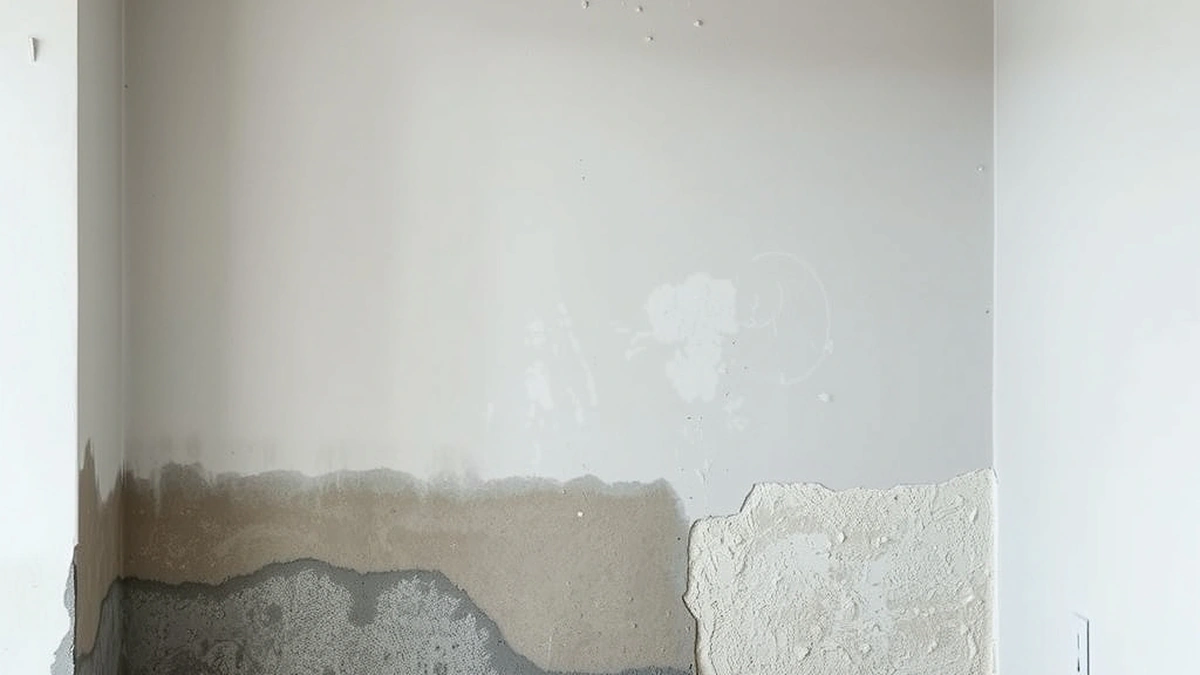
Settling is not a single event. It starts as soil compression under a footing, progresses to visible cracking, and eventually produces floor slope and door misalignment. Each stage has a different repair and a different price.
| Stage | Sign | Repair | Cost |
|---|---|---|---|
| Early | Hairline crack, no slope | Monitor | $0 - $50 |
| Moderate | 1/8 inch crack, slight slope | Engineer, then piers | $6,000 - $30,000 |
| Advanced | 2 inch movement, floor slope | Piers plus restoration | $20,000 - $40,000 |
The early stage is the one homeowners skip, and it is the one where the cheapest intervention works best. A $90 downspout extension and a weekend of regrading can stop a settling process that would otherwise become a $15,000 repair.
Stage One: Monitoring
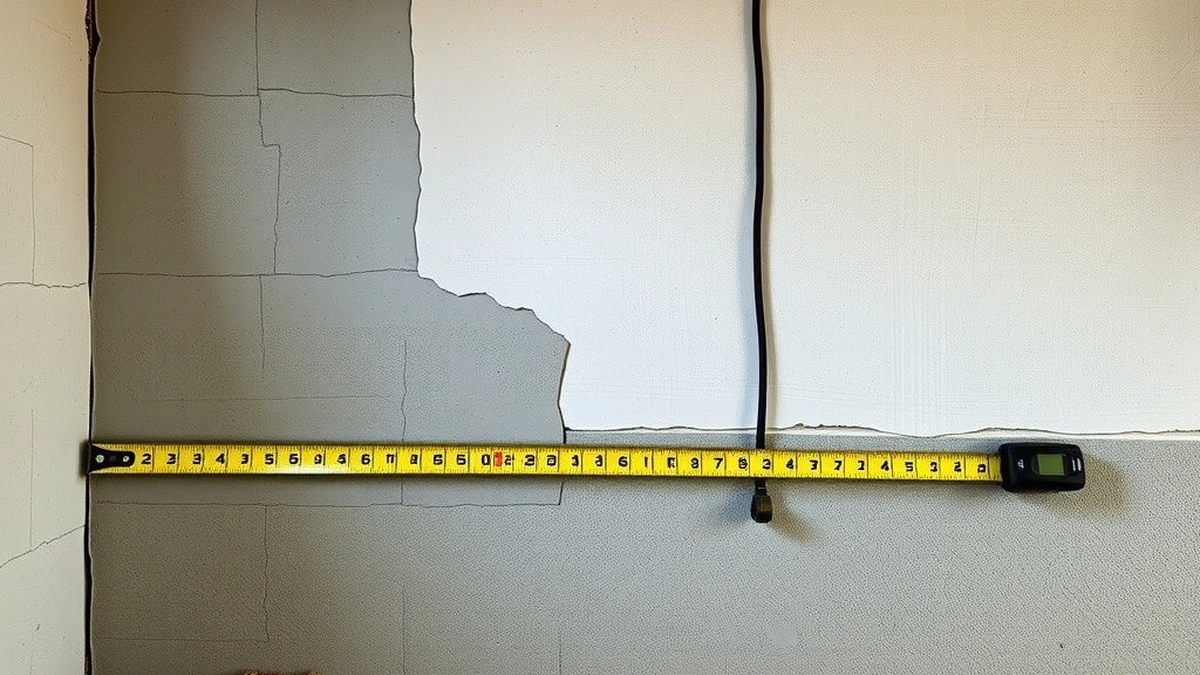
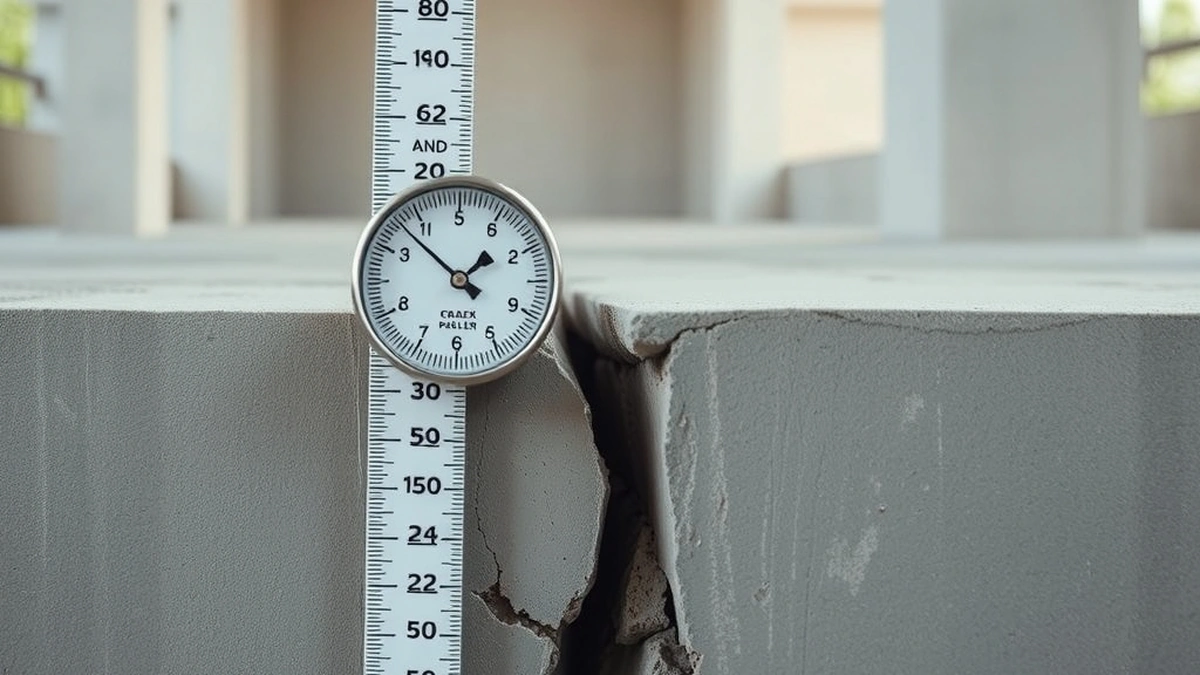
Buy a crack gauge, record the width at the widest point, photograph it with a scale, and repeat monthly. Keep the readings in one place. A crack that has not changed in a year is dormant; a crack that has grown by 1/32 inch in a month is active.
Monitoring is not doing nothing. It is establishing the rate of movement, which is the number the engineer needs to decide whether repair is urgent. It also creates the record that supports a warranty or insurance claim later.
Stage Two: Engineering and Piers
Once a crack reaches 1/8 inch, or a floor slope reaches an inch across a room, an engineer should look at it. The report at $400 to $1,500 will name the cause, specify a pier type and count, and set a lift tolerance.
Piers run $1,000 to $3,000 each for push piers and $700 to $2,500 for helical, and a full job usually lands at $6,000 to $30,000. The count is the price driver, and the count comes from the engineer’s spacing.
Stage Three: Major Correction
At 2 inches of movement, the question changes. Lifting that much puts stress on the frame, the plumbing, and the cladding, and the risk of breaking something inside the house rises sharply. Some structures can be lifted that far; many cannot.
At this stage, the repair often includes partial reconstruction, plumbing replacement, and extensive interior restoration, which is why the total moves into the $20,000 to $40,000 band and sometimes beyond.
A Costed Example
A 1,800 sq ft house has settled 1 inch at the rear wall, with a crack at 3/16 inch. The engineer specifies eight push piers at $2,000:
8 × $2,000 = $16,000
Add engineering at $1,000, drainage at $2,500, and restoration at 15%:
$16,000 × 0.15 = $2,400
Total: $21,900. That is a moderate-to-advanced repair, and it shows why catching the movement at 1/8 inch matters: the same house at half the movement might have needed five piers instead of eight.
The Repair Sequence
- Record the crack widths and floor elevations.
- Find and correct the water source.
- Book an engineer if any threshold is crossed.
- Permit the work and locate utilities.
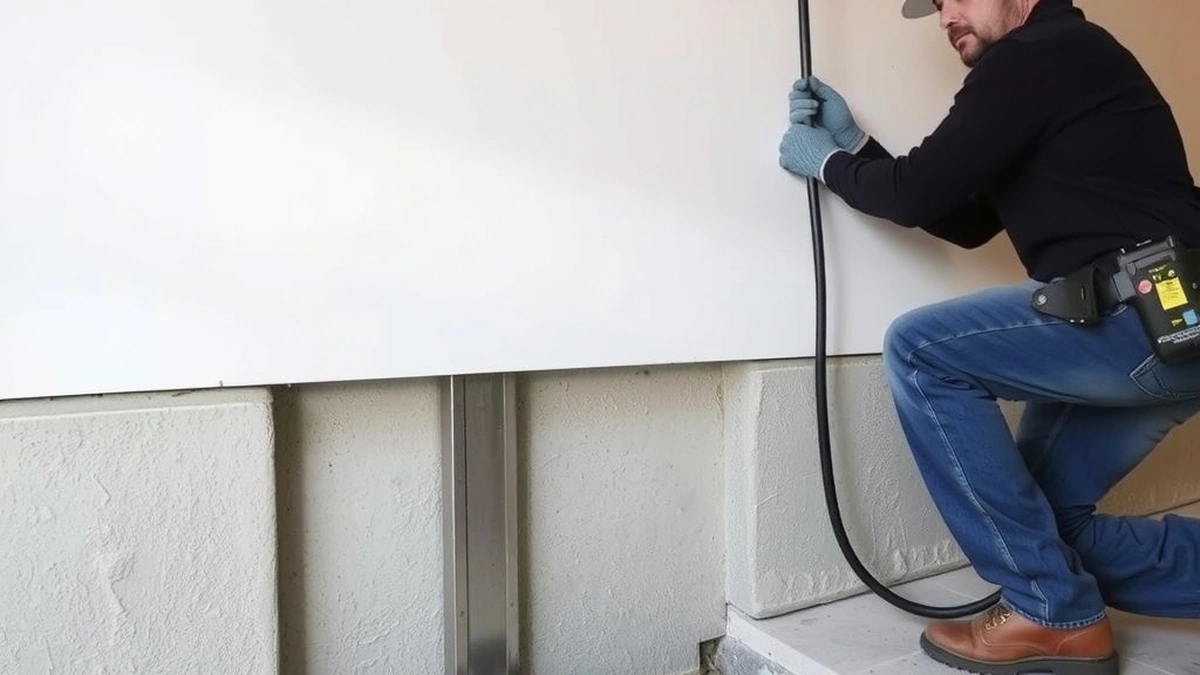
- Install piers to the design and lift in increments.
- Lock off and record the readings.
- Restore finishes after the settling period.
Settling Versus Heave
Settling goes down; heave goes up. The distinction matters because the repairs are opposite, and applying the wrong one makes the problem worse. A heaving slab that is pinned with piers will crack somewhere else as the soil continues to expand.
If the cracks open in dry weather and close in wet weather, the soil is the variable. Expansive clay is the usual culprit, and the repair is a deeper pier that isolates the structure from the active zone, not a shallow lift.
Water management is the part a homeowner can control. Keeping the soil moisture consistent around the foundation is the single most effective long-term measure, and it costs very little. A soaker hose run during dry spells, gutters that discharge away from the house, and downspouts that extend four to six feet all reduce the wet-dry cycle that drives both settlement and heave.
What to Watch After Repair
Watch the repaired area for one full year, and check the same points you measured before. A repaired foundation that stays stable through a wet spring and a dry summer is a success. One that moves again needs the engineer back, because the cause was not fully addressed.
Keep the repair documents together: the engineer’s report, the permit, the pier log, the lift record, and the warranty. Those five documents are what a future buyer will ask for, and they are also what an engineer needs to diagnose a new problem without starting from zero. A repair without paperwork is a repair that has to be re-proven every time someone asks about it. The file also shortens the next engineer’s visit, because the measurements from before the repair are the baseline for everything after it.
For the method detail, read foundation settlement repair and differential settlement. If the soil is shrinking and swelling, expansive clay soil explains what the engineer is likely to design.
Frequently asked questions
How much does foundation settling repair cost?
It depends on the stage. Monitoring costs nothing beyond a gauge, crack injection runs $400 to $1,200, and pier systems run $6,000 to $30,000 once the footing has dropped.
Does foundation settling stop on its own?
It can pause when the soil moisture stabilizes, but it usually resumes in the next wet or dry cycle. A pause is not a repair, and monitoring should continue.
How much settling is too much?
Cracks at 1/8 inch or wider, floors sloping more than an inch across a room, and movement beyond 2 inches are the thresholds that call for engineering review.
Can a settled house be leveled again?
Yes, up to about 2 inches. Piers are installed and the structure is lifted in small increments. Beyond that, the frame and plumbing may not tolerate the correction.
Is settling the same as sinking?
In practice, yes. Both describe downward movement, but sinking usually implies a void or washout beneath the footing, while settling can be simple soil compression.
How long does settling repair take?
Pier work usually runs two to five days on site. Permits add one to three weeks, and interior restoration follows after a one to two week settling period.
Sources
Some links are affiliate links.If you buy through them we may earn a commission at no extra cost to you. We do not accept payment for rankings. Read the full disclosure.