Foundation Repair Underpinning: Methods and Costs
Underpinning adds deeper support beneath an existing footing. Compare pier systems at $700 to $3,000 each with grouting and mass concrete.
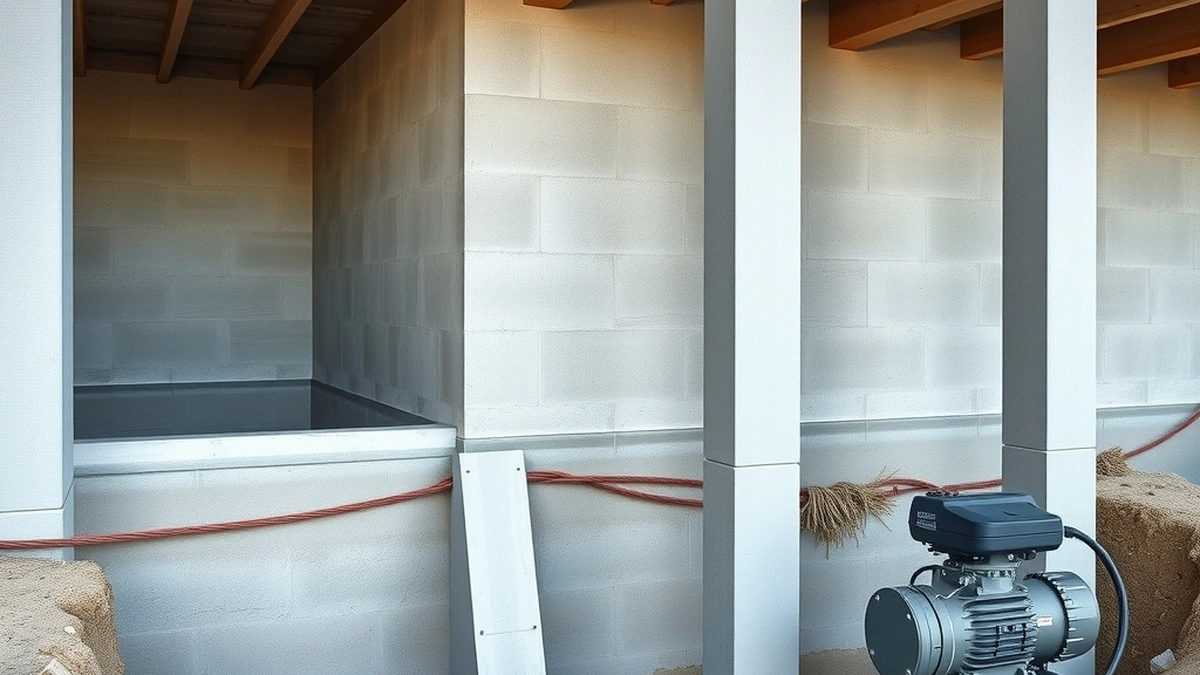
Foundation repair underpinning installs deeper support beneath an existing footing, usually with push piers at $1,000 to $3,000 each or helical piers at $700 to $2,500 each. Full jobs run $6,000 to $30,000.
- Push pier each
- $1,000 - $3,000
- Helical pier each
- $700 - $2,500
- Typical job
- $6,000 - $30,000
- Engineering report
- $400 - $1,500
- Movement limit
- 2 inches
Some links on this page are affiliate links.If you buy through them we may earn a commission at no extra cost to you. We do not accept payment for rankings. Read the full disclosure.
Foundation repair underpinning installs new support beneath an existing footing so the building’s load bypasses weak soil and bears on something competent. Push piers cost $1,000 to $3,000 each and helical piers $700 to $2,500 each, and a full job usually runs $6,000 to $30,000. It is the standard repair for settlement, and it is not the repair for a bowing wall.
What Underpinning Does
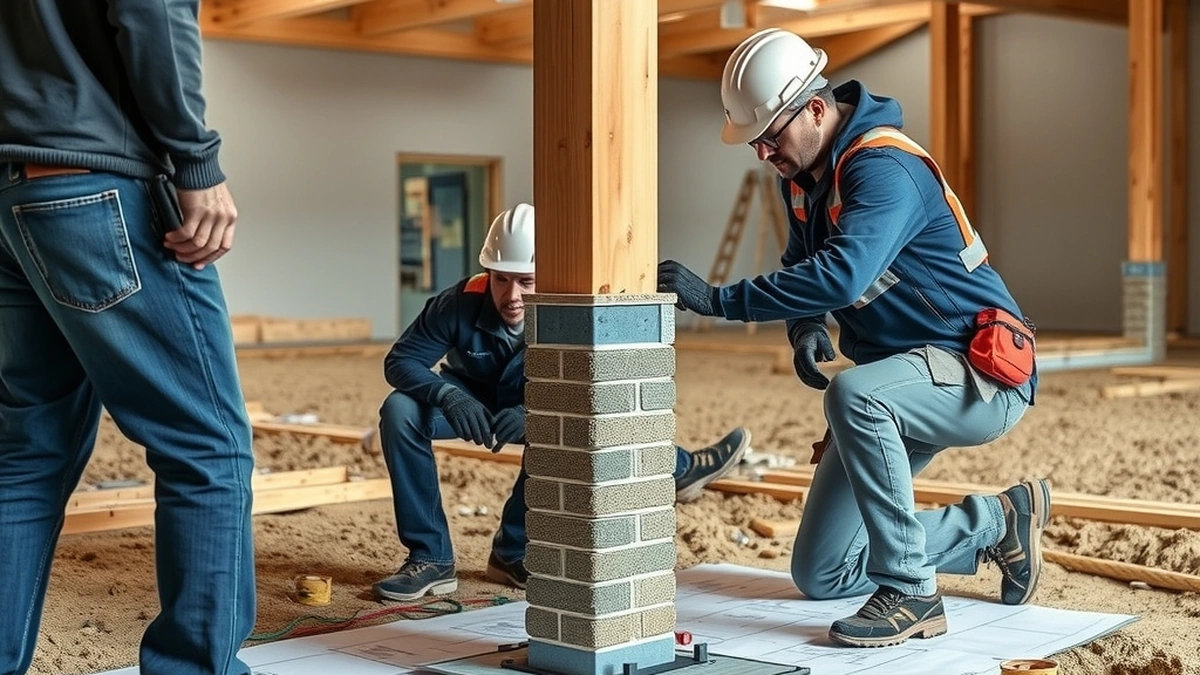
Underpinning is a load transfer. The existing footing is exposed, a bracket is attached, and a pier is advanced down to a stratum that can carry the load. The bracket is then loaded and, if the structure has settled, the house is lifted back toward level.
That is different from soil improvement, which changes the soil rather than adding a structural element, and from slab lifting, which raises a slab without supporting a footing. Underpinning addresses the vertical load path.
The Main Methods
| Method | Cost | How it works | Best for |
|---|---|---|---|
| Push piers | $1,000 - $3,000 each | Driven to refusal | Heavier structures |
| Helical piers | $700 - $2,500 each | Rotated to torque | Lighter loads, tight access |
| Mass concrete | $150 - $400 per ft | New footing poured below old | Shallow foundations |
| Soil grouting | $3 - $10 per sq ft | Binds loose soil | Voids, granular soils |
Mass concrete underpinning is the traditional method: excavate in short bays beneath the existing footing and pour a new, deeper footing in sections. It is labor intensive and disruptive, and it is still used where piers are impractical or where the loads are low.
Cost Arithmetic
A 1,500 sq ft house needs seven push piers at $2,000 each:
7 × $2,000 = $14,000
Add engineering at $1,000 and a permit at $350:
$14,000 + $1,000 + $350 = $15,350
Add interior restoration at 10% to 25% of structural cost:
$14,000 × 0.10 = $1,400 $14,000 × 0.25 = $3,500
All-in: $16,750 to $18,850. That is a typical mid-range underpinning job and it sits inside the $6,000 to $30,000 band.
A smaller example with five helical piers at $1,300:
5 × $1,300 = $6,500
With engineering at $800, the total is $7,300, near the bottom of the band.
When Underpinning Is Required
The clearest case is settlement with an active cause, such as a plumbing leak that washed out soil or fill that was never compacted. The second is a footing that was built too shallow for the soil, which is common in older homes on expansive clay.
The third is an adjacent excavation. A new basement next door, a deep utility trench, or a retaining wall removal can undermine an existing footing, and underpinning protects the neighbor’s structure during the work.
The fourth is a change in use. Adding a second story or a heavy addition increases the load on an existing footing, and the footing may need deeper support to carry it.
Underpinning Versus Other Repairs
| Problem | Underpinning? | Correct repair |
|---|---|---|
| Settled corner | Yes | Piers to bearing |
| Bowing wall | No | Anchors or straps |
| Settled driveway | No | Slab lifting |
| Leaking stable crack | No | Injection |
| Heaving slab | No | Remove expansive soil |
The most common expensive mistake is underpinning a wall that is bowing rather than settling. Piers do not resist lateral pressure, so the wall keeps moving and the homeowner pays twice.
The Installation Sequence
- Get an engineer’s design with pier type, spacing, and capacity.
- Permit the work and schedule the utility locate.
- Excavate access trenches and expose the footing.
- Attach brackets and advance piers to the design depth.
- Load the piers and lift in small increments if lifting is specified.
- Lock off, backfill, and compact in lifts.
- Record the pier refusal or torque log and hand it over.
Limits and Cautions
Underpinning does not fix the water that caused the settlement. If the drainage is unchanged, the new piers will hold, but the soil around them will keep moving and the lifted structure may crack again in a different place.
Underpinning also has a lifting limit. Beyond about 2 inches of correction, the frame and the plumbing may not tolerate the movement, and a partial lift with cosmetic acceptance is often the wiser plan. The engineer’s report should state the target and the tolerance before work starts.
Expect the house to feel different during the work. Piers are driven outside the wall, so the noise is outdoors, but the vibration travels through the footing and the frame. Pictures on shared walls can shift, and doors may stick or swing free as the load changes. None of that is damage, and most of it resolves once the lift is locked off and the frame settles. Move anything fragile off the walls on the working side before the crew arrives, and expect the dog to have opinions about the hydraulic ram. Plan to be out of the house for the loudest hours if you work from home, because the ram runs in bursts and the pauses are not predictable.
For the wider cost picture, read underpinning cost and underpinning methods. If the report proposes piers, push pier foundation repair explains the installation in detail.
Frequently asked questions
What is foundation underpinning?
Underpinning is the installation of new, deeper support beneath an existing foundation so loads bypass weak soil and bear on a competent stratum.
How much does underpinning cost?
Push piers run $1,000 to $3,000 each and helical piers run $700 to $2,500 each. A full job commonly lands between $6,000 and $30,000 including engineering.
When is underpinning necessary?
When a footing has settled into weak soil, when the original footing is too shallow, or when a nearby excavation would undermine the existing support.
Can underpinning lift a house back to level?
Yes, up to a point. Lifting is practical to about 2 inches of movement, and the engineer sets the tolerance. Beyond that the frame and plumbing may not tolerate the correction.
How long does underpinning last?
Steel piers reaching competent bearing soil are designed for the life of the structure, and the warranty is typically transferable for a $100 to $500 fee.
Does underpinning require a permit?
Usually yes. The engineer's design is part of the permit application, and the inspection confirms the piers reached the specified depth and load.
Sources
Some links are affiliate links.If you buy through them we may earn a commission at no extra cost to you. We do not accept payment for rankings. Read the full disclosure.